Tokyo
Photo: David Kernan · CC BY 4.0

Photo Spots

Most Instagrammable Places & Best Views in Tokyo

A guide to the best photo spots in Tokyo, from Shibuya Crossing and Skytree to hidden shrines, neon streets and seasonal blooms.

Tokyo rewards photographers at every scale, from the sweep of a neon skyline to the quiet geometry of a single torii gate.

This guide gathers the city's most photogenic places and organizes them by the kind of image you want to make, whether that is a sweeping cityscape, a moody night frame or a tight detail of lanterns and rooftops.

Every location here is a real, publicly known Tokyo landmark, and the notes focus on what you can see and how the light tends to behave rather than on prices or opening hours, which change often and should be checked on each official site before you go.

Where a spot is popular, expect crowds, and plan around them by arriving early or staying late.

Use the top picks for a fast shortlist, then dive into the themed sections for skyline overlooks, Instagram favorites, observation decks, night scenes, temples and shrines, neon streets and seasonal color.

Bring a lens you trust, respect posted rules and local residents, and let the city do the rest.

20 places on the map · tap a pin for details

At a glance

The top pick in each category, at a glance.

CategoryOur pick
Best overallShibuya Crossing📍 View
Skyline ViewsRoppongi Hills Mori Tower📍 View
Iconic Instagram SpotsShibuya Crossing📍 View
From Above: Observation DecksTokyo Skytree Tembo Deck and Galleria📍 View
At NightTokyo Tower illuminated📍 View
Temples and ShrinesSenso-ji📍 View
Neon and StreetsKabukicho📍 View
Cherry Blossom and SeasonalChidorigafuchi📍 View

Top Picks

⛴️GetYourGuide skyline & sunset cruises, see Tokyo from the water. Affiliate slot (stub).
Shibuya Crossing

📍 Shibuya

Shibuya Crossing

◷ Night

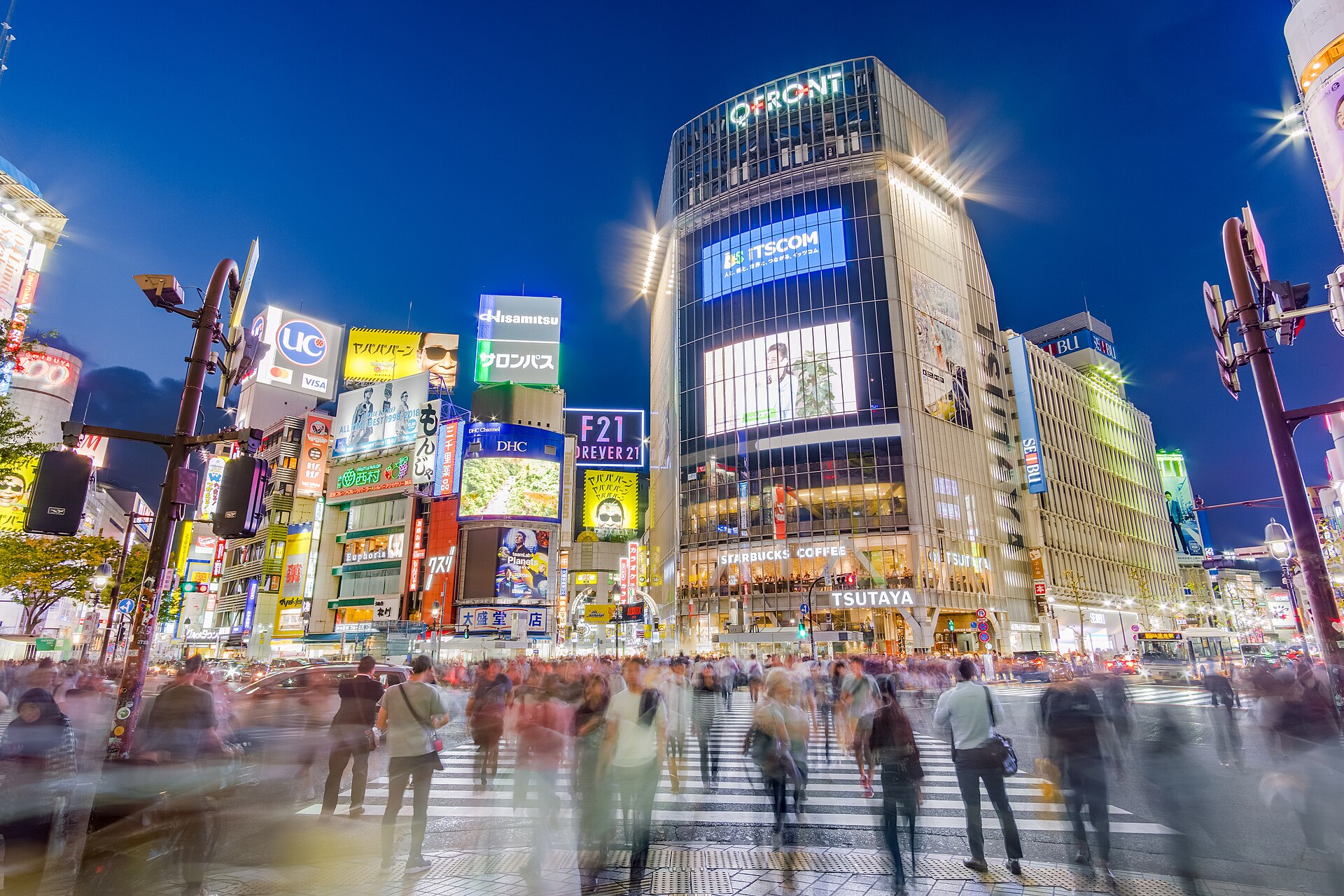
The world's busiest scramble crossing, best framed from above as waves of pedestrians surge across in every direction under giant screens.

Where to shoot: Second-floor walkway window of the Shibuya Station Mark City exit or the Starbucks overlooking the scramble.

Pro tip: Use a slow shutter around 1/15s on a steady sill to blur the pedestrian surge while keeping the screens sharp.

📍 View on Google Maps →
Tokyo Skytree

📍 Sumida

Tokyo Skytree

◷ Blue hour

One of the tallest towers on earth, striking both as a subject on the skyline and as a vantage point over the eastern wards.

Where to shoot: Across the Kitajikken River on the Jikken-bashi bridges in Sumida for a clean reflected tower shot.

Pro tip: Shoot vertically at 24-35mm during the post-sunset lighting change to catch both the tower's glow and deep sky color.

📍 View on Google Maps →
Tokyo Tower

📍 Minato

Tokyo Tower

◷ Blue hour

The lattice orange and white tower that anchors countless Tokyo frames, especially glowing after dark between surrounding high-rises.

Where to shoot: The base of the stairs at Shiba Park or Roppongi's Keyakizaka slope to frame the tower between buildings.

Pro tip: Bracket exposures at f/8 to balance the tower's warm lattice lights against the darkening sky.

📍 View on Google Maps →
Senso-ji

📍 Asakusa

Senso-ji

◷ Sunrise

Tokyo's oldest temple, with the giant Kaminarimon lantern, the Nakamise approach and a five-story pagoda for classic compositions.

Where to shoot: Center of the Nakamise-dori approach looking through Hozomon toward the pagoda before crowds arrive.

Pro tip: Use a 35mm and get low to layer the Kaminarimon lantern, the shopping street and the pagoda in one line.

📍 View on Google Maps →
teamLab

📍 Koto and Minato

teamLab

◷ Anytime

Immersive digital art rooms of light, mirrors and projected color that produce some of the most saturated interior photos in the city.

Where to shoot: Inside the mirror-floor Infinite Crystal Universe and lamp rooms at teamLab Planets or Borderless.

Pro tip: Turn off flash, brace against a wall for 1/30s, and expose for the highlights so the projected color stays saturated.

📍 View on Google Maps →
Shibuya Sky

📍 Shibuya

Shibuya Sky

◷ Golden hour

An open-air rooftop deck above Shibuya Scramble Square with a glass edge and sky-facing views over the crossing and beyond.

Where to shoot: The open-air rooftop edge on level 46, at the northwest glass corner facing the crossing.

Pro tip: Arrive before sunset to shoot the city warm, then stay for blue hour as the crossing lights come up.

📍 View on Google Maps →
Tokyo Metropolitan Government Building

📍 Shinjuku

Tokyo Metropolitan Government Building

◷ Golden hour

Twin-tower observation floors in Shinjuku offering wide free views, with Mount Fuji visible on clear days toward sunset.

Where to shoot: The South Observatory windows facing west toward the Shinjuku skyline and Mount Fuji.

Pro tip: Press a rubber lens hood to the glass to kill reflections and shoot Fuji's silhouette at sunset with a 70-200mm.

📍 View on Google Maps →
Nezu Shrine

📍 Bunkyo

Nezu Shrine

◷ Midday

A serene shrine famous for its tunnel of vermilion torii gates and azalea slopes that draw photographers each spring.

Where to shoot: Standing inside the Otome Inari torii tunnel on the shrine's western slope.

Pro tip: Shoot straight down the tunnel at f/5.6 to compress the vermilion gates, timing a gap in foot traffic.

📍 View on Google Maps →
Meiji Jingu

📍 Shibuya

Meiji Jingu

◷ Sunrise

A forested Shinto shrine near Harajuku with towering wooden torii, gravel approaches and rows of sake barrels.

Where to shoot: On the gravel path directly beneath the giant Otorii at the forest entrance.

Pro tip: Use a wide 16-24mm angled up to exaggerate the torii's scale against the morning canopy light.

📍 View on Google Maps →
Rainbow Bridge

📍 Odaiba and Minato

Rainbow Bridge

◷ Blue hour

A suspension bridge across Tokyo Bay that lights up at night, best shot from the Odaiba waterfront with the skyline behind.

Where to shoot: The Odaiba Seaside Park promenade with the bridge spanning left to the Minato skyline.

Pro tip: Set up a tripod for a 20-30s exposure at f/11 to smooth the bay and streak passing boat lights.

📍 View on Google Maps →
Odaiba Seaside

📍 Odaiba

Odaiba Seaside

◷ Night

A bayfront promenade with the Statue of Liberty replica, the bridge and city towers lining up for long evening exposures.

Where to shoot: The waterline steps near the Statue of Liberty replica facing the bridge and towers.

Pro tip: Foreground the statue with the lit bridge behind using a long exposure and low ISO for clean water reflections.

📍 View on Google Maps →
Roppongi Hills Mori Tower

📍 Roppongi

Roppongi Hills Mori Tower

◷ Blue hour

The Tokyo City View deck and Sky Deck frame Tokyo Tower and the Minato skyline in one of the city's best cityscapes.

Where to shoot: The indoor Tokyo City View glass on the east side, or the open-air Sky Deck facing Tokyo Tower.

Pro tip: Frame Tokyo Tower centered at 35-50mm during blue hour to balance its glow with the surrounding city lights.

📍 View on Google Maps →
Shinjuku Kabukicho

📍 Shinjuku

Shinjuku Kabukicho

◷ Night

Dense neon signage, the Godzilla head over Toho and narrow lanes that define Tokyo's electric night-street look.

Where to shoot: The corner of Central Road looking up at the Godzilla head crowning the Toho building.

Pro tip: Expose for the bright neon signage and let the alleys go moody; a 35mm captures the sign density without distortion.

📍 View on Google Maps →
Golden Gai

📍 Shinjuku

Golden Gai

◷ Night

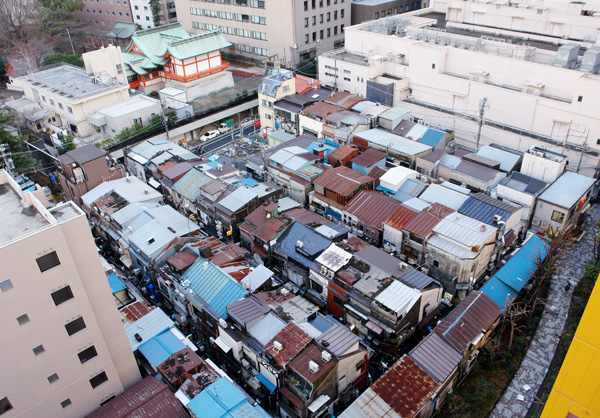
A warren of tiny lantern-lit bars packed into narrow alleys, rich with texture, signage and atmosphere after dark.

Where to shoot: The mouth of the narrowest lantern-lit alley looking down the row of stacked bar signs.

Pro tip: Shoot handheld at f/2 with a bright lantern anchoring the frame and let the depth fall into warm bokeh.

📍 View on Google Maps →
Omoide Yokocho

📍 Shinjuku

Omoide Yokocho

◷ Blue hour

A retro alley of smoky yakitori stalls and hanging lanterns beside Shinjuku Station, cinematic in the blue hour.

Where to shoot: The entrance of the yakitori alley beside Shinjuku Station's west side, shooting down the lantern line.

Pro tip: Balance the warm lantern glow against the cool blue-hour sky and catch grill smoke backlit by the signs.

📍 View on Google Maps →
Chidorigafuchi

📍 Chiyoda

Chidorigafuchi

◷ Sunrise

A moat beside the Imperial Palace lined with cherry trees that arch over the water, a signature spring photo location.

Where to shoot: The path along the moat's edge near Chidorigafuchi boat dock with cherry branches arching overhead.

Pro tip: Get low near the water at first light to mirror the pink canopy, shooting a rowboat for scale at f/8.

📍 View on Google Maps →
Ueno Park

📍 Taito

Ueno Park

◷ Golden hour

A broad park with cherry-lined avenues, temples and a pond, popular for seasonal blossoms and lotus in summer.

Where to shoot: The cherry-lined central avenue leading toward the National Museum, or Shinobazu Pond for lotus.

Pro tip: Use a 50mm at f/2.8 to compress the blossom tunnel with soft backlight raking through the branches.

📍 View on Google Maps →
Nakameguro

📍 Meguro

Nakameguro

◷ Blue hour

A canal district where cherry trees frame the Meguro River, glowing with lanterns in spring evenings.

Where to shoot: On one of the small bridges over the Meguro River looking down the lantern- and blossom-lined canal.

Pro tip: Shoot into the receding row of lanterns at f/4 to stack warm reflections on the water during spring evenings.

📍 View on Google Maps →
Gotokuji

📍 Setagaya

Gotokuji

◷ Midday

A temple famous for its shelves of beckoning cat figures, a quirky and highly shareable close-up subject.

Where to shoot: Beside the tiered shelves of maneki-neko figures in the temple courtyard.

Pro tip: Fill the frame at 50mm f/2.8 with a single cat sharp in front and the massed shelf softly out of focus behind.

📍 View on Google Maps →
Hie Shrine

📍 Chiyoda

Hie Shrine

◷ Golden hour

A hillside shrine near Akasaka with a photogenic stairway of red torii gates rising between the buildings.

Where to shoot: Standing at the foot of the Sanno-torii stairway looking up through the tunnel of red gates.

Pro tip: Shoot upward with a 24-35mm to lead the eye through the gate tunnel toward the light at the top.

📍 View on Google Maps →

Skyline Views

For the classic Tokyo cityscape, height and distance matter. These vantage points give you clean sightlines across the sprawl, with Mount Fuji, Tokyo Tower or Skytree as focal points depending on where you stand.

  • Roppongi Hills Mori Tower

    ◷ Blue hour

    Tokyo City View and the open Sky Deck line up Tokyo Tower against the Minato towers, ideal at sunset into blue hour.

    Pro tip: Shoot through the glass at a diagonal with a 24-70mm to keep Tokyo Tower centered as ambient and city light balance.

  • Tokyo Metropolitan Government Building

    ◷ Golden hour

    Free observation floors in Shinjuku with wide western views toward Mount Fuji on clear days.

    Pro tip: Bring a rubber lens hood to press flush against the glass and kill reflections on the Fuji side.

  • Shibuya Sky

    ◷ Golden hour

    An open rooftop over Shibuya that turns the whole western skyline into a foreground for sunset.

    Pro tip: Use the corner glass edge and a wide 16-35mm to sweep the whole western skyline into the sunset.

  • Bunkyo Civic Center

    ◷ Golden hour

    A free observatory in Bunkyo with a strong northwest angle that can catch Fuji behind the city.

    Pro tip: Pack a short telephoto (100-200mm) to compress Fuji large against the Shinjuku towers on clear days.

  • Carrot Tower

    ◷ Golden hour

    A free observation floor in Sangenjaya with a westward view that frames Fuji on clear evenings.

    Pro tip: Frame Fuji with a 135mm and wait for the sun to sink just left of the cone.

  • Sky Circus Sunshine 60

    ◷ Blue hour

    An Ikebukuro observation deck looking out over the northern wards and toward Skytree.

    Pro tip: Zoom in on distant Skytree with a 70-200mm and steady on the rail for a crisp northern skyline.

  • World Trade Center area, Hamamatsucho

    ◷ Blue hour

    A long-standing viewpoint district near the bay that frames Tokyo Tower and the harbor.

    Pro tip: Layer Tokyo Tower over the harbor cranes with a 50mm to build foreground-to-background depth.

  • Ebisu Garden Place Tower

    ◷ Blue hour

    An upper-floor viewpoint in Ebisu that captures Tokyo Tower and the southern skyline.

    Pro tip: Use a 85mm from an upper window to isolate a glowing Tokyo Tower against the southern grid.

  • Odaiba waterfront

    ◷ Blue hour

    From across the bay, the entire central skyline stacks up behind Rainbow Bridge.

    Pro tip: Set a tripod low and use a 24mm to stack Rainbow Bridge in front of the skyline reflection.

  • Kachidoki and Tsukishima riverside

    ◷ Blue hour

    Bayside promenades that frame the Sumida towers and bridges across open water.

    Pro tip: Do a long exposure across the water with an ND filter to smooth the bay under the lit towers.

Iconic Instagram Spots

Some Tokyo scenes are instantly recognizable. These are the frames that define the city's social feed, from the scramble crossing to torii tunnels and beckoning cats.

  • Shibuya Crossing

    ◷ Anytime

    Shoot from an overlooking window or the street edge to capture the surge of the scramble.

    Pro tip: Shoot from the Starbucks window with a 35mm and drag the shutter to 1/15s to blur the crowd's motion.

  • Nezu Shrine torii tunnel

    ◷ Sunrise

    A compact corridor of vermilion gates that photographs beautifully in soft morning light.

    Pro tip: Arrive at opening and use a 35mm low in the tunnel to layer the vermilion gates in soft directional light.

  • Hie Shrine red stairway

    ◷ Sunrise

    A rising flight of red torii gates near Akasaka, striking shot from below looking up.

    Pro tip: Crouch at the base with a 24mm looking up to let the red gates converge overhead.

  • Gotokuji beckoning cats

    ◷ Anytime

    Tiered shelves of white maneki-neko figures make a playful, tightly framed subject.

    Pro tip: Fill the frame tight with a 50mm macro on one shelf of cats to flatten the repeating pattern.

  • teamLab light rooms

    ◷ Anytime

    Mirrored, color-saturated installations built for immersive, reflective portraits.

    Pro tip: Shoot wide open at f/1.8 and place your subject against a mirrored wall for infinite reflections.

  • Takeshita Street, Harajuku

    ◷ Midday

    A bright, crowded youth-fashion lane full of signage and color.

    Pro tip: Use a 24mm and shoot up the lane to stack the layered signage and banners into a dense frame.

  • Kaminarimon at Senso-ji

    ◷ Sunrise

    The giant red lantern of the Thunder Gate is one of Tokyo's most photographed symbols.

    Pro tip: Get there before the crowds and use a 35mm straight-on to center the lantern under the gate.

  • Nakameguro canal

    ◷ Blue hour

    The tree-lined Meguro River is a year-round favorite and a spring icon.

    Pro tip: Reflect the lantern-lit trees in the canal with a 50mm and a low riverside angle.

  • Shimokitazawa lanes

    ◷ Golden hour

    Vintage shopfronts and murals give a relaxed, characterful street backdrop.

    Pro tip: Wander with a 35mm and catch warm side light raking across the murals and shopfronts.

  • Yanaka Ginza

    ◷ Golden hour

    An old-town shopping street with retro signage and a famous staircase view.

    Pro tip: Shoot down the famous staircase with a 50mm as low sun backlights the retro street.

From Above: Observation Decks

Observation decks give you controlled height, glass or open-air edges and a reliable line on the skyline. Some are free, some are ticketed, and each has a different angle on the city.

  • Tokyo Skytree Tembo Deck and Galleria

    ◷ Blue hour

    The highest public views in the city, sweeping across the eastern wards and the Sumida River.

    Pro tip: Rest a 24-70mm on the ledge and expose for the twilight sky to keep the eastern wards detailed.

  • Tokyo Tower Main and Top Decks

    ◷ Blue hour

    Central views with a glass floor section and a close look at the surrounding districts.

    Pro tip: Frame straight down through the glass floor with a 16mm for a vertigo perspective of the streets.

  • Shibuya Sky

    ◷ Golden hour

    An open rooftop with a glass-edge corner and sky lounge above the crossing.

    Pro tip: Claim the glass-edge corner early and shoot wide with a 16-35mm as the sun drops over the crossing.

  • Roppongi Hills Sky Deck

    ◷ Blue hour

    A rare open-air rooftop deck for unobstructed cityscape frames.

    Pro tip: On the open deck use a tripod and a 24mm for clean, unobstructed twilight cityscapes.

  • Tokyo Metropolitan Government Building

    ◷ Golden hour

    Free twin-tower decks with broad Shinjuku and westward views.

    Pro tip: Press a lens hood to the glass and use a 70-200mm to reach for Fuji at sunset.

  • Sunshine 60 Sky Circus

    ◷ Blue hour

    An Ikebukuro deck with interactive exhibits and northern city views.

    Pro tip: Shoot the northern grid with a 35mm and let the interactive lights add foreground color.

  • Shibuya Scramble Square lower observatories

    ◷ Night

    Indoor levels below the rooftop with glass-framed views of the crossing.

    Pro tip: Steady a 35mm against the glass and slow to 1/8s to streak the scramble's crowd and traffic.

  • Tokyo City View, Roppongi

    ◷ Blue hour

    Indoor galleries wrapping the Mori Tower with Tokyo Tower front and center.

    Pro tip: Use a 50mm through the wrap-around glass to keep Tokyo Tower dead center as the sky deepens.

  • Bunkyo Civic Center Observatory

    ◷ Golden hour

    A free, quiet deck with a strong angle toward Shinjuku and Fuji.

    Pro tip: Bring a 135mm to pull Fuji and Shinjuku close from this quiet, uncrowded deck.

  • Caretta Shiodome viewpoint

    ◷ Blue hour

    An upper-level view over the bay and the Hamarikyu greenery.

    Pro tip: Frame Hamarikyu's greenery against the bay with a 24-70mm as the water catches twilight.

At Night

Tokyo after dark is a photographer's city of reflections, neon and light trails. These spots reward the blue hour and the hours beyond, so bring a way to steady your camera.

  • Tokyo Tower illuminated

    ◷ Night

    The tower's evening lighting glows warmly between the Minato high-rises.

    Pro tip: Use a tripod and f/8 for a crisp long exposure of the warm-lit tower between the high-rises.

  • Rainbow Bridge

    ◷ Blue hour

    The lit span across the bay reflects across the water from the Odaiba side.

    Pro tip: Long-expose from the Odaiba side with an ND filter to mirror the lit span across the bay.

  • Shibuya Crossing after dark

    ◷ Night

    Screens and signage turn the scramble into a river of color and motion.

    Pro tip: Drag the shutter to 1/10s with a 35mm to turn the neon crossing into streaks of color.

  • Kabukicho neon

    ◷ Night

    Dense signage and the Godzilla head define Tokyo's brightest night street.

    Pro tip: Shoot vertical with a 24mm to stack the dense signage up to the Godzilla head.

  • Golden Gai alleys

    ◷ Night

    Lantern-lit micro-bars make intimate, textured night frames.

    Pro tip: Work a 35mm at f/2 down the alley and expose for the lantern glow for intimate frames.

  • Omoide Yokocho

    ◷ Night

    Smoke, lanterns and grill glow create a cinematic alley scene.

    Pro tip: Use a 50mm and let the grill smoke diffuse the lantern light into a cinematic haze.

  • Odaiba bayfront

    ◷ Night

    Long exposures capture the skyline, the bridge and the Ferris wheel area.

    Pro tip: Set a tripod for a 20-30s exposure to render the skyline, bridge and wheel in trails and glow.

  • Skytree light-up

    ◷ Night

    The tower's changing evening colors reflect along the Sumida River.

    Pro tip: Frame the tower reflected in the Sumida with a 35mm during a color-change for symmetry.

  • Ginza at night

    ◷ Night

    Polished flagship facades and crosswalks shine under upscale lighting.

    Pro tip: Shoot polished facades with a 50mm and include a wet crosswalk for mirrored highlights.

  • Akihabara

    ◷ Night

    Layered electronics signage glows in dense vertical stacks after dark.

    Pro tip: Point a 24mm up the stacked signage to exaggerate the vertical layers of glowing signs.

Temples and Shrines

Sacred sites offer strong architecture, symmetry and calm. Photograph respectfully, follow posted rules, avoid blocking worshippers and keep quiet in prayer areas.

  • Senso-ji

    ◷ Sunrise

    The Kaminarimon lantern, Nakamise approach and pagoda give layered classic frames.

    Pro tip: Arrive at dawn with a 24mm to shoot the empty Nakamise approach leading to the pagoda.

  • Meiji Jingu

    ◷ Sunrise

    Massive wooden torii and forest paths create a serene, monumental mood.

    Pro tip: Use a 35mm low under the giant torii to catch morning light filtering through the forest.

  • Nezu Shrine

    ◷ Sunrise

    The torii tunnel and azalea garden are a spring highlight.

    Pro tip: Shoot the torii tunnel at opening with a 35mm to layer gates in soft, even light.

  • Hie Shrine

    ◷ Sunrise

    A red torii stairway rising between office towers near Akasaka.

    Pro tip: Crouch at the stairway base with a 24mm to let the red gates rise between the towers.

  • Gotokuji

    ◷ Anytime

    The beckoning-cat temple pairs a three-story pagoda with rows of figures.

    Pro tip: Compose the three-story pagoda over the cat rows with a 50mm for a layered subject.

  • Yushima Tenjin

    ◷ Golden hour

    A scholarly shrine known for plum blossoms in late winter.

    Pro tip: Use an 85mm to isolate plum blossom clusters against the shrine's dark timber.

  • Zojoji

    ◷ Blue hour

    A large temple framed directly beneath Tokyo Tower for a two-era composition.

    Pro tip: Align the temple gate directly beneath Tokyo Tower with a 35mm for the two-era stack.

  • Kanda Myojin

    ◷ Anytime

    A vividly painted shrine near Akihabara blending tradition and pop culture.

    Pro tip: Get close with a 35mm to fill the frame with the vivid vermilion and gold carvings.

  • Tomioka Hachimangu

    ◷ Anytime

    A historic shrine in Koto with festival heritage and stone monuments.

    Pro tip: Frame the stone monuments with a 50mm and side light to bring out their texture.

  • Toyokawa Inari, Akasaka

    ◷ Anytime

    Rows of fox statues and red banners make a distinctive, atmospheric scene.

    Pro tip: Shoot the fox statues in a receding row with a 50mm to lead the eye through the red banners.

Neon and Streets

For street energy and signage, Tokyo's dense districts deliver. Look for reflections in wet pavement, layered signs and pockets of old-town texture between the towers.

  • Kabukicho

    ◷ Night

    The city's densest neon canyon, with the Godzilla head as a landmark.

    Pro tip: Use a 24mm to compress the neon canyon with the Godzilla head as a top anchor.

  • Golden Gai

    ◷ Night

    Hand-painted signs and tiny facades stacked along narrow lanes.

    Pro tip: Work a 35mm at f/2 to capture the hand-painted signs glowing along the narrow lane.

  • Omoide Yokocho

    ◷ Night

    A retro yakitori alley heavy with lanterns and steam.

    Pro tip: Let the steam catch a 50mm's backlight for a moody, lantern-lit yakitori alley.

  • Akihabara

    ◷ Night

    Electronics and anime signage rise in bright vertical layers.

    Pro tip: Shoot vertical with a 24mm to stack the bright anime and electronics signage.

  • Ameyoko, Ueno

    ◷ Midday

    A bustling market street packed with stalls, banners and crowds.

    Pro tip: Use a 35mm at eye level to compress the packed stalls and banners into a busy frame.

  • Shimokitazawa

    ◷ Anytime

    Bohemian lanes of vintage shops, cafes and murals.

    Pro tip: Roam with a 35mm and catch murals against the vintage shopfronts for character.

  • Yanaka Ginza

    ◷ Golden hour

    A nostalgic downtown street with retro storefronts and a sunset staircase.

    Pro tip: Shoot down the staircase with a 50mm as low sun warms the retro street.

  • Nakano Broadway approach

    ◷ Anytime

    A covered arcade of subculture shops and dense signage.

    Pro tip: Use a 24mm along the covered arcade to draw the dense signage into a receding line.

  • Kagurazaka

    ◷ Blue hour

    Stone-paved slopes and hidden alleys with an old Tokyo mood.

    Pro tip: Frame a stone-paved slope with a 35mm as evening lanterns light the old-Tokyo alleys.

  • Ginza main avenue

    ◷ Blue hour

    Sleek flagship facades and wide crosswalks for polished street frames.

    Pro tip: Include a wide crosswalk with a 35mm and expose for the sleek facades at dusk.

Cherry Blossom and Seasonal

Tokyo's seasons transform its parks and waterways. Spring brings sakura, early summer adds hydrangea and azalea, autumn turns the ginkgo gold and winter offers plum and illuminations. Bloom timing shifts each year, so check current forecasts.

  • Chidorigafuchi

    ◷ Golden hour

    Cherry branches arch over the palace moat, famous for boat-level views.

    Pro tip: Shoot from boat level with a 50mm to let cherry branches arch over the moat in warm light.

  • Meguro River, Nakameguro

    ◷ Blue hour

    Trees line the canal and glow with lanterns during spring evenings.

    Pro tip: Reflect the lantern-lit cherry canopy in the river with a 35mm from a low bank angle.

  • Ueno Park

    ◷ Golden hour

    Broad cherry avenues and a lotus-filled pond mark spring and summer.

    Pro tip: Use an 85mm to compress the cherry avenue into a tunnel of backlit blossoms.

  • Shinjuku Gyoen

    ◷ Midday

    A spacious garden with many cherry varieties and long bloom windows.

    Pro tip: Shoot with a 35mm at f/8 to keep the many cherry varieties sharp across the wide lawns.

  • Yoyogi Park

    ◷ Midday

    Open lawns and cherry groves popular for relaxed spring frames.

    Pro tip: Get low with a 24mm to place picnic blossoms against the open lawn and sky.

  • Nezu Shrine azaleas

    ◷ Golden hour

    Hillside azalea beds bloom in vivid layers each spring.

    Pro tip: Use a 50mm to isolate the layered azalea beds against the hillside greenery.

  • Icho Namiki, Meiji Jingu Gaien

    ◷ Golden hour

    A golden ginkgo avenue that peaks in late autumn.

    Pro tip: Shoot straight down the ginkgo avenue with an 85mm to compress the golden tunnel.

  • Rikugien

    ◷ Night

    A classic strolling garden known for autumn maples and evening light-ups.

    Pro tip: Bring a tripod for the maple light-up and long-expose to mirror the color in the pond.

  • Koishikawa Korakuen

    ◷ Golden hour

    A historic garden with maples, plums and seasonal color.

    Pro tip: Use a 50mm to layer maples over the pond bridge in warm late-day light.

  • Sumida Park

    ◷ Blue hour

    Riverside cherry trees framed against Skytree in spring.

    Pro tip: Frame the riverside cherries with Skytree behind using a 35mm as the sky turns.

Frequently Asked Questions

What is the single most iconic photo spot in Tokyo?

Shibuya Crossing is Tokyo's definitive photo spot. Shoot it from an overlooking deck like Shibuya Sky during blue hour when the signage glows.

Where can I photograph Mount Fuji from within Tokyo?

On clear days, Mount Fuji is visible from western decks like the Tokyo Metropolitan Government Building, Carrot Tower in Sangenjaya and the Bunkyo Civic Center.

Which observation decks are free?

Free decks include the Tokyo Metropolitan Government Building in Shinjuku, the Bunkyo Civic Center Observatory and Carrot Tower in Sangenjaya. Skytree, Tokyo Tower, Shibuya Sky and Roppongi Hills are ticketed.

When is cherry blossom season in Tokyo?

Cherry blossoms usually peak from late March into early April, though timing shifts yearly. Check the season forecast and visit spots like Chidorigafuchi and Nakameguro early to avoid crowds.

Are there rules for photography at temples and shrines?

Yes. Many halls ban indoor photography and tripods. Follow posted signs, don't photograph worshippers without consent, stay out of prayer areas and keep quiet.

What is the best time of day for Tokyo cityscapes?

The blue hour just after sunset is ideal, with color in the sky as city lights come on. Arrive before sunset and stay through dusk for the strongest contrast.