

📍 West coast
Eagle Beach
The widest beach in Aruba, with soft white sand, the famous fofoti trees and water sports. Four species of sea turtles nest in Aruba, and most nests are on Eagle Beach.
📍 View on Google Maps →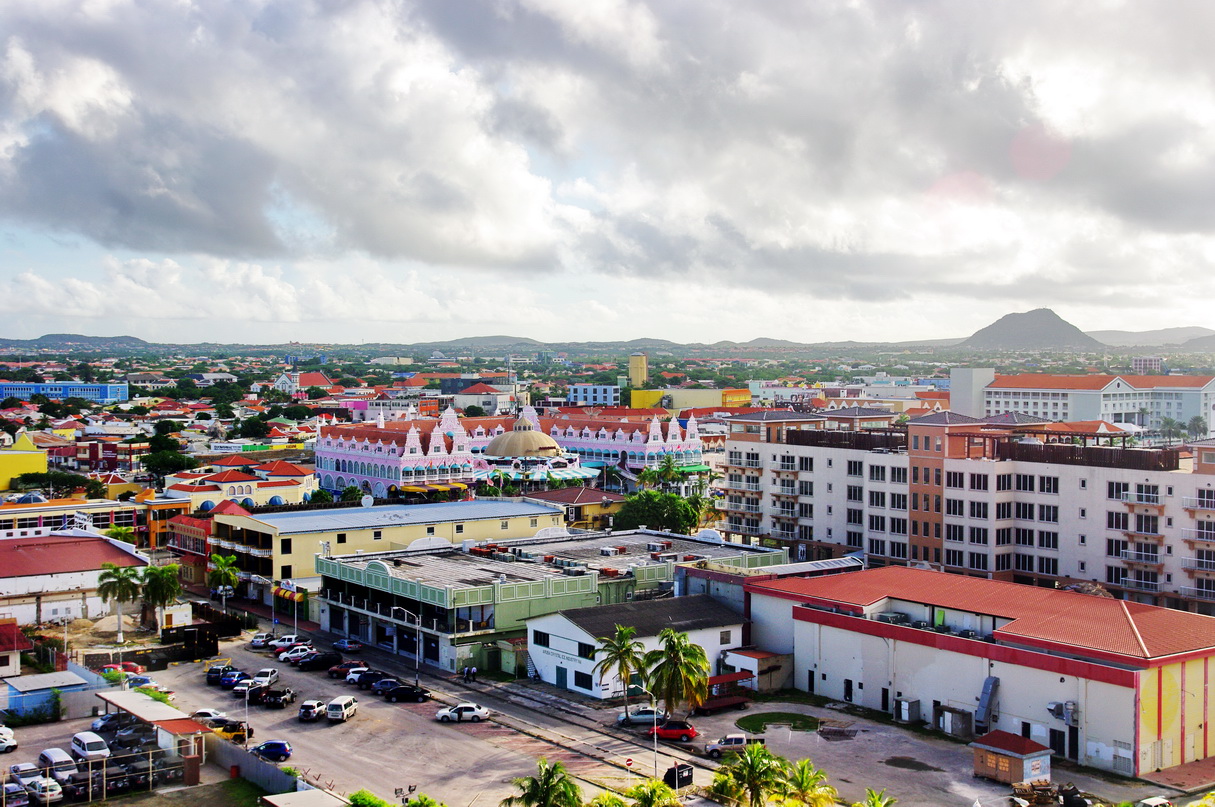 Photo: Bgabel · CC BY-SA 3.0
Travel guide
The best things to do in Oranjestad and Aruba: Eagle Beach, Palm Beach, Arikok National Park, the Natural Pool, Casibari, the lighthouse and downtown history.
Last updated
The best things to do in Oranjestad start with the capital itself: a harbor town of colorful buildings, museums, shops and restaurants. The rest of Aruba is a short drive away.
White-sand beaches line the west coast, the dry interior has rock formations and a national park, and the northeast coast is rugged and wild.
The Aruba Tourism Authority says nearly a fifth of the island is a national park, and that Aruba has more than 20 public beaches and coves. The climate is warm and dry, with trade winds almost all year, so most plans work in any month.
This guide uses the tourism authority's descriptions and travel.gc.ca for safety notes.
📍 West coast
The widest beach in Aruba, with soft white sand, the famous fofoti trees and water sports. Four species of sea turtles nest in Aruba, and most nests are on Eagle Beach.
📍 View on Google Maps →
📍 Northwest coast
A two-mile strip of white sand with calm water for swimming and snorkeling, beach bars, casinos and restaurants.
📍 View on Google Maps →
📍 East and interior
Nearly 20 percent of the island is protected. The park has caves, original Indian rock drawings, lava and limestone formations, and guided walks through dry river beds to secluded bays.
📍 View on Google Maps →
📍 Arikok National Park
A pool in volcanic rock on the northeast coast, also called Conchi. It is reached by 4x4 vehicle, on horseback or on a long hike.
📍 View on Google Maps →
📍 Casibari
Huge tonalite boulders with trails and steps to the top for a 360-degree view.
📍 View on Google Maps →
📍 Hudishibana, Noord
A stone lighthouse on the northwest tip with views of the western coast, best at sunset.
📍 View on Google Maps →
📍 Downtown Oranjestad
The oldest building in the capital, a clock tower, museums, shops and restaurants close to the harbor.
📍 View on Google Maps →
📍 South coast
A half-moon beach in a calm lagoon near San Nicolas, with shallow water that suits small children and a marked area for snorkeling.
📍 View on Google Maps →
📍 Palm Beach area
A wetland with an observation tower where more than 80 species of migratory birds can be watched, beside the old Dutch windmill.
📍 View on Google Maps →Water, wind and rock are the main playgrounds.
The calm water makes the beach a comfortable place to swim and snorkel, and water sports are offered there.
The trade winds blow more from May to October, and a kite boarding and windsurfing competition, Hi-Winds, takes place in May.
A guided jeep tour is the easiest way to reach the pool through rough terrain.
Walk the trails and steps between the boulders to the top.
A guided tour of about 25 minutes tells the history of aloe in Aruba, which once covered two-thirds of the island.
Aruba's beaches and streets cost nothing.
Colorful buildings, shops and monuments are all within walking distance.
Beaches in Aruba are public, and Eagle Beach has shaded areas and space for everyone.
The wind-shaped trees of Eagle Beach are among the most photographed in Aruba.
Palm Beach and the California Lighthouse area are known for orange sunsets over the Caribbean.
A long, calm beach with pelicans on poles in the water.
Calm water and animals make Aruba easy with children.
A calm lagoon with shallow water, well suited to small children.
About 100 rescued donkeys live at the sanctuary in Bringamosa, and visitors can meet them.
Climb the tower to watch herons, egrets and ducks.
A tourist tram links the cruise terminal and the center of Oranjestad.
Relatively calm water close to the shore, with beach huts and chairs.
Sunsets and quiet corners are easy to find.
Climb up and watch the sun dip into the sea.
Pinchos Grill & Bar has tables right by the water's edge.
A wide beach with soft sand and ocean views.
A quiet hilltop chapel with views of the coast.
Aruba is warm all year. The tourism authority gives December to April as the sunny, dry peak season, with a rainy season from October to December and a windier season from May to October.
The peak season, with sunny and dry weather. Carnival takes place in January and February, and festive parades fill the streets, according to the tourism authority.
The windier months, which suit kite boarding and windsurfing. The hurricane season runs from June 1 to November 30, but Aruba lies outside the main hurricane belt.
The rainy season, with short, intermittent showers and plenty of sunshine. The rain turns the desert-like landscape green.
Aruba is small, so each area is a short ride from the capital.
Neighborhood
The harbor, Fort Zoutman, the Archaeological Museum, City Hall, shops and restaurants, with a tram from the cruise terminal.
Neighborhood
The widest beach in Aruba and a calm stretch of white sand, with the low-rise resorts and the fofoti trees.
Neighborhood
The strip of high-rise resorts, casinos and restaurants, with the Bubali Bird Sanctuary and the California Lighthouse nearby.
Neighborhood
Arikok National Park, the Natural Pool, Casibari and the gold mill ruins to the east and north, and Baby Beach in the south.
See our full Best Hotels in Oranjestad guide for the best areas, and plan smoothly with our Oranjestad travel tips.
Walk downtown to see Fort Zoutman, the Willem III Tower, the museums and the colorful buildings, then spend the afternoon at Eagle Beach or Palm Beach.
The capital is a harbor town. The nearest beaches are Surfside Beach, about 15 minutes on foot from the cruise port, and Eagle Beach, about ten minutes by car, according to the tourism authority.
By 4x4 vehicle, on horseback or on a 3 to 4 hour round-trip hike, according to the tourism authority. Standard cars are not allowed past the park checkpoints, and the site is not wheelchair accessible.
Coastal waters can be dangerous, and rescue services may not meet Canadian standards, according to travel.gc.ca. Follow local instructions, and swim only where the water is calm.
Yes. According to the tourism authority, Aruba lies well south of the main Atlantic hurricane belt, though passing storms in the region can bring wind changes or rain. Travel.gc.ca still asks visitors to follow forecasts and local advice.