
Currency & Language
The currency is the Aruban florin, but US dollars are widely accepted, and you may receive florins as change. Dutch and Papiamento are the official languages, and English and Spanish are widely spoken.
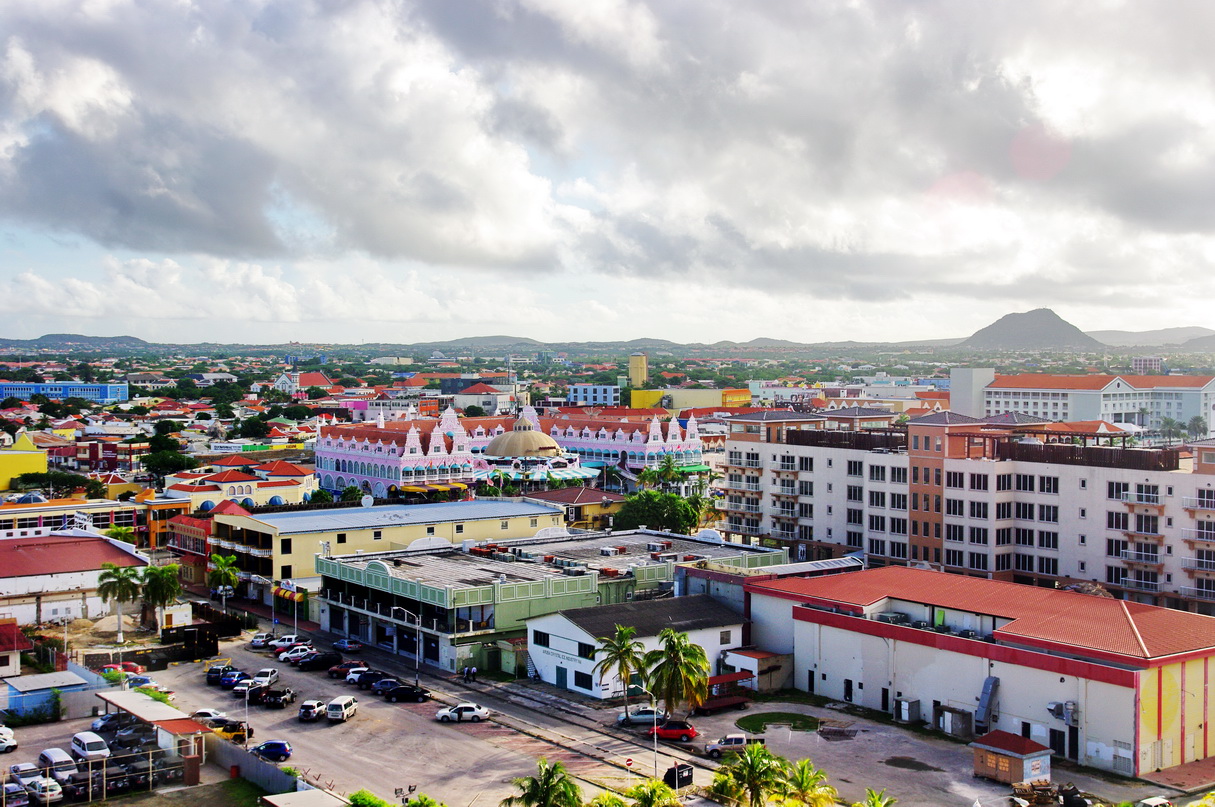 Photo: Bgabel · CC BY-SA 3.0
Travel Tips
Practical Oranjestad and Aruba travel tips: best time to visit, safety, getting around, money, entry rules and what to pack, from official sources.
These Oranjestad travel tips draw on the Aruba Tourism Authority for practical information and on the Government of Canada's travel advice for safety, and they say each time a fact comes from one of those sources.
Aruba is a constituent country of the Kingdom of the Netherlands, and Oranjestad is its capital. The island is small, dry and windy, with warm weather all year, and most visitors combine the capital with beaches on the west coast.
Rules, rates and conditions change, so check the official sources named in each section before you book.
The currency is the Aruban florin, but US dollars are widely accepted, and you may receive florins as change. Dutch and Papiamento are the official languages, and English and Spanish are widely spoken.
Queen Beatrix International Airport has a US preclearance facility. Cruise ships dock on the north side of downtown Oranjestad, a 5 to 10 minute walk from Lloyd G. Smith Boulevard.
The Government of Canada advises normal security precautions in Aruba. Petty crime occurs, so keep valuables and travel documents secure, and be careful on the water.
Fill in the online ED card before you travel, and bring a passport valid for your whole stay.
Aruba has warm weather and trade winds all year, with small differences between seasons.
The sunny, dry peak season, according to the tourism authority. Carnival events fill January and February.
The windier season. The trade winds pick up, which suits sailing, kite boarding and windsurfing.
The rainy season, with short, intermittent showers and still plenty of sunshine. Average rainfall is low through the year.
It runs from June 1 to November 30. The tourism authority says Aruba lies outside the main hurricane belt, with side effects such as wind changes or rain from passing storms. Travel.gc.ca asks visitors to follow forecasts and local advice.
In its October 2026 update, travel.gc.ca says El Niño conditions are present and expected to strengthen into 2027, which may raise the likelihood of drought, floods and severe storms. Check forecasts before you travel.
This section follows the Government of Canada's travel advice for Aruba, last updated on October 14, 2026.
Take normal security precautions in Aruba.
Pickpocketing, purse snatching, and theft from vehicles, hotel rooms and rental units occur. Never leave valuables on the beach or in a vehicle, and crime typically increases during Carnival.
Avoid unpopulated areas and unpatrolled beaches after dark, and check with local authorities about which beaches are safe.
Coastal waters can be dangerous, and rescue services may not meet Canadian standards. Check equipment and insurance before scuba diving, jet skiing or parasailing.
Penalties for possession, use or trafficking of illegal drugs are severe, and the island is used as a trafficking hub. Never carry a package that is not your own.
Taxis must be registered and have license plates marked TX. They are not metered, so agree on a fare before you leave.
Downtown is walkable, and the rest of the island is reached by bus, taxi or car.
A tram connects the cruise terminal with the center of town, with stops at monuments, museums and shopping areas.
The Arubus runs along the hotel strip, and the central bus station is in downtown Oranjestad next to the cruise terminal and Royal Plaza.
Taxis have no meters. Rates are fixed by destination in florins and US dollars, with extra charges on Sundays, holidays and late at night.
The tourism authority says a rental car lets you visit remote beaches and restaurants off the beaten path.
A guided 4x4 tour is the easiest way to reach the Natural Pool through rough terrain.
It depends on how far you want to roam.
No. Downtown Oranjestad is walkable, and a tram helps.
A rental car gives freedom to visit remote beaches and the interior.
Drive on the right. The speed limit is 30 km/h in urban areas, 60 km/h out of town and 80 km/h on faster roads. Travel.gc.ca adds that turning right on red is prohibited and that many drivers do not respect traffic laws.
Canadian driver's licenses are accepted, and travel.gc.ca advises carrying an international driving permit.
At most stations an attendant pumps the gas, and prices are the same everywhere because the government regulates them.
Most visitors arrive by air or by ship.
Queen Beatrix International Airport is near Oranjestad. Divi Aruba's listing places its resort ten minutes from the airport.
U.S.-bound passengers use a separate terminal building with a US pre-clearance facility.
The cruise port is on the north side of downtown. Surfside Beach is about 15 minutes on foot, and Eagle Beach is about ten minutes by car.
Every passenger, including infants and children, must complete the online ED card before arriving. It can be filled in up to a week before the trip.
Money advice follows the tourism authority and the Government of Canada.
The Aruban florin is the official currency, and US dollars are widely accepted. Some businesses will not accept US$50 or US$100 bills because of counterfeiting.
Major credit cards are accepted. ATM cards with a Cirrus, MasterCard, Maestro or Visa logo can withdraw cash at banks and at more than 50 locations.
Tipping is not mandatory but encouraged, and 15 to 20 percent is customary. Many restaurants add a service charge of about 15 percent for groups, which is shared among all the staff, so a tip for your server is a separate thank-you.
Fares are fixed, but a tip is welcome for good service.
The tourism authority says US health insurance is not accepted in Aruba, so be ready to pay by cash or card at medical facilities.
Pack light and casual, and bring what you need to stay healthy.
Aruba vacations are casual and comfortable, and the average annual temperature is about 82 degrees Fahrenheit.
Sun care is sold on the island, but bring your own everyday health and beauty products for convenience and cost.
Bring your prescription drugs. Prescriptions from doctors abroad are generally not honored at local pharmacies, and the specific drug may not be available.
Tap water is safe to drink, so you can refill a bottle.
Bring a passport valid for your whole stay. Travel.gc.ca says Dutch law requires you to carry valid identification, so keep a copy of your passport on you.
It is strictly prohibited to remove seashells, corals or beach sand from the island.
One day covers downtown Oranjestad. Three to five days let you add the beaches, the north coast and Arikok National Park without rushing.
The tourism authority gives December to April as the sunny, dry peak season, and also says February to August is a good time depending on your preferences. The rainy season runs from October to December, with short showers.
The Government of Canada advises normal security precautions in Aruba. Petty crime and theft from vehicles and hotel rooms occur, so do not leave valuables unattended, and avoid unpopulated areas and unpatrolled beaches after dark.
A valid passport for the duration of your stay and a completed online ED card, which you can fill in up to 7 days before you travel. Canadians do not need a tourist visa for stays of up to 90 days in a 180-day period, according to travel.gc.ca.
The Aruban florin (AWG), but US dollars are widely accepted. You may receive florins as change.
Yes. The tourism authority says tap water in Aruba is safe to drink and is produced by desalinating seawater.