

📍 Castries
Castries Market
The colorful market built in 1891, with produce, spices, crafts and Creole food. Saturday is the liveliest day.
📍 View on Google Maps →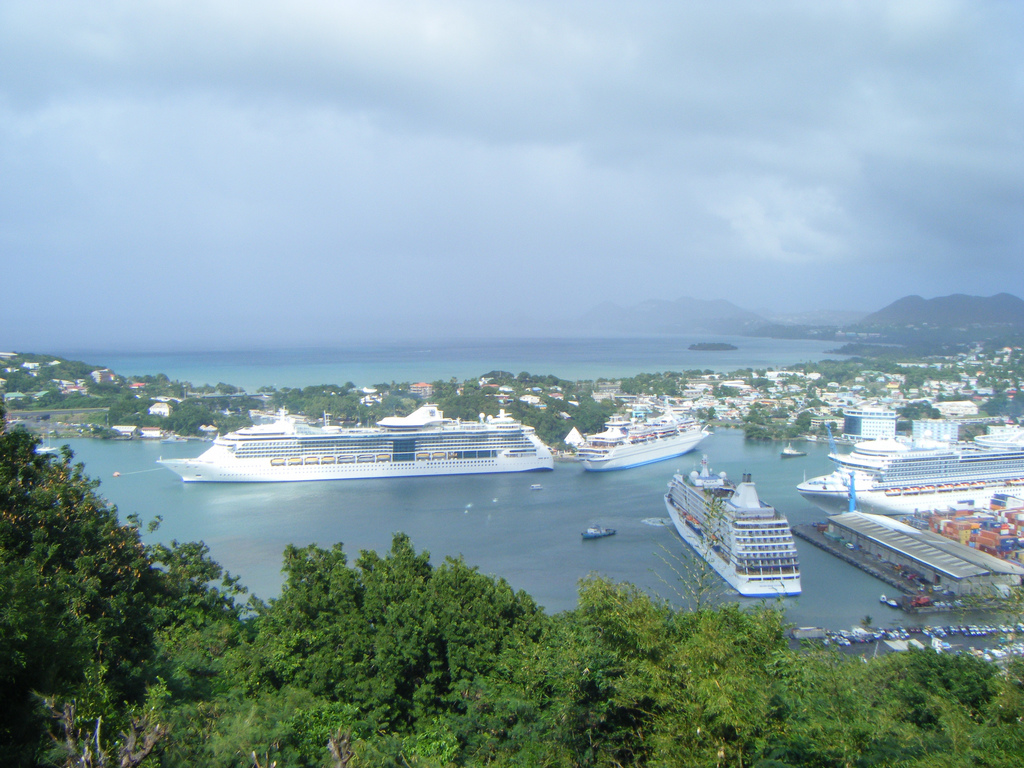 Photo: D G Brown · CC BY 2.0
Travel guide
The best things to do in Castries and Saint Lucia: Castries Market, Morne Fortune, Pigeon Island, Marigot Bay, the Pitons, Sulphur Springs and Gros Islet.
Last updated
The best things to do in Castries start in the capital: a market built in 1891, a square named for a Nobel poet and a hilltop fort above the harbor. The rest of Saint Lucia is reached by road.
The north has Rodney Bay, Pigeon Island and the Friday night street party in Gros Islet. The southwest has the Pitons, a UNESCO World Heritage Site, a drive-in volcano and botanical gardens.
The Saint Lucia Tourism Authority says the tropical climate and the trade winds make the island a year-round destination. This guide uses the authority's descriptions and the Government of Canada's travel advice for safety notes.
📍 Castries
The colorful market built in 1891, with produce, spices, crafts and Creole food. Saturday is the liveliest day.
📍 View on Google Maps →
📍 Castries
A shaded square named for the Nobel Prize-winning poet, with a large samaan tree and historic buildings around it.
📍 View on Google Maps →📍 Above Castries
A ridge above the harbor with old fortifications, cemeteries and panoramic views, open free of charge.
📍 View on Google Maps →
📍 Castries
The cruise port, with duty-free stores, local boutiques and harbor views.
📍 View on Google Maps →
📍 Gros Islet
An 18th-century fort, hilltop viewpoints, a small museum and a quiet beach on Rodney Bay.
📍 View on Google Maps →
📍 Rodney Bay
A long sandy beach with calm waters, water sports, restaurants and the Splash Island Water Park.
📍 View on Google Maps →
📍 Marigot Bay
A sheltered bay and marina with waterfront dining, boat trips and a viewpoint over the water.
📍 View on Google Maps →
📍 Soufrière
Gros Piton and Petit Piton, twin volcanic peaks rising from the sea and a UNESCO World Heritage Site.
📍 View on Google Maps →
📍 Soufrière
The Caribbean's only drive-in volcano, with steaming vents, bubbling pools and mud baths.
📍 View on Google Maps →
📍 Soufrière
Tropical gardens, mineral baths and a waterfall whose colors change with the mineral deposits.
📍 View on Google Maps →Markets, mud baths and mountains.
Fresh fruit, spices, handmade crafts and Creole treats.
Apply volcanic mud and rinse in warm spring water, near Soufrière.
A 4-kilometer round trip with a certified guide, about four to six hours.
Music, grilled seafood and Caribbean street food every Friday.
Warm mineral waters once used by French troops, among tropical gardens.
Squares, hills and beaches cost nothing.
Shade from a large samaan tree and the bronze busts of two Nobel laureates.
The National Trust says there is no fee to enter the sites.
Calm water minutes from the center.
A long beach in Rodney Bay with restaurants and the marina close by.
One of the island's most photographed views.
Calm water and shows for all ages.
A floating inflatable water park on Reduit Beach with slides and obstacle courses.
Calm waters and a long shoreline, according to the tourism authority.
Short trails, old cannons and a quiet beach.
Tropical plants and a colorful waterfall.
The tourism authority's family page lists resorts with water parks and kids clubs.
Sunsets, bays and the Pitons.
A calm bay framed by green hills.
Dasheene faces the Pitons from a ridge about 1,000 feet above the sea, according to its website.
Hilltop views over Rodney Bay.
Sugar Beach sits between Gros Piton and Petit Piton.
The tourism authority says the weather stays warm all year, with a drier season from December to May and a rainy season from June to December.
The busiest and driest part of the year. The Saint Lucia Jazz & Arts Festival runs from April 30 to May 9, 2027. Travel.gc.ca notes that petty crime increases around festivals and the winter holiday season.
The rainy season begins, with short showers followed by sunshine. Carnival takes over the island in July, and the hurricane season starts in early June, according to travel.gc.ca.
The tail of the rainy and hurricane seasons. October is Creole Heritage Month, with events across the island, and the hurricane season ends at the end of November.
Saint Lucia is small, but its roads are winding, so plan each area as its own outing.
Neighborhood
The market, Derek Walcott Square, the cathedral, Pointe Seraphine and Morne Fortune.
Neighborhood
Reduit Beach, the marina, Pigeon Island and the Friday night street party.
Neighborhood
A sheltered harbor with a marina, restaurants and a viewpoint.
Neighborhood
The Pitons, Sulphur Springs, Diamond Falls and Toraille Waterfall on the southwest coast.
Neighborhood
The south of the island, beside Hewanorra International Airport.
See our full Best Hotels in Castries guide for the best areas, and plan smoothly with our Castries travel tips.
Visit Castries Market on a Saturday morning, then see Derek Walcott Square and the cathedral on foot and finish at Morne Fortune for the view.
The capital is a port. Vigie Beach is minutes from the center, and Reduit Beach in Rodney Bay is the most popular beach in the north, according to the tourism authority.
Coastal waters can be dangerous, riptides are common, and beaches are unsupervised with no warning flags, according to travel.gc.ca. Never swim alone, and ask residents or tour operators about safe areas.
Yes, but travel.gc.ca says even small tropical storms can quickly develop into major hurricanes between early June and the end of November. Follow forecasts and local advice.
Yes. The tourism authority says a certified local guide is required for both Gros Piton and Petit Piton. Gros Piton is 798 meters and takes about four to six hours, and Petit Piton is 743 meters and a steeper scramble.