
Currency & Language
The currency is the Eastern Caribbean dollar (XCD), and US dollars are widely accepted. English is the official language, and Saint Lucian Creole (Kwéyòl) is widely spoken, according to the tourism authority.
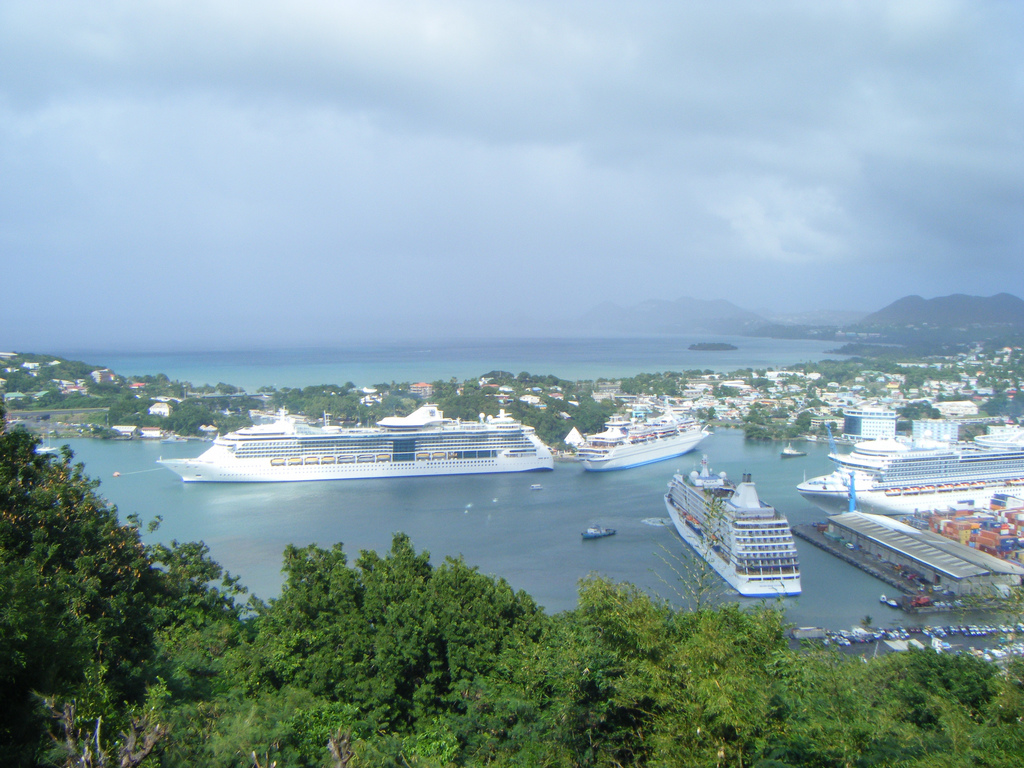 Photo: D G Brown · CC BY 2.0
Travel Tips
Practical Castries and Saint Lucia travel tips: best time to visit, safety, getting around, money, entry rules and what to pack, from official sources.
These Castries travel tips draw on the Saint Lucia Tourism Authority for practical information and on the Government of Canada's travel advice for safety, and they say each time a fact comes from one of those sources.
Castries is the capital of Saint Lucia. The island is small, warm all year and volcanic, and most visitors combine the capital with beaches in the north and the Pitons in the southwest.
Rules, rates and conditions change, so check the official sources named in each section before you book.
The currency is the Eastern Caribbean dollar (XCD), and US dollars are widely accepted. English is the official language, and Saint Lucian Creole (Kwéyòl) is widely spoken, according to the tourism authority.
Hewanorra International Airport in Vieux Fort is 40 miles south of Castries. George F.L. Charles Airport, just outside Castries, is an inter-island airport, according to the tourism authority.
The Government of Canada advises normal security precautions. Petty crime occurs and violent crime has increased, so stay aware of your surroundings.
Bring a valid passport and complete the electronic immigration form within three days before you arrive by air.
Saint Lucia has warm weather all year.
The average temperature ranges from 23 to 31 degrees Celsius, with cooling trade winds, according to the tourism authority.
The tourism authority recommends December to May for Castries, when the weather is warm, sunny and dry.
It runs from June to December, with more rain in the rainforest than on the coast. Showers are usually brief.
It runs from early June to the end of November. Travel.gc.ca says even small tropical storms can quickly develop into major hurricanes, and asks visitors to follow forecasts and local advice.
Travel.gc.ca says Saint Lucia is in an active seismic zone and that a tsunami risk exists on the coast.
This section follows the Government of Canada's travel advice for Saint Lucia, last updated on May 26, 2026.
Take normal security precautions in Saint Lucia.
Pickpocketing and purse snatching occur and increase around festivals, Carnival and the winter holiday season.
Violent crime, including gun violence, has increased over the past year, particularly in Vieux Fort. Be aware of your surroundings, avoid walking alone after dark, avoid isolated areas and avoid showing signs of affluence.
Card and ATM fraud may occur, so use ATMs in well-lit public areas or inside a bank or business.
Coastal waters can be dangerous, riptides are common and beaches are unsupervised. Never swim alone.
Saint Lucia regularly experiences water shortages, and authorities may impose rationing.
Women travelling alone may be subject to harassment, verbal abuse and sexual assault, according to the Government of Canada.
The center of Castries is walkable, and the rest of the island is reached by road, sea or air.
The market, Derek Walcott Square and the cathedral are close together, and the tourism authority recommends comfortable shoes.
Authorized taxis have a blue number plate with a TX prefix. Travel.gc.ca says taxis do not use meters, so negotiate the fare in advance and keep small bills handy.
The main transport of local residents, with green number plates starting with M. The tourism authority gives fares from EC$2.50 to EC$8.00, and travel.gc.ca warns they can be unsafe because of speed.
The tourism authority names Allez, a local rideshare app, with upfront fare estimates and cashless payment.
Ferries link Saint Lucia with Martinique, and helicopter transfers connect Hewanorra and George F.L. Charles airports, according to the tourism authority.
It depends on how far you want to roam.
No. The center of Castries is walkable.
A car or a tour helps for the Pitons and the south, which are a long drive from the north.
Traffic drives on the left. Travel.gc.ca says drivers do not always respect traffic laws, and road conditions are generally good across the island.
You need a temporary permit. The legal age to drive is 17 and the legal age to rent a car is 25, according to travel.gc.ca.
Most visitors arrive by air or by ship.
Hewanorra International Airport is in Vieux Fort, about 1 hour 15 minutes by car from Castries, according to the tourism authority.
Pointe Seraphine is the key cruise port and shopping area in Castries.
Complete one electronic immigration form per family or group within three days before arrival by air, according to travel.gc.ca.
It is included in the ticket for air passengers over 12. By sea it is EC$33 or US$13, according to the tourism authority.
Children travelling unaccompanied or with one parent may need a notarized consent letter and proof of parentage, according to travel.gc.ca.
Money advice follows the tourism authority and the Government of Canada.
The currency is the Eastern Caribbean dollar, and US dollars are widely accepted.
Payments at Castries Market are in Eastern Caribbean dollars, most vendors also accept US dollars and cash is preferred, according to the tourism authority's stories.
Check whether a service charge is already on your bill before you add a tip.
Medical services are expensive and often expect immediate payment, according to travel.gc.ca, which advises insurance that covers medical evacuation.
Pack light, and bring sun and rain protection.
The tourism authority recommends light, breathable clothing year-round, with swimwear, sunscreen and a hat.
A light rain jacket or umbrella helps in the rainy season, especially on rainforest trails.
Needed for hiking and for walking in towns and villages.
Travel.gc.ca says dengue is a risk to travellers and advises protecting yourself from mosquito bites at all times.
Some prescription medications may not be available in Saint Lucia, so bring enough, according to travel.gc.ca.
It is illegal for anyone who is not a member of the police force to wear camouflage clothing, according to travel.gc.ca.
One day covers the market, the square and Morne Fortune. Three to five days let you add Rodney Bay, Pigeon Island, Marigot Bay and the Pitons.
December to May, when the weather is warm, sunny and dry, according to the tourism authority's Castries page. The weather stays warm all year, with an average temperature between 23 and 31 degrees Celsius.
The Government of Canada advises normal security precautions. Violent crime, including gun violence, has increased over the past year, particularly in Vieux Fort. Avoid walking alone after dark and avoid isolated areas.
A valid passport. Canadians do not need a tourist visa for stays up to six weeks, and air travelers must complete an electronic immigration form within three days before arrival, according to travel.gc.ca. Officials may ask for a return ticket, proof of accommodation and proof of funds.
The Eastern Caribbean dollar (XCD). US dollars are widely accepted, according to travel.gc.ca and the tourism authority.
The left. Visitors need a temporary driving permit, which car rental agencies, the airport immigration desk and police stations issue on presentation of a valid driver's licence.