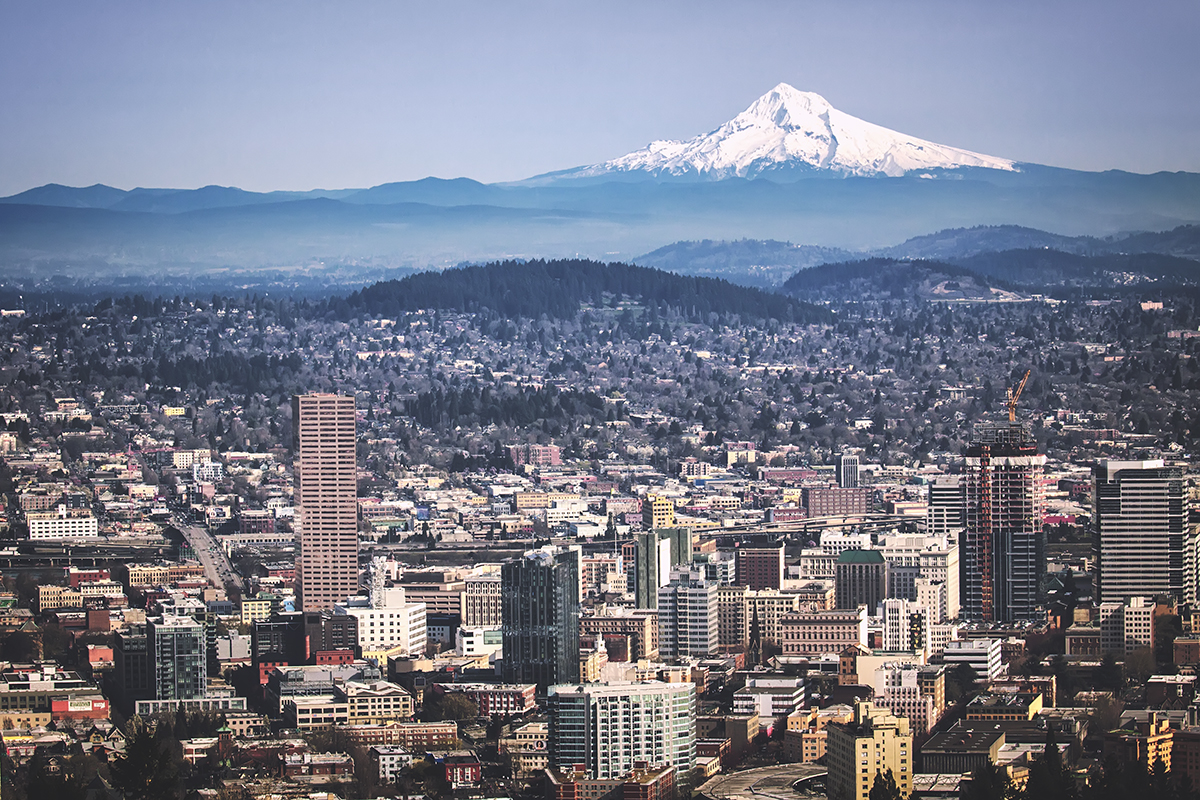
Portland landmarks
Photo: Steven Pavlov · CC BY-SA 4.0

Landmarks

Portland's Most Iconic Landmarks

A deep guide to Portland's iconic landmarks: Powell's, the Rose Test Garden, the Japanese Garden, Pittock Mansion, the bridges and Multnomah Falls.

Portland grew up as a river port where the Willamette meets the Columbia, on land that has been home for thousands of years to Indigenous peoples, including Chinookan peoples who traded along the rivers.

The city was incorporated in 1851, and its name was decided by a coin toss between two founders, one from Portland, Maine, and one from Boston. The original coin, the Portland Penny, is displayed at the Oregon Historical Society.

As the city grew, it built a remarkable series of bridges across the Willamette, set aside huge areas of forest and parkland in the West Hills and became known as the City of Roses after the Rose Festival began in 1907.

In the late twentieth century, it tore out a riverside highway to create a waterfront park, and it became a pioneer of light rail and urban planning.

Today, Portland's landmarks tell all of these stories: gardens and forests, a mansion in the hills, a bookstore that fills a city block, bridges of every style and the waterfalls of the Columbia River Gorge just outside town.

This guide explains what to see, why it matters and how to visit, with practical tips for each landmark.

Bookstore · Pearl District · 1971

Powell's City of Books

A bookstore that fills an entire city block with new and used books.

Powell's began in 1971 and grew into one of the best known independent bookstores in the world. Its flagship on West Burnside fills a full city block, with new and used books shelved side by side in color-coded rooms that make it easy to wander for hours.

The store is a Portland institution and a rainy day refuge. Its Rare Book Room holds signed and collectible editions, and the store hosts author events throughout the year.

Visiting

Powell's is open daily. Pick up a store map at the entrance and allow at least an hour. It is a short walk from downtown and on the streetcar line.

Insider tip: Find the Rare Book Room on the upper floor, and check the events calendar for author readings.

📍 View on Google Maps →

Garden · Washington Park · 1917

International Rose Test Garden

Terraces of roses above the city, with views to Mount Hood on clear days.

Founded in 1917 during World War I to protect European rose varieties, the International Rose Test Garden is the oldest continuously operating public rose test garden in the United States. Today, more than 10,000 rose bushes grow on its terraces in Washington Park.

The garden is where new varieties are tested, and it gave Portland its nickname, the City of Roses. On a clear day, Mount Hood rises above the downtown skyline beyond the beds.

Visiting

The garden is free and open daily. The roses peak from late May to the end of June. Parking nearby is paid and limited, so consider the light rail to Washington Park station.

Insider tip: Visit in the early morning in June for soft light, fewer people and the best scent.

📍 View on Google Maps →

Garden · Washington Park · 1967

Portland Japanese Garden

A serene garden of ponds, moss, maples and stone in the West Hills.

The Portland Japanese Garden opened in 1967, a few years after Portland and Sapporo became sister cities. It brings together several traditional garden styles, from a strolling pond garden to a sand and stone garden, on a hillside above the city.

In 2017, the garden opened its Cultural Village, designed by the Japanese architect Kengo Kuma, with a cafe, a gallery and a library. The garden is beautiful in every season, with spring blossoms, summer greens and famous red maples in autumn.

Visiting

Admission is charged, and timed tickets are recommended, especially on weekends. Check the current hours and closures before you go. Allow one and a half to two hours.

Insider tip: Go early on a weekday and save the view from the pavilion terrace for the end of your visit.

📍 View on Google Maps →

Garden · Old Town Chinatown · 2000

Lan Su Chinese Garden

A walled Suzhou-style garden that fills a city block in Old Town.

Lan Su Chinese Garden was built by artisans from Suzhou, Portland's sister city in China, and opened in 2000. It recreates a scholar's garden of the Ming dynasty, with a lake, covered walkways, pavilions, rockeries and carefully chosen plants.

The garden's teahouse serves tea and snacks in a two-story pavilion overlooking the water, and seasonal events celebrate festivals such as Lunar New Year.

Visiting

Admission is charged. The garden is in Old Town, a short walk from the light rail. Allow an hour, more if you stop at the teahouse.

Insider tip: Visit on a rainy day, when the garden is quiet and the rain on the roofs adds to the atmosphere.

📍 View on Google Maps →

Historic house · West Hills · 1914

Pittock Mansion

A French Renaissance style mansion with one of the best views over Portland.

Pittock Mansion was completed in 1914 for Henry Pittock, publisher of The Oregonian, and his wife, Georgiana. Built of local sandstone high in the West Hills, the house mixed fine craftsmanship with modern comforts of its time.

The city bought the house in the 1960s, and it is now a museum with furnished rooms. The lawn in front of the house offers a sweeping view over the city to Mount Hood and, on very clear days, other Cascade volcanoes.

Visiting

The grounds are free; admission is charged for the house. You can drive and park, or hike up from Lower Macleay Park on the Wildwood Trail. Allow one to two hours.

Insider tip: Come for sunset, when the city lights come on below and the mountain glows.

📍 View on Google Maps →

Urban forest · Northwest · 1948

Forest Park

One of the largest urban forests in the United States, with miles of trails.

Forest Park was officially dedicated in 1948 and covers more than 5,000 acres of forest in the hills northwest of downtown. Its trail network runs to more than 80 miles, including the long Wildwood Trail.

The park protects a forest of Douglas firs, western red cedars, ferns and moss, with streams and wildlife only minutes from city streets. The Lower Macleay Trail, with its stone ruin known as the Witch's Castle, is a popular entry point.

Visiting

The park is free and open daily. Wear good shoes, as trails can be muddy in the rainy season. Allow one to four hours.

Insider tip: Start at Lower Macleay Park and walk up Balch Creek to the stone ruin, then continue to Pittock Mansion if you have energy.

📍 View on Google Maps →

Art museum · Downtown · Founded in 1892

Portland Art Museum

The oldest art museum in the Pacific Northwest, expanded with the Rothko Pavilion.

Founded in 1892, the Portland Art Museum is the oldest art museum in the Pacific Northwest. Its collections include Native American art, Asian art, European and American paintings, photography and modern and contemporary works.

After a major renovation and expansion, the museum reopened its campus on November 20, 2025, with the new glass Mark Rothko Pavilion connecting its buildings. Rothko grew up in Portland.

Visiting

The museum is on the South Park Blocks downtown. Admission is charged; check the website for current hours and free days. Allow two to three hours.

Insider tip: Combine your visit with a walk along the South Park Blocks and the Oregon Historical Society across the street.

📍 View on Google Maps →

Public square · Downtown · 1984

Pioneer Courthouse Square

Portland's living room, a brick-paved square in the heart of downtown.

Pioneer Courthouse Square opened in 1984 on the site of a former hotel and later a parking lot. Thousands of residents bought engraved bricks to help pay for it, and their names still pave the square.

The square hosts concerts, markets, festivals and the holiday tree each winter. It faces the Pioneer Courthouse, the oldest federal building in the Pacific Northwest, and it is a hub for the light rail.

Visiting

The square is free and open daily. Check the events calendar for concerts and markets. Allow 15 minutes, or longer during events.

Insider tip: Look for the weather machine sculpture, which announces the forecast at noon.

📍 View on Google Maps →

Park · Downtown · 1978

Tom McCall Waterfront Park

A riverside park built on the site of a former highway.

Tom McCall Waterfront Park runs along the west bank of the Willamette, on land once occupied by Harbor Drive, a highway that the city removed in the 1970s. Named after the Oregon governor who supported it, the park is a symbol of Portland's planning history.

The park hosts the Rose Festival, the Waterfront Blues Festival and the Portland Saturday Market nearby. In spring, its rows of cherry trees bloom along the river.

Visiting

The park is free and open daily. Combine it with a loop across the Steel Bridge and the Eastbank Esplanade. Allow 30 minutes to two hours.

Insider tip: Visit in late March or early April for the cherry blossoms.

📍 View on Google Maps →

Bridge · St Johns · 1931

St Johns Bridge

A green suspension bridge with Gothic towers over the Willamette.

The St Johns Bridge opened in 1931, with Gothic-style towers rising above the river in North Portland. Its green color and slender cables make it one of the most beautiful bridges in the city.

Below the bridge, Cathedral Park takes its name from the arches that frame the river like a cathedral nave. The neighborhood of St Johns has its own small town feel, with shops and cafes.

Visiting

The bridge is free to cross on foot or by bike, and Cathedral Park lies below it. It is about 20 minutes by car from downtown. Allow an hour with the park.

Insider tip: Photograph the arches from Cathedral Park in the late afternoon.

📍 View on Google Maps →

Waterfall · Columbia River Gorge · Natural landmark

Multnomah Falls

A two-tier waterfall in the Columbia River Gorge, east of Portland.

Multnomah Falls drops about 620 feet in two tiers, making it the tallest waterfall in Oregon. Fed by springs and snowmelt, it flows all year and is especially powerful in winter and spring.

A stone footbridge, the Benson Bridge, crosses between the two tiers, and the historic Multnomah Falls Lodge sits at the base. The falls are one of the most visited natural sites in the Pacific Northwest.

Visiting

In 2026, a timed use permit was required for the Interstate 84 parking lot daily from 9 in the morning to 6 in the evening between May 22 and September 7. Check current rules on Recreation.gov before you go. Allow one to two hours.

Insider tip: Arrive early in the morning, and combine the falls with Vista House at Crown Point.

📍 View on Google Maps →

Frequently Asked Questions

What are the best landmarks to see if I only have limited time in Portland?

Start with Powell's City of Books and the Pearl District, then take the light rail or a bus up to Washington Park for the International Rose Test Garden and the Japanese Garden. End the day with sunset at Pittock Mansion or a walk along Tom McCall Waterfront Park.

Which Portland landmarks are free to visit?

The International Rose Test Garden, Forest Park, Hoyt Arboretum, Tom McCall Waterfront Park, Pioneer Courthouse Square, the grounds of Pittock Mansion and the bridges are free. The Japanese Garden, Lan Su Chinese Garden, Pittock Mansion's interior and the Portland Art Museum charge admission.

How do I get to Washington Park without a car?

Take the MAX Blue or Red Line to Washington Park station, then walk the trails to the gardens or check whether the seasonal park shuttle is running. Parking in the park is paid and fills up quickly on sunny weekends.

When do the roses bloom in Portland?

The International Rose Test Garden usually peaks from late May through June, around the time of the Portland Rose Festival, and roses keep blooming into early fall.

Is the Columbia River Gorge worth a day trip from Portland?

Yes. Multnomah Falls, Vista House at Crown Point and the Historic Columbia River Highway are less than an hour from downtown. In summer, a timed use permit was required for the Multnomah Falls parking lot on Interstate 84 in 2026, so check the rules before you go.

When is the best time to visit Portland's landmarks?

July to September offers the most reliable sunshine for gardens and viewpoints. Spring brings blossoms and full waterfalls, while fall brings color to the Japanese Garden and Forest Park. In the rainy season, plan indoor landmarks and gardens for dry spells.