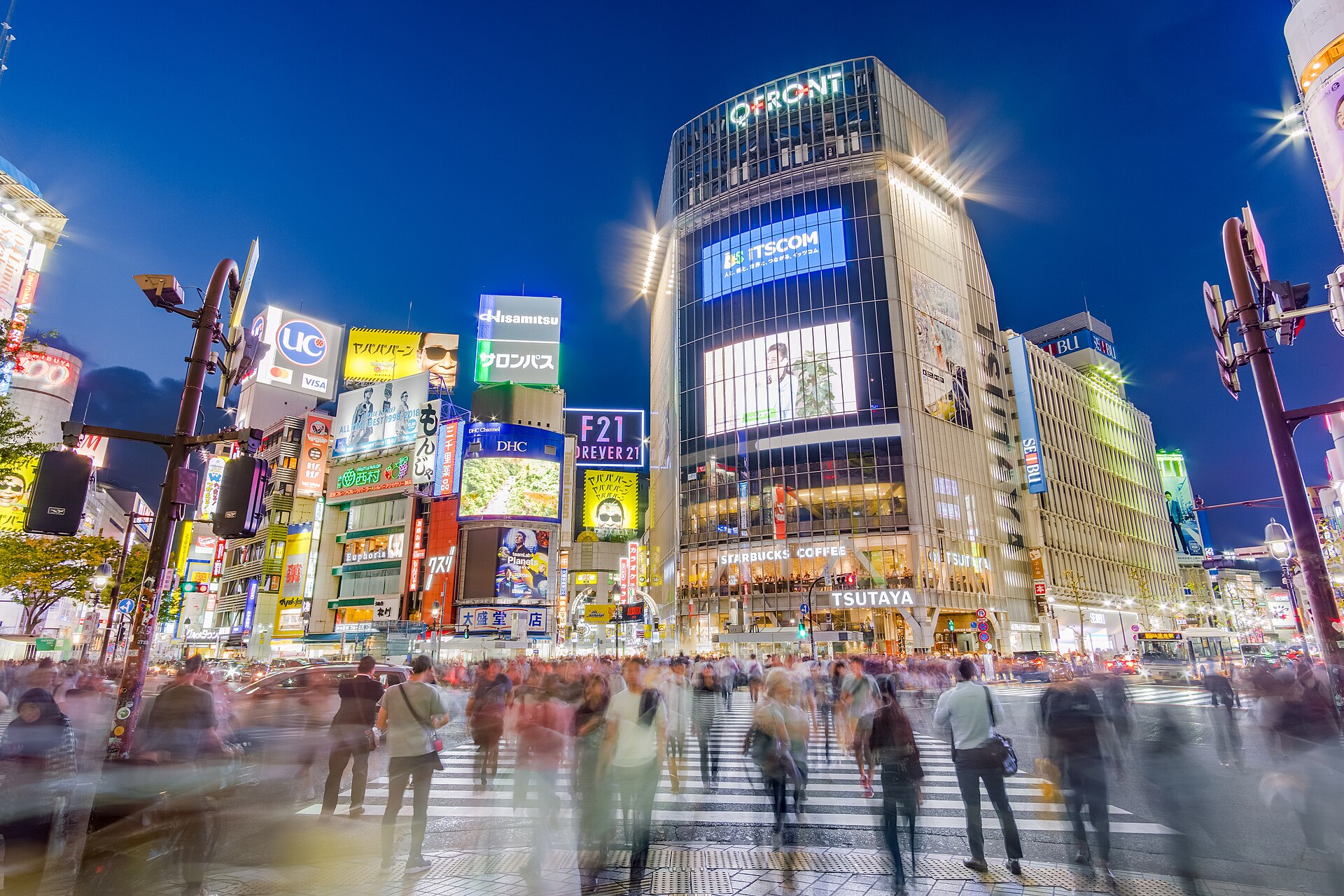
Tokyo landmarks
Photo: David Kernan · CC BY 4.0

Landmarks

Tokyo's Most Iconic Landmarks

Explore Tokyo's most iconic landmarks, from Senso-ji Temple and Tokyo Skytree to Shibuya Crossing and the Imperial Palace, with neighborhoods, tips and visiting notes.

Tokyo is a city that layers centuries of history over relentless reinvention, and nowhere is that clearer than in its landmarks. In a single day you can bow before an incense cloud at a temple founded in the seventh century, then ride an elevator up one of the tallest towers on earth. The contrasts are not accidental. They are the rhythm of the place.

This guide gathers eleven of the sights that define the skyline and the soul of the capital. Some are sacred, some are engineering feats, and a few are simply intersections and bridges that somehow became symbols. Each entry sits in a distinct neighborhood, so the list doubles as a loose map for building your own route across the city.

Use it as a starting point rather than a checklist. Tokyo rewards the traveler who lingers, who ducks down a side street near a famous gate, or who returns to a viewpoint after dark. The landmarks below are the anchors. The city between them is the reason to come.

Buddhist temple · Asakusa · 645

Senso-ji Temple

Tokyo's oldest temple and its most beloved.

Senso-ji is the spiritual heart of old downtown Tokyo, a Buddhist temple dedicated to Kannon, the goddess of mercy. According to legend it was founded after two fishermen pulled a small statue of Kannon from the Sumida River, and a temple has stood here in some form ever since. The present buildings are postwar reconstructions, faithful to the forms lost in the bombing of the city.

Approaching from the great Kaminarimon gate, with its enormous red lantern, you enter Nakamise, a shopping street that has served pilgrims for generations. Vendors sell rice crackers, folding fans and sweet bean cakes along the approach to the main hall. Beyond the second gate the five-story pagoda rises to one side and the incense cauldron sits before the hondo, where visitors waft the smoke toward themselves for health.

The temple is busy from morning to night, yet it never loses its sense of devotion. Come early and you will find worshippers arriving before the crowds, drawing paper fortunes and lighting candles in the quiet.

Visiting

The temple grounds are open and accessible throughout the day, with the main hall interior open during posted daytime hours. Reach it via Asakusa Station, served by the Ginza, Asakusa and Tobu lines, a short walk from the Kaminarimon gate.

Insider tip: Visit at night when the crowds thin and the gates and pagoda are illuminated against the dark.

📍 View on Google Maps →

Broadcasting and observation tower · Sumida · 2012

Tokyo Skytree

The tallest tower in Japan, soaring above the old east.

Tokyo Skytree is a broadcasting and observation tower that redefined the eastern skyline when it opened. At 634 meters it is one of the tallest structures in the world, its lattice silhouette designed to evoke both a traditional pagoda and cutting-edge engineering. The number 634 can be read in Japanese as Musashi, the historic name for the region.

Two observation levels reward the climb. The lower Tembo Deck wraps the tower in glass, including a stretch of transparent floor, while the higher Tembo Galleria spirals upward in a gently sloping ramp that seems to float in the air. On a clear day the view stretches to Mount Fuji far to the southwest.

At the tower's base sits a sprawling complex of shops, restaurants and an aquarium, so the visit can easily fill an afternoon whether or not you ascend. The structure is engineered to resist earthquakes with a central column that counterbalances the outer frame.

Visiting

Tickets are sold for the observation decks, with timed entry available in advance and on the day. The tower connects directly to Tokyo Skytree Station on the Tobu line and Oshiage Station on the Hanzomon and Asakusa lines.

Insider tip: Buy timed tickets ahead for sunset to catch both the daylight panorama and the city lighting up.

📍 View on Google Maps →

Communications and observation tower · Minato · 1958

Tokyo Tower

The orange and white beacon of the postwar city.

Tokyo Tower is the older of the city's two great towers, a lattice structure painted in international orange and white and modeled loosely on the Eiffel Tower. Built during Japan's postwar recovery, it stood as the tallest structure in the country for decades and became an enduring emblem of a nation rebuilding and rising.

Despite being surpassed in height by the Skytree, the tower has never lost its affection among residents. It offers two observation levels, and the Main Deck gives sweeping views over the low-rise temple district and the towers of Roppongi and Shiodome beyond. At night the illumination shifts with the seasons and for special occasions.

The tower photographs beautifully from the surrounding streets, framed between buildings or rising behind the grounds of nearby Zojo-ji. Many visitors find the approach as memorable as the ascent itself.

Visiting

The observation decks are open to ticketed visitors during posted hours. The tower is a walk from Akabanebashi Station on the Oedo line, Kamiyacho on the Hibiya line, or Onarimon on the Mita line.

Insider tip: Photograph the tower rising behind the gate of Zojo-ji temple, a short walk away, for a classic old-and-modern contrast.

📍 View on Google Maps →

Shinto shrine · Shibuya · 1920

Meiji Shrine

A vast forest sanctuary in the middle of the metropolis.

Meiji Shrine is a Shinto shrine dedicated to the deified spirits of Emperor Meiji and Empress Shoken, under whose reign Japan opened to the modern world. It sits within a dense, manmade forest of well over a hundred thousand trees, donated from across the country and planted so that the woodland would mature naturally over generations.

Entering beneath towering wooden torii gates, the roar of the city falls away almost at once. Gravel paths wind through the green toward the main shrine buildings, where visitors offer prayers, write wishes on wooden plaques and, on lucky days, glimpse a traditional wedding procession crossing the courtyard.

The shrine is one of the most visited in Japan, especially over the New Year holiday when millions come to make their first prayers of the year. Yet the forest is large enough to absorb the crowds, and quiet corners are never far away.

Visiting

The shrine grounds open around dawn and close around dusk, with times shifting by season. Access is easiest from Harajuku Station on the Yamanote line or Meiji-jingumae Station on the Chiyoda and Fukutoshin lines.

Insider tip: Enter from the Harajuku side in the early morning for the most peaceful walk through the forest approach.

📍 View on Google Maps →

Pedestrian scramble crossing · Shibuya · 1973

Shibuya Crossing

The world's busiest crossing and the pulse of youth culture.

Shibuya Crossing is a scramble intersection outside Shibuya Station where, on each signal change, pedestrians surge across from every direction at once. At peak times thousands cross in a single cycle, umbrellas and shopping bags weaving into a choreography that has become shorthand for Tokyo itself.

The crossing sits at the center of one of the city's great commercial and entertainment districts, ringed by giant video screens, department stores and the neon of countless shops. It has featured in films and photographs so often that many arrive already feeling they know it, only to be surprised by the sheer scale of the human flow.

Around the crossing the neighborhood pulses with fashion boutiques, music venues and restaurants that draw a young crowd late into the night. The statue of the loyal dog Hachiko waits nearby, a favorite meeting point and a story worth knowing before you visit.

Visiting

The crossing is a public street, free and open at all times, busiest in the evenings and on weekends. It lies directly outside Shibuya Station, a major hub on the Yamanote line and several subway and private railways.

Insider tip: For the classic overhead view, look from an upper-floor cafe or the walkway overlooking the intersection rather than from the street.

📍 View on Google Maps →

Royal residence and gardens · Chiyoda · 1888

Imperial Palace

The residence of the Imperial Family, ringed by moats and pine.

The Imperial Palace is the residence of the Emperor of Japan, built on the grounds of the former Edo Castle at the very center of the city. Broad moats, massive stone ramparts and ancient pine trees enclose a compound that remains largely private, a green heart amid the office towers of Marunouchi.

While the inner grounds are generally closed, the surrounding East Gardens are open to the public and preserve the foundations of the old castle keep along with seasonal plantings and quiet lawns. The Nijubashi bridges, framed against a guard tower, form one of the most photographed views in the country.

The outer plaza and the broad avenues around the moat have become a favorite circuit for runners and cyclists. Walking the perimeter gives a sense of the scale of the Edo-era fortress that once controlled the whole plain.

Visiting

The East Gardens are open to visitors on most days, with certain closing days each week, and guided tours of the inner grounds can be reserved in advance. The palace is a short walk from Tokyo Station and Otemachi Station.

Insider tip: Combine a walk around the East Gardens with the view of the Nijubashi bridges from the outer plaza.

📍 View on Google Maps →

Fish markets · Chuo and Koto · 2018

Tsukiji and Toyosu

The legendary heart of Tokyo's seafood, old and new.

For decades the Tsukiji fish market was the largest wholesale seafood market in the world, its predawn tuna auctions the stuff of legend. In 2018 the wholesale operations moved to a modern facility at Toyosu, purpose-built with viewing galleries that let visitors watch the auctions and trading floors from above without disrupting the work.

At Toyosu the scale is staggering, with vast climate-controlled halls and observation decks explaining the flow of fish from boat to buyer. The tuna auction, once glimpsed only by the persistent few, can now be viewed through glass by visitors who arrive early enough.

Meanwhile the original Tsukiji site lives on as the Outer Market, a warren of stalls and small restaurants selling knives, dried goods and some of the freshest sushi and street food in the city. Together the two sites tell the story of how a beloved institution modernized without losing its flavor.

Visiting

The Toyosu Market offers public viewing areas on designated open days, reached via the Yurikamome line to Shijo-mae Station. The Tsukiji Outer Market is a walk from Tsukiji Station on the Hibiya line and remains open to browsers and diners.

Insider tip: For the freshest experience, go early in the morning when the stalls and sushi counters are at their liveliest.

📍 View on Google Maps →

Railway station · Chiyoda · 1914

Tokyo Station

A red-brick gateway where the whole country converges.

Tokyo Station is the central railway hub of the nation, the point from which the shinkansen bullet trains fan out to the north, west and south. Its Marunouchi facade is a stately red-brick structure with domed wings, a rare survival of early twentieth-century architecture that has been meticulously restored to its original form.

Beneath and around the historic building lies an enormous modern complex of platforms, underground concourses and shopping streets. Character Street and the sweets arcades draw travelers with regional snacks and souvenirs, and it is easy to spend an hour underground without ever seeing daylight.

Step outside onto the plaza facing the Imperial Palace and the restored brickwork glows at dusk, framed by the glass towers of the business district. The station is not merely a place to pass through, but a landmark in its own right.

Visiting

The station concourses and shopping areas are open daily, following the long operating hours of the rail network. It is a stop on the Yamanote line, numerous other JR lines, the shinkansen and the Marunouchi subway line.

Insider tip: Walk out to the Marunouchi plaza at dusk to see the illuminated brick facade reflected in the surrounding glass.

📍 View on Google Maps →

National garden · Shinjuku · 1906

Shinjuku Gyoen

A serene garden of three styles beneath the skyscrapers.

Shinjuku Gyoen is one of the city's largest and most graceful gardens, laid out in the early twentieth century on the grounds of a former feudal estate. It blends three distinct styles within its walls: a formal French garden of symmetrical avenues, an English landscape garden of open lawns, and a traditional Japanese garden with ponds, bridges and teahouses.

The park is famous for its cherry blossoms in spring, when a wide range of varieties extends the flowering season across many weeks. In autumn the maples and ginkgo turn the paths gold and crimson, and even in winter the greenhouse shelters tropical plants against the cold.

Because the garden charges admission and closes at set hours, it remains calmer than many public parks, a place for slow walks and picnics on the grass with the towers of Shinjuku rising just beyond the trees.

Visiting

The garden charges an entry fee and is open during posted daytime hours, with a regular weekly closing day. It is a short walk from Shinjuku-gyoemmae Station on the Marunouchi line and from Shinjuku and Sendagaya stations.

Insider tip: Come during cherry blossom season for one of the finest and least frantic hanami spots in central Tokyo.

📍 View on Google Maps →

Suspension bridge · Minato and Koto · 1993

Rainbow Bridge

A twin-deck span linking the city to the bay.

The Rainbow Bridge is a suspension bridge crossing northern Tokyo Bay, connecting the mainland districts with the artificial island of Odaiba. Its white towers and double-deck structure carry roads, a rail line and a pedestrian walkway across the water, and at night colored illumination gives the bridge its evocative name.

From Odaiba the bridge forms the centerpiece of a waterfront panorama that takes in the bay, the distant towers of the city and, on clear evenings, silhouettes against the sunset. The walk across the pedestrian deck offers changing views of the harbor and the skyline throughout.

The bridge has become one of the defining images of modern waterfront Tokyo, a favorite of photographers and a reminder that the city faces the sea as much as it climbs skyward.

Visiting

The pedestrian promenade is open during posted daytime hours, while the roadway and rail line operate on their own schedules. Reach the Odaiba side via the Yurikamome line, which crosses the bridge itself for memorable views.

Insider tip: Ride the elevated Yurikamome line across the bridge for a moving panorama, then return on foot along the promenade.

📍 View on Google Maps →

Buddhist temple · Minato · 1393

Zojo-ji Temple

An ancestral temple of the shoguns beneath Tokyo Tower.

Zojo-ji is a major Buddhist temple of the Jodo, or Pure Land, sect, and served for centuries as the family temple of the Tokugawa shoguns who ruled Japan from Edo. Several shoguns are entombed in its mausoleum, and the great Sangedatsumon gate at its entrance is among the oldest wooden structures to survive in the city.

The temple grounds sit directly beneath Tokyo Tower, and the juxtaposition of the sweeping temple roofs against the orange lattice above is one of the most striking sights in the city. Rows of small stone statues dedicated to unborn children, adorned with red caps and pinwheels, line one side of the precinct in a quietly moving display.

Throughout the year the temple hosts ceremonies and seasonal events, and its central location makes it an easy pairing with a visit to the tower or a walk through the surrounding Shiba district.

Visiting

The temple grounds are open through the day, with the main hall interior accessible during daytime hours. It is a short walk from Onarimon and Shibakoen stations on the Mita line and Daimon Station on the Asakusa and Oedo lines.

Insider tip: Frame the main hall with Tokyo Tower rising directly behind it for the definitive old-meets-new photograph.

📍 View on Google Maps →

Frequently Asked Questions

How many days do I need to see Tokyo's main landmarks?

You can see the highlights in three to four days if you group sights by neighborhood. Pair Senso-ji with Tokyo Skytree in the east, Meiji Shrine with Shibuya Crossing in the west, and Tokyo Tower with Zojo-ji in Minato. Allowing more time lets you linger in the gardens and explore the streets between the landmarks, which is where much of the city's character lives.

What is the best way to get around between these landmarks?

Tokyo's rail and subway network is the fastest and most reliable way to travel. The JR Yamanote loop line connects many major hubs including Tokyo Station, Shibuya, Harajuku for Meiji Shrine and Shinjuku, while the subway lines fill in the gaps. A rechargeable IC card such as Suica or Pasmo lets you tap through gates without buying individual tickets.

Which landmarks are free to visit?

Many of the most iconic sights cost nothing to enter. Senso-ji, Meiji Shrine and Zojo-ji are free to visit as places of worship, Shibuya Crossing is a public street, and the Imperial Palace East Gardens and the Rainbow Bridge promenade are open without charge. The observation decks of Tokyo Skytree and Tokyo Tower, and admission to Shinjuku Gyoen, do require tickets.

When is the best time of year to visit?

Spring and autumn are widely considered the finest seasons. Cherry blossoms typically appear in spring and transform gardens like Shinjuku Gyoen and the Imperial Palace moats, while autumn brings vivid foliage to the same places. Both seasons offer mild weather for walking, though they are also popular, so expect crowds at the most famous spots.

Can I see Tokyo Skytree and Tokyo Tower in the same trip?

Yes, and many visitors enjoy comparing them. Tokyo Tower in Minato is the older orange-and-white landmark surrounded by temples, while Tokyo Skytree in the east is taller and more modern. You do not need to ascend both. Some travelers climb one for the view and simply photograph the other from the streets below, which is rewarding in its own right.

Do I need to book tickets in advance for the observation towers?

Booking ahead is a good idea for Tokyo Skytree, especially around sunset and on weekends, as timed-entry tickets help you skip long lines. Tokyo Tower can usually be entered on the day, though busy periods may involve a wait. Check the official sites before you go, since availability and any advance-purchase options can change.