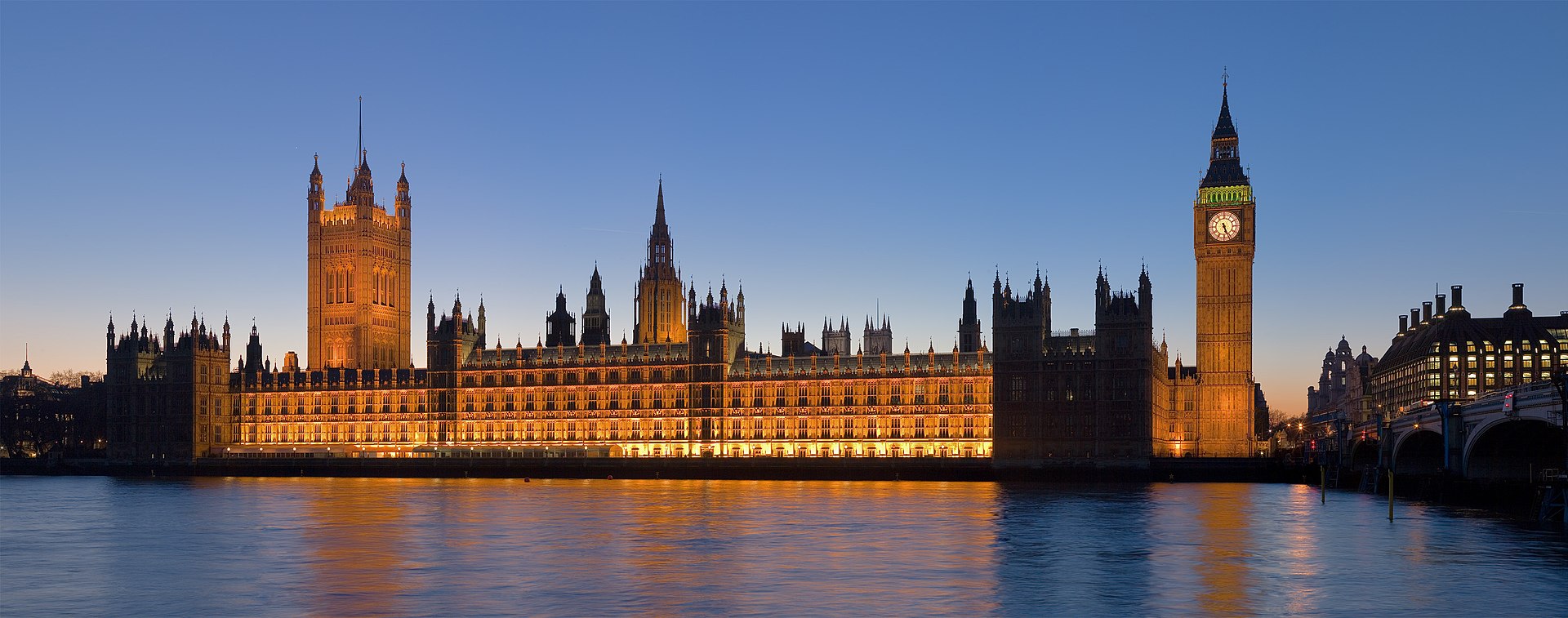
London landmarks
Photo: Diliff · CC BY-SA 3.0

Landmarks

London's Most Iconic Landmarks

A deep guide to London's iconic landmarks: the Tower of London, St Paul's Cathedral, and the Houses of Parliament, with history and insider visiting tips.

London wears its history in stone, brick, and glass.

This is the city that rebuilt itself after the Great Fire of 1666, raised Christopher Wren's dome above the medieval street plan, and turned the muddy banks of the Thames into a stage for a thousand years of coronations, executions, and reinventions.

To walk its streets is to move through a living museum, where a Norman keep guards the river a short stroll from a Gothic Revival parliament, and where a great wheel of glass reflects the whole ensemble back across the water.

What makes London's landmarks so compelling is that they are not isolated monuments. They gather along the Thames, ring the royal parks, and cluster around Westminster and the City in a way that lets you read the capital's ambitions century by century.

The buildings argue with one another across the river, the public spaces invite you to linger, and the museums hold collections gathered from every corner of the globe. The Thames, tidal and grey and endlessly busy, ties it all together and gives the city its restless mood.

This guide gathers eleven landmarks that define London: the ancient fortress, the soaring cathedral, the palaces still in royal use, the great museums, and the modern towers that have reshaped the skyline.

For each you will find what it is, why it matters, what to look for, and how to visit sensibly. Read it front to back for a chronological narrative of the city, or skip to the places that call to you and build your own route along the river.

Skyscraper · London Bridge / Southwark · 2012

The Shard (The View)

Ride to the top of Western Europe's tallest tower and watch the whole sprawl of London arrange itself far below your feet.

The Shard rises above London Bridge station on the south bank of the Thames, a tapering pyramid of glass designed by the Italian architect Renzo Piano and completed in 2012.

At roughly 310 metres it is the tallest building in the United Kingdom and one of the tallest in Western Europe, its form conceived as a spire of irregular glass fragments, or shards, that lean inward but never quite meet at the summit, leaving the top open to the sky.

The public heart of the building is The View from The Shard, an observation experience spread across the sixty-eighth to seventy-second floors.

From this height the city loses its street-level chaos and reveals its true shape: the Thames curling through the centre, the dome of St Paul's, the Tower of London, the clustered towers of the City, and on a clear day a panorama reaching some forty miles to the horizon.

The upper deck is partly open to the air, so you feel the wind and hear the hum of the living city drifting up from below.

Beyond the viewing galleries, the Shard is a vertical quarter in itself, stacking offices, restaurants, a hotel, and residences within a single slender profile.

Its glazed skin changes character with the weather, glowing pink at dawn, vanishing into low cloud, or catching the last gold of a summer evening, so that the tower reads differently from every bridge and street corner across the capital.

Visiting

The View from The Shard is open daily, usually with extended hours in summer, and timed tickets bought in advance are strongly recommended to secure the best slots and avoid queues. Entry is from the dedicated ticket hall on Joiner Street beside London Bridge station, which is served by the Underground, national rail, and buses. Choose a clear day, since haze and cloud can swallow the view entirely, and consider a late-afternoon slot so you can watch the city shift from daylight to a carpet of lights. Allow at least an hour, longer if you want a drink at altitude.

Insider tip: Book a slot about an hour before sunset: a single ticket lets you linger through the golden light, the sunset, and the moment the whole city switches on beneath you, all without moving from the deck.

📍 View on Google Maps →

Public Art · Stratford / Queen Elizabeth Olympic Park · 2012

ArcelorMittal Orbit

A twisting red helix of steel that doubles as Britain's tallest sculpture, a viewing tower, and the world's longest tunnel slide.

The ArcelorMittal Orbit loops and coils above Queen Elizabeth Olympic Park in Stratford, a tangle of bright red tubular steel conceived by the sculptor Anish Kapoor with the structural designer Cecil Balmond.

Built as a permanent legacy of the 2012 Olympic Games, it stands about 114 metres tall, making it the largest piece of public art in the United Kingdom, its restless spiralling lattice deliberately refusing the calm symmetry of a conventional tower.

Kapoor, the same artist behind Chicago's mirrored Cloud Gate, wanted a structure that could never be taken in from a single viewpoint, so the Orbit changes shape as you circle it, its loops folding over and through one another like a drawing in mid-air.

Two observation platforms near the top offer wide views across the park, the Olympic Stadium, the Aquatics Centre, and the eastern reach of London toward Canary Wharf and beyond.

What began as a pure sculpture gained a playful second life in 2016, when the artist Carsten Höller wrapped it in a tunnel slide that corkscrews down the outside of the structure, carrying riders on a fast, twisting descent from near the summit to the ground.

The result is a landmark that manages to be serious art, engineering spectacle, and pure fairground thrill all at once, a fitting emblem of the regenerated East London around it.

Visiting

The ArcelorMittal Orbit is open on selected days through the year, with opening patterns varying by season, so check current times and book tickets online before travelling. It sits in the middle of Queen Elizabeth Olympic Park, an easy walk from Stratford station, which is a major hub on the Underground, Overground, Elizabeth line, and national rail. The slide carries an additional charge and has height and age requirements, so review these in advance if you plan to ride. Combine the visit with a wander around the park's gardens, waterways, and Olympic venues.

Insider tip: Buy the combined viewing and slide ticket: take your time at the top drinking in the panorama first, then descend the twisting tunnel slide, so you experience the sculpture both as a calm viewpoint and as a rush.

📍 View on Google Maps →

Historic · Tower Hamlets / City of London · 1894

Tower Bridge

The most theatrical bridge in the world, a pair of Gothic towers whose great roadway still splits and lifts for passing ships.

Tower Bridge spans the Thames just downstream of the Tower of London, a combined bascule and suspension bridge that opened in 1894 and has become one of the most instantly recognisable structures on earth.

Designed by the City Architect Horace Jones with the engineer John Wolfe Barry, its two towers were clad in ornate Victorian Gothic stonework, chosen to harmonise with the ancient fortress beside it, while a hidden framework of steel does the real structural work behind the decorative skin.

The bridge's genius lies in its movement: the central roadway is split into two bascules, or leaves, that can be raised to let tall vessels pass through.

Originally driven by steam-powered hydraulics that pumped pressurised water into vast accumulators, the mechanism still lifts the roadway regularly today, now under electric and oil-hydraulic power, and the schedule of raisings is published in advance so visitors can watch the spectacle.

High above the river, the two towers are linked by a pair of enclosed walkways, built so that pedestrians could still cross while the bridge was open to shipping.

These high-level walkways now form part of an exhibition that includes a stretch of glass floor, letting you look straight down at the traffic and water below, while the beautifully preserved Victorian Engine Rooms display the original steam machinery that powered the bridge for decades.

Visiting

The bridge itself is free to cross on foot or by road at any time, and simply admiring it from the riverbanks costs nothing. The Tower Bridge Exhibition, which includes the high-level walkways, the glass floor, and the Engine Rooms, is ticketed and open daily, with timed entry recommended in busy periods. The nearest Underground stations are Tower Hill and London Bridge, both a short walk away. Check the published list of bridge lift times online and try to time your visit to see the bascules rise, one of the great free shows in London.

Insider tip: Look up the day's bridge lift schedule before you go and position yourself on the riverside walkway a few minutes early: watching the huge bascules swing open for a passing ship is far more thrilling than any photo of the closed bridge.

📍 View on Google Maps →

Historic · City of London · 1710

St Paul's Cathedral

Christopher Wren's baroque masterpiece, a vast dome that has crowned the London skyline and outlasted fire and war.

St Paul's Cathedral crowns Ludgate Hill at the highest point of the City of London, the English Baroque masterwork of Sir Christopher Wren.

Raised between 1675 and 1710 to replace the medieval cathedral destroyed in the Great Fire of London, it was Wren's grandest project, and his tomb inside carries the famous Latin epitaph telling visitors that if they seek his monument, they should look around them.

The cathedral is defined by its enormous dome, one of the largest in the world, an ingenious triple-shell construction of an inner dome, a hidden brick cone that carries the weight of the lantern, and the soaring lead-covered outer dome that dominates the skyline.

Inside, a series of galleries climbs the structure: the Whispering Gallery, where a murmur against the wall carries clear across the void, then the outdoor Stone Gallery, and finally the Golden Gallery at the very top, reached by hundreds of steps but repaid with a sweeping view over London.

St Paul's is woven into the nation's memory as much as its skyline. It has hosted the funerals of Nelson and Wellington and Churchill, the wedding of Charles and Diana, and countless services of national mourning and celebration.

Its survival through the bombing of the Blitz, famously photographed standing firm amid the smoke, made it an enduring emblem of the city's resilience, and it remains a working cathedral where daily worship continues beneath Wren's dome.

Visiting

St Paul's is open to sightseers Monday to Saturday, with the interior, crypt, and dome galleries included in a ticket that is cheaper when booked online in advance; on Sundays the building is reserved for worship and there is no charge to attend services. The nearest Underground station is St Paul's, with Mansion House and Blackfriars also close by. Climbing to the Golden Gallery involves more than five hundred steps and no lift, so allow time and energy for the ascent. Photography is limited inside, and a visit of one to two hours suits most people.

Insider tip: Climb all the way to the Golden Gallery rather than stopping at the Whispering Gallery: the final outdoor platform gives a full circle of the City, the river, and the Shard, and the crowds thin noticeably on the last stretch of the stairs.

📍 View on Google Maps →

Museum · Bloomsbury · 1759

The British Museum

One of the world's great encyclopedic collections, spanning two million years of human culture beneath a soaring glass roof.

The British Museum in Bloomsbury is among the oldest and greatest museums on earth, founded in 1753 around the collection of the physician Sir Hans Sloane and opened to the public in 1759 as a place of learning free to all.

Behind its imposing Greek Revival colonnade lies an encyclopedic collection tracing human history and culture across some two million years and every inhabited continent.

At its centre is the Great Court, a vast covered square wrapped around the old circular Reading Room and roofed in 2000 with a spectacular grid of glass and steel designed by Norman Foster, now the largest covered public square in Europe.

From here the galleries radiate outward to some of the most famous objects in the world: the Rosetta Stone, whose parallel scripts unlocked Egyptian hieroglyphs; the Parthenon sculptures brought from Athens; the colossal Assyrian winged bulls; the treasures of the Sutton Hoo ship burial; and hall after hall of Egyptian mummies that draw crowds all day long.

The scale is almost overwhelming, and part of the museum's character is the ongoing debate about how its collection was assembled and whether some of its greatest treasures should return to their countries of origin.

Whatever your view, a visit is a journey through the whole span of human making, from ancient Mesopotamia to the art of the present, and it remains, remarkably, free to enter, a founding principle the museum has never abandoned.

Visiting

The British Museum is open daily and admission to the permanent collection is free, though special exhibitions are ticketed and it is worth booking a free timed entry slot online in busy periods. The main entrance is on Great Russell Street, with the nearest Underground stations at Tottenham Court Road, Holborn, and Russell Square. The collection is far too large to see in one visit, so pick a few galleries or follow a themed trail; a couple of hours covers the highlights, while a full day barely scratches the surface. Free gallery talks and tours run throughout the week.

Insider tip: Head straight for the Rosetta Stone and the Egyptian and Assyrian galleries when the doors open, before the tour groups arrive: these are the busiest rooms by late morning, and you will have the marquee objects almost to yourself in the first half hour.

📍 View on Google Maps →

Historic · Tower Hamlets / City of London · 1078

Tower of London

A thousand-year-old fortress of palace and prison, guarding the Crown Jewels and watched over by its legendary ravens.

The Tower of London stands on the north bank of the Thames, a formidable stone fortress begun by William the Conqueror soon after 1066, with its great keep, the White Tower, rising around 1078.

For more than nine hundred years it has served as royal palace, treasury, armoury, menagerie, and most notoriously as a prison and place of execution, a concentrated stage on which much of England's history has played out.

At its heart the White Tower still holds displays of royal armour, while the fortress as a whole guards the Crown Jewels, the dazzling working regalia of the British monarchy, including crowns set with some of the largest cut diamonds in the world, kept under guard and viewed from a slow-moving walkway.

The walls and towers tell darker stories too: the Bloody Tower, the cells where prisoners scratched their names into the stone, and Tower Green, where Anne Boleyn and other figures met their end within the walls.

The Tower is watched over by the Yeoman Warders, the ceremonial guardians nicknamed Beefeaters, who live within the fortress and lead vivid guided tours full of history and grisly legend.

Equally famous are the ravens, kept at the Tower by tradition that says the kingdom will fall if they ever leave. A recognised UNESCO World Heritage Site, the Tower rewards a slow visit, from the ancient chapel to the ramparts overlooking Tower Bridge next door.

Visiting

The Tower of London is open daily, though it may close for a day around the winter holidays, and tickets are noticeably cheaper when booked online in advance. The nearest Underground station is Tower Hill, a few minutes' walk away. Arrive early to see the Crown Jewels before the longest queues form, then join one of the free Yeoman Warder tours that set off regularly from near the entrance. Allow at least two to three hours to take in the White Tower, the jewels, the towers, and the walls without rushing.

Insider tip: Go to the Crown Jewels first thing at opening and join the earliest Yeoman Warder tour of the day: the jewels draw long lines by midday, and the Warders' storytelling brings the whole grim history of the fortress to life far better than any guidebook.

📍 View on Google Maps →

Park · Westminster / Kensington · 1637

Hyde Park

London's great green lung, a royal deer chase turned public playground of lakes, gardens, and open sky in the heart of the city.

Hyde Park spreads across some 350 acres in the middle of London, one of the largest and best loved of the eight Royal Parks.

Once a hunting ground seized by Henry VIII, it was opened to the public in 1637 and has served ever since as the city's gathering place, a vast open expanse of grass, ancient trees, and water where Londoners come to walk, ride, row, swim, protest, and simply escape the surrounding streets.

At its centre lies the Serpentine, a curving artificial lake created in the eighteenth century, where you can hire a rowing or pedal boat in summer, watch the hardy members of the Serpentine Swimming Club, or stroll to the Diana, Princess of Wales Memorial Fountain, a low ring of flowing Cornish granite designed as a place to sit and dip your feet.

On the lake's banks the Serpentine Galleries show contemporary art, and each summer a leading architect designs a temporary pavilion beside them.

The park's northeast corner is home to Speakers' Corner, a long-standing site of free public debate where anyone may stand up and address the crowd, a tradition that has drawn orators and hecklers for well over a century.

Seamlessly joined to the adjoining Kensington Gardens, with Kensington Palace at its western edge, Hyde Park offers a genuine sense of countryside within the capital, alive from dawn joggers to evening picnickers all through the warmer months.

Visiting

Hyde Park is free and open every day from early morning until midnight, and you can enter at numerous gates around its edges. It is ringed by Underground stations, with Hyde Park Corner, Marble Arch, Lancaster Gate, and Knightsbridge all convenient. Boating on the Serpentine and deckchair hire are seasonal and charged separately, while the paths, lawns, and memorial fountain are free to enjoy. Come on a fine weekend to see the park at its liveliest, or on a quiet weekday morning for a peaceful walk, and check what is showing at the Serpentine Galleries.

Insider tip: Time a summer visit for late afternoon: rent a rowing boat on the Serpentine while the light softens, then drift near the shore and watch the city slow down, one of the cheapest and most relaxing pleasures in central London.

📍 View on Google Maps →

Skyscraper · City of London · 2003

30 St Mary Axe (The Gherkin)

A curving glass bullet of a tower, so beloved for its shape that the whole city knows it simply as the Gherkin.

30 St Mary Axe, universally nicknamed the Gherkin for its rounded, tapering form, is the tower that announced a new era of adventurous high-rise design in the City of London.

Completed in 2003 to designs by Norman Foster and his practice, it rises around 180 metres in a smooth glass curve that swells at the middle and narrows toward a rounded glass cap at the top, an outline unlike anything else on the skyline.

The shape is not mere styling.

The tapering, aerodynamic profile reduces the wind pressure that buffets a conventional flat-sided tower and lets breezes slip around the building, while the distinctive spiralling pattern of dark glass marks a series of light wells that twist up through the floors, drawing daylight and natural ventilation deep into the interior.

Its diagonally braced steel frame, or diagrid, carries the loads around the perimeter, freeing the floors of internal columns.

The tower stands on the site of the former Baltic Exchange, damaged beyond repair by a bomb in the early 1990s, and its arrival helped trigger the cluster of nicknamed towers that now surround it, from the Cheesegrater to the Walkie-Talkie.

Although the building is a working commercial address and not generally open to the public, its silhouette has become one of the defining images of modern London, admired from the surrounding lanes of the old City and from viewpoints right across the capital.

Visiting

The Gherkin is a private office building, so for most visitors the experience is architectural appreciation from the streets around it rather than a trip inside. The tight medieval lanes of the City, such as St Mary Axe, Leadenhall Street, and the area around Leadenhall Market, give dramatic close-up views where the glass curve looms above the old street pattern. The nearest Underground and rail stations are Aldgate, Liverpool Street, and Bank. Occasional public access events, such as the annual Open House festival, sometimes allow a limited look inside, so it is worth checking those listings.

Insider tip: Wander the narrow streets at the tower's base rather than viewing it from a distance: framed between historic buildings and glimpsed above Leadenhall Market, the Gherkin's curving glass makes a far more striking photograph than the standard wide shot.

📍 View on Google Maps →

Historic · Westminster · 1859

Elizabeth Tower (Big Ben)

The great Gothic clock tower of Parliament, whose booming bell has kept the nation's time for more than a century and a half.

Elizabeth Tower rises at the north end of the Palace of Westminster beside the Thames, the clock tower that most of the world knows as Big Ben.

Strictly speaking Big Ben is the name of the largest bell inside, but the name has long since spread to the whole tower, completed in 1859 as part of the rebuilding of Parliament after fire destroyed the old palace.

Its richly detailed Gothic Revival design came from the architect Augustus Pugin, working with Sir Charles Barry on the wider palace.

The tower stands around 96 metres tall and houses the Great Clock, for decades the largest and most accurate striking clock in the world, its four dials each some seven metres across and lit from within so they glow after dark.

The mechanism drives the famous quarter chimes and the deep, resonant strike of Big Ben on the hour, a sound broadcast across the country and bound up with national occasions and the turning of the year.

Renamed Elizabeth Tower in 2012 to mark the Diamond Jubilee of Queen Elizabeth II, the tower recently emerged from a lengthy and meticulous restoration that cleaned its stonework, regilded its details, and returned the clock dials to their original colours.

Together with the pinnacled bulk of the Houses of Parliament and neighbouring Westminster Abbey, it forms one of the most photographed and instantly recognisable scenes in the world, best appreciated from Westminster Bridge or the far bank of the river.

Visiting

The exterior of Elizabeth Tower can be admired for free at any time, and the classic views are from Westminster Bridge, Parliament Square, and the South Bank across the river. Guided tours that climb the tower to see the clock mechanism and stand beside the bells are available but limited, generally bookable through UK Parliament and often restricted or prioritised for UK residents, so check current arrangements well ahead. The nearest Underground station is Westminster, which opens right beside the tower. Come on the hour to hear Big Ben strike, and at dusk to see the illuminated dials.

Insider tip: Cross to the far side of Westminster Bridge and wait for the top of the hour at nightfall: hearing Big Ben strike while the clock faces glow and the river reflects the lit-up Parliament is the quintessential London moment, and it costs nothing.

📍 View on Google Maps →

Historic · Westminster · 1245

Westminster Abbey

The soaring Gothic church where England's monarchs are crowned, married, and buried, a thousand years of history under one roof.

Westminster Abbey stands just south of the Houses of Parliament, the great Gothic church at the ceremonial centre of English national life.

A place of worship has stood here for over a thousand years, but the towering building seen today was largely begun in 1245 under King Henry III, who rebuilt the abbey in the elegant Early English and French-influenced Gothic style, with soaring pointed arches, flying buttresses, and the tallest medieval nave in the country.

Since the coronation of William the Conqueror on Christmas Day 1066, the abbey has been the coronation church of English and British monarchs, and the ancient Coronation Chair still stands within it.

It is also a royal burial place and a national mausoleum, crowded with the tombs and memorials of kings and queens, statesmen, scientists, and writers.

Poets' Corner gathers memorials to Chaucer, Dickens, and many more, while the graves of figures such as Isaac Newton and Charles Darwin lie beneath the floor.

Beyond the coronations, the abbey has hosted royal weddings and state funerals watched by billions, and it holds the Grave of the Unknown Warrior, a focus of national remembrance.

Quieter treasures reward the patient visitor: the fan-vaulted Lady Chapel of Henry VII, the medieval Cosmati pavement, the tranquil cloisters, and the Queen's Diamond Jubilee Galleries high in the medieval triforium, which look down into the church.

A UNESCO World Heritage Site, it remains a living, working church at the heart of the nation.

Visiting

Westminster Abbey is open to visitors Monday to Saturday, with ticketed timed entry that is best booked online in advance; on Sundays and religious festivals it is open only for worship, which anyone may attend free of charge. The nearest Underground stations are Westminster and St James's Park. A visit typically takes an hour and a half to two hours, and an included audio guide helps make sense of the crowded memorials. Photography rules are restricted in parts of the church, so check on arrival, and consider attending Evensong to experience the choir in its proper setting.

Insider tip: If your schedule allows, attend the free daily service of Evensong rather than only touring by day: sitting in the quiet, candlelit choir while the voices rise into the Gothic vaults is a moving experience that the ticketed daytime crowds never see.

📍 View on Google Maps →

Observation Wheel · South Bank / Lambeth · 2000

The London Eye

A giant cantilevered wheel on the South Bank that lifts glass capsules high above the Thames for a slow, sweeping turn over the city.

The London Eye turns on the South Bank of the Thames directly opposite the Houses of Parliament, a giant observation wheel that opened in 2000 to mark the millennium and quickly became one of the most visited paid attractions in the country.

Designed by the husband-and-wife architects David Marks and Julia Barfield, it rises about 135 metres and was, when built, the tallest wheel of its kind in the world, an elegant piece of engineering that has reshaped the London riverscape.

Unlike a traditional Ferris wheel, the Eye is cantilevered, supported on one side by an A-frame so that the entire rim appears to float out over the river.

Its 32 sealed glass capsules, one for each of the London boroughs, are mounted on the outside of the rim and rotate gently to stay level, carrying passengers on a slow half-hour rotation that gives time to pick out landmark after landmark as the city unfolds.

From the top the view stretches across the whole of central London: the Palace of Westminster and Big Ben directly below, the river snaking past St Paul's and the towers of the City, Buckingham Palace among its parks, and on a clear day the green hills at the capital's edge.

The wheel has become a fixture of the city's celebrations, wreathed in fireworks each New Year's Eve, and the surrounding South Bank, with its walkways, galleries, and street performers, makes the approach an attraction in itself.

Visiting

The London Eye operates daily, with reduced hours in winter and the occasional closure for maintenance, and tickets are cheaper and quicker when booked online for a timed slot in advance. It stands beside County Hall on the South Bank, a short walk from Waterloo station and just across Westminster Bridge from Westminster Underground station. A standard rotation lasts about thirty minutes, and clear weather makes an enormous difference to the view, so save it for a bright day. Fast-track and private capsule options are available at a premium for those wanting to skip the longest queues.

Insider tip: Book a capsule for around sunset on a clear evening: a single slow rotation lets you watch the city move from daylight into a glittering carpet of lights, with Parliament and the river glowing directly beneath you.

📍 View on Google Maps →

Frequently Asked Questions

What are the best landmarks to see if I only have limited time in London?

Prioritise the Westminster cluster: the Houses of Parliament with Big Ben, Westminster Abbey, and a walk across the bridge to the London Eye. Then head along the South Bank towards Tower Bridge and the Tower of London, or up to St Paul's Cathedral in the City.

Which iconic London landmarks are free to visit?

The British Museum, the National Gallery, and the Tate Modern are all free, as are Trafalgar Square and the royal parks. You can admire Tower Bridge, the Houses of Parliament, and Buckingham Palace from public pavements, and watch the Changing of the Guard at no cost.

How many days do I need to see London's iconic landmarks?

Two full days cover the essentials: one for Westminster, the Abbey, and the London Eye, and another for the Tower of London, Tower Bridge, and St Paul's Cathedral. Three days is ideal, adding the British Museum, Buckingham Palace, and a river cruise.

What is the best way to see London's landmarks along the river?

A Thames river cruise is the best introduction, passing the Houses of Parliament, the London Eye, and Tower Bridge with commentary. Add a walk along the South Bank from Westminster to Tower Bridge for close views of St Paul's and the Shard across the water.

Should I go up the Shard or the London Eye for the view?

The Shard's View from the Shard is far higher, reaching the 72nd floor for the most expansive panorama across the whole city. The London Eye sits on the South Bank with slow rotating capsules and classic views of Parliament and the river. Choose the Eye for the postcard skyline, the Shard for sheer altitude.

When is the best time of year to visit London's landmarks?

Late spring through early autumn is prime, with long daylight, blooming parks, and open-top river cruises. Summer is liveliest but busiest, so book timed tickets ahead. Autumn brings thinner crowds and golden parks. Winter offers festive markets, ice rinks, and warm museum galleries.