Atlanta landmarks
Photo: Marc Merlin · CC BY-SA 4.0

Landmarks

Atlanta's Most Iconic Landmarks

A deep guide to Atlanta's iconic landmarks: the Georgia Aquarium, the Fox Theatre, and the Martin Luther King Jr. National Historical Park, with history and insider visiting tips.

Atlanta wears its history in red clay, railroad iron, and the emblem of a rising phoenix.

This is the city that began in 1837 as a rail terminus called Terminus, burned nearly to the ground in 1864 during the Civil War, and then adopted the motto Resurgens as it rebuilt itself into the commercial capital of the South.

To move through its streets is to trace a story of reinvention, where the birthplace of a civil rights leader sits a short ride from the global headquarters of Coca-Cola, and where a Moorish movie palace from the Jazz Age shares a neighbourhood with a museum wrapped in gleaming white porcelain panels.

What makes Atlanta's landmarks so compelling is that they gather around a few charged districts you can actually walk. Downtown, the attractions ring Centennial Olympic Park, the green square left behind by the 1996 Summer Games.

To the east, the Sweet Auburn neighbourhood holds the sacred sites of the civil rights movement along Auburn Avenue.

Midtown balances culture and nightlife, while the Atlanta BeltLine, a former rail corridor turned into a ribbon of trails, stitches old warehouses, breweries, and parks into one continuous route.

The city's canopy of trees, thick enough to earn it the nickname the city in a forest, softens the whole ensemble and gives Atlanta its particular green light.

This guide gathers eleven landmarks that define Atlanta: the record-setting aquarium, the beloved sites of the freedom struggle, the world-class museums, and the restless new developments that are reshaping how the city moves.

For each you will find what it is, why it matters, what to look for, and how to visit sensibly.

Read it front to back for a narrative of a city that keeps rebuilding itself, or skip to the places that call to you and build your own route through downtown, Sweet Auburn, and Midtown.

Museum · Downtown · 2005

Georgia Aquarium

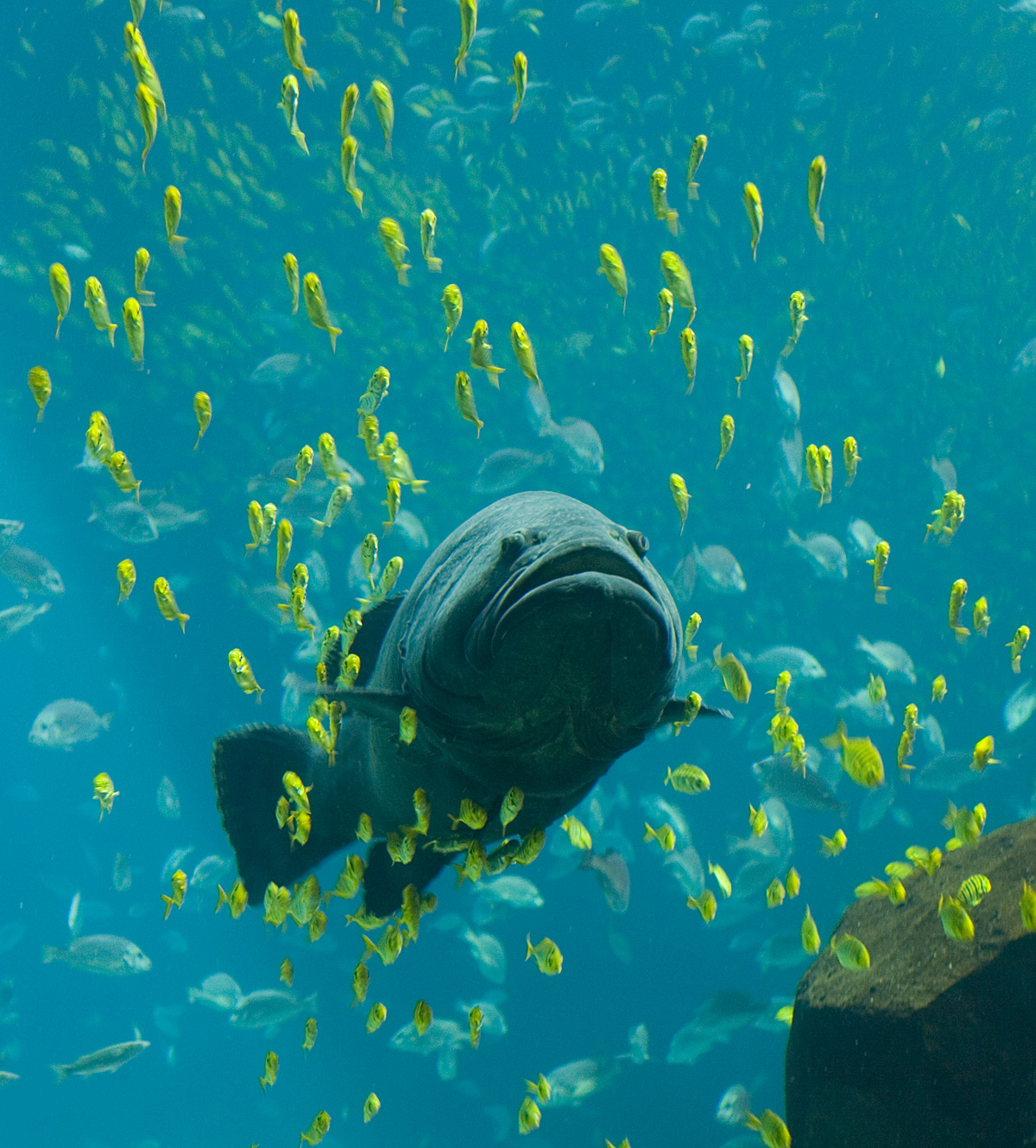
Stand in a glass tunnel as whale sharks glide overhead in one of the largest aquariums on the planet.

The Georgia Aquarium sits at the edge of Pemberton Place downtown, a gift to the city underwritten largely by Home Depot co-founder Bernie Marcus, whose founding donation of roughly two hundred and fifty million dollars turned an empty lot into a marine landmark.

When it opened it was the largest aquarium in the world, and it remains the only facility in the United States to keep whale sharks, the gentle giants that are the biggest fish in the sea.

The centerpiece is the Ocean Voyager exhibit, a vast tank holding millions of gallons of saltwater where you walk through an acrylic tunnel while whale sharks, manta rays, and schools of fish sweep past above and around you.

Other galleries carry visitors from the cold-water world of beluga whales and sea otters to the coral color of tropical reefs, the eerie architecture of a jellyfish gallery, and a touch pool where children meet rays and small sharks up close.

Beyond the spectacle, the aquarium doubles as a research and conservation institution, running breeding, rescue, and study programs for threatened species.

It anchors a downtown tourist district that includes the World of Coca-Cola next door and Centennial Olympic Park across the street, so a visit slots easily into a full day of walkable attractions.

Visiting

The Georgia Aquarium is open daily, and timed tickets bought in advance are strongly recommended, since it is one of the busiest attractions in the city and same-day entry can sell out on weekends and holidays. It sits in downtown beside Centennial Olympic Park and is reachable on foot from many hotels or by the streetcar and transit. Go right at opening or in the last couple of hours of the day for thinner crowds around the marquee tanks, and allow at least two to three hours. Animal presentations run on a schedule, so check times when you arrive.

Insider tip: Head to the Ocean Voyager tunnel first thing at opening before the tour groups arrive: standing alone under a passing whale shark is a completely different experience from doing it shoulder to shoulder with a crowd.

📍 View on Google Maps →

Museum · Downtown · 2007

World of Coca-Cola

The story of a fizzy Atlanta invention that conquered the world, ending in a room where you taste it a hundred ways.

The World of Coca-Cola tells the story of the soft drink that was born in Atlanta in 1886, when pharmacist John Pemberton mixed the first batch of syrup and it was sold from a soda fountain at a local drugstore.

The current pavilion at Pemberton Place opened in 2007, replacing an earlier downtown museum, and it presents the brand as both a beverage and a global cultural phenomenon that grew up alongside the city itself.

Inside, exhibits trace more than a century of advertising, packaging, and memorabilia, from vintage signs and delivery trucks to a gallery of art the drink has inspired.

The theatrical highlight is the Vault of the Secret Formula, a playful, faux-high-security chamber built around the closely guarded recipe that the company has famously never published.

A working bottling line shows how the product is made, and a resident polar bear character delights younger visitors.

The experience culminates in Taste It, a tasting room where you can sample dozens of Coca-Cola beverages from around the world, discovering which flavors delight and which, by regional taste, startle the American palate.

Sitting next to the Georgia Aquarium and across from Centennial Olympic Park, it completes a compact downtown cluster of Atlanta's most popular family attractions.

Visiting

The World of Coca-Cola is open daily with timed entry, and buying tickets ahead helps avoid lines at the busiest midday hours. It is an easy walk from the Georgia Aquarium and Centennial Olympic Park, and the three are often combined on a single day with discounted combination tickets worth checking for. Plan on about ninety minutes to two hours. Mornings tend to be calmer than afternoons, and the tasting room, the favorite of most visitors, comes at the end, so pace yourself for it.

Insider tip: Save room and an empty stomach for the Taste It room: work through the international samples from mildest to boldest, and do not miss the notoriously divisive Beverly from Italy, a rite of passage that makes for the trip's best reaction photo.

📍 View on Google Maps →

Historic · Sweet Auburn · 1980

Martin Luther King Jr. National Historical Park

The birthplace, church, and final resting place of Dr. King, gathered along the street where the movement was born.

The Martin Luther King Jr. National Historical Park runs along Auburn Avenue in the historic Sweet Auburn district, once one of the most prosperous Black commercial streets in America.

It preserves the places that shaped the civil rights leader, from the modest Queen Anne house where he was born in 1929 to the church where he was baptized, ordained, and eulogized, all within a few walkable blocks managed by the National Park Service.

At the heart of the site is Ebenezer Baptist Church, where King preached alongside his father, its sanctuary now restored so visitors can hear his voice recorded from the very pulpit.

Nearby, the King Center, founded by his widow Coretta Scott King, holds the reflecting pool where Dr. King and Mrs. King are entombed together, an eternal flame burning at the water's edge.

The park visitor center frames the wider story of the movement with photographs, exhibits, and the sculpture-lined International World Peace Rose Garden.

Walking the district connects the personal and the historic: the childhood home, the church, the fire station where a young King watched the trucks, and the modern Ebenezer sanctuary across the street that carries the congregation forward.

Together they form one of the most moving and important pilgrimage sites in the country, telling a national story rooted in a single Atlanta neighborhood.

Visiting

The park is free and open most days, though hours and the schedule for touring the birth home vary, so check with the visitor center and reserve a birth-home tour slot early, as they are limited and go quickly. It lies just east of downtown in Sweet Auburn, reachable by the streetcar, transit, or a short drive, with nearby parking. Allow at least two hours to see the visitor center, both churches, and the King Center tomb without rushing. Guided ranger talks add valuable context when available.

Insider tip: Line up for the free timed tickets to tour Dr. King's birth home as soon as the visitor center opens: the small group sizes mean they are often gone by late morning, and the interior of the house is the one part of the site you cannot simply walk up to.

📍 View on Google Maps →

Historic · Midtown · 1929

Fox Theatre

A Moorish fantasy palace with a ceiling of twinkling stars, saved from the wrecking ball by the city that loves it.

The Fox Theatre rises on Peachtree Street in Midtown, an extravagant movie palace that opened in 1929 just as the Jazz Age gave way to the Depression.

It was conceived partly as a Shrine temple, which explains its exotic Moorish and Egyptian revival design: minarets and onion domes outside, and inside an auditorium styled as an Arabian courtyard beneath a night sky, complete with twinkling star lights and projected drifting clouds.

The interior is a feast of ornament, from the sweeping arches and striped brickwork to the elaborate throne-like balcony boxes and one of the largest working theater pipe organs in the world, the beloved instrument the staff call Mighty Mo.

The scale is staggering, with well over four thousand seats, and the craftsmanship reflects an era when going to the pictures was meant to feel like stepping into a palace.

By the 1970s the aging theater faced demolition, and a grassroots Save the Fox campaign rallied the city to rescue it, a defining moment in Atlanta's preservation history.

Today it thrives as a stage for touring Broadway shows, concerts, and film screenings, its restored splendor intact. Seeing a performance here, or simply touring the building, is to experience one of the finest surviving movie palaces in America.

Visiting

The Fox is a working venue, so the fullest way to experience it is to attend a show, from Broadway tours to concerts, with tickets booked through the theater. For those who want the history and the architecture without a performance, the Atlanta Preservation Center and the theater offer guided building tours on select days, and reserving ahead is wise. It stands in Midtown on Peachtree Street, easy to reach by transit with a station essentially at the door. Arrive early for any event to explore the lobbies and the star-lit ceiling.

Insider tip: If you attend a show, get there when the doors first open and walk the upper lobbies and the auditorium before the lights dim: the projected clouds and the star ceiling are best appreciated in the quiet minutes before the crowd and the performance take over.

📍 View on Google Maps →

Museum · Midtown · 1983

High Museum of Art

A luminous white landmark of modern architecture holding the Southeast's leading collection of art.

The High Museum of Art anchors the Woodruff Arts Center in Midtown, the leading art museum in the American Southeast and a work of architecture in its own right.

Its original building, completed in 1983 and designed by Richard Meier, is a gleaming composition of white porcelain-enameled panels, curving ramps, and a light-filled atrium that helped establish Meier's international reputation and won major architectural honors.

In 2005 the museum roughly doubled in size with an expansion by Renzo Piano, adding a cluster of buildings around a piazza and a rooftop system of skylights that bathes the galleries in soft, even daylight.

The collection spans European masters and nineteenth-century American art, a strong holding of American decorative arts and design, folk and self-taught art for which the High is particularly noted, photography, and a growing body of modern and contemporary work.

The museum is also known for ambitious traveling exhibitions and for partnerships that have brought works from major institutions to Atlanta.

Between the art, the play of natural light through Meier's ramps and Piano's skylights, and the outdoor sculpture, a visit rewards both the dedicated art lover and the casual wanderer, and it pairs naturally with a walk in nearby Piedmont Park.

Visiting

The High is open most days but typically closed on Mondays, so check hours before you go, and consider reserving tickets online. It sits in Midtown at the Woodruff Arts Center, directly served by transit with a rail station adjacent. Free or discounted admission is offered at certain times worth looking into, and special exhibitions may carry an added charge. Plan on about two hours for the highlights, more if a major show is on, and give yourself time to enjoy the architecture and the piazza between buildings.

Insider tip: Start at the top of Meier's atrium ramps and work your way down: you follow the architect's intended path through the light, and you reach the popular special-exhibition galleries before the midday crowds build.

📍 View on Google Maps →

Park · Downtown · 1996

Centennial Olympic Park

The green heart left behind by the Olympics, where children dance through fountains shaped like the Olympic rings.

Centennial Olympic Park was created as the gathering place and legacy of the 1996 Summer Olympic Games, when Atlanta hosted the world for the centennial of the modern Games.

Carved out of a run-down stretch of downtown, the twenty-one-acre park transformed the district and spurred the wave of attractions that now surround it, from the Georgia Aquarium to the World of Coca-Cola.

Its signature feature is the Fountain of Rings, an interactive fountain laid out in the pattern of the five Olympic rings, where jets of water leap and fall in choreographed shows set to music several times a day.

On warm afternoons children run shrieking through the spray, and in the evening the illuminated water and the surrounding skyline make the plaza a lively social heart of the city.

Commemorative bricks purchased by supporters pave the grounds, each one a small piece of the Games' memory.

The park is also a place of reflection, marking both the triumph and the tragedy of those Games, including a memorial to the bombing that struck during the festivities.

Today it hosts concerts, festivals, and holiday events year round, and its lawns and walkways give downtown a rare stretch of open green space in the middle of the attractions district.

Visiting

Centennial Olympic Park is free and open daily, an easy walk from the aquarium, the World of Coca-Cola, and the college football hall of fame, all clustered around it. The Fountain of Rings runs its water-and-music shows several times a day in the warmer months, so time your visit to catch one, and bring a towel or a change of clothes if children plan to play in it. Evenings are pleasant when the fountain and skyline light up. Weekend festivals can fill the park, so weekdays are calmer for a quiet stroll.

Insider tip: Check the posted schedule for the Fountain of Rings show times and arrive a few minutes early on a hot day: standing near the rings when the jets erupt to music, with kids splashing through, is the park at its most joyful and completely free.

📍 View on Google Maps →

Historic · Old Fourth Ward · 1926

Ponce City Market

A colossal old Sears building reborn as a food hall and marketplace, with carnival games on the roof.

Ponce City Market occupies the enormous former Sears, Roebuck and Company building on Ponce de Leon Avenue, a brick colossus completed in 1926 that once served as a regional catalog warehouse, store, and distribution hub.

For decades it was among the largest brick structures in the Southeast, and after years serving as city offices it was painstakingly rehabilitated and reopened in the mid-2010s as one of Atlanta's most popular mixed-use destinations.

The ground floor holds the Central Food Hall, a sprawling market of chef-driven stalls, restaurants, and shops where local vendors sit alongside national names, drawing crowds from morning coffee to late dinner.

Above the food hall the building rises through floors of offices and apartments, all wrapped in the original industrial bones of exposed brick, heavy timber, and steel that give the place its character.

The surprise is on top: The Roof, a rooftop entertainment deck called Skyline Park, revives the amusements of an old-fashioned midway with carnival games, mini golf, a slide, and sweeping views over the city and the surrounding neighborhoods.

The market sits directly on the Atlanta BeltLine's Eastside Trail, so it functions as a natural anchor for one of the city's most dynamic corridors, buzzing with walkers, cyclists, and diners.

Visiting

Ponce City Market is free to enter and open daily, with the food hall busiest around lunch and dinner and on weekends. It lies in the Old Fourth Ward on the BeltLine's Eastside Trail, so arriving on foot or by bike from Piedmont Park or Inman Park is part of the fun, and there is paid parking for drivers. The rooftop Skyline Park charges for its attractions and often requires timed entry, so book ahead on busy evenings. Allow a couple of hours to eat, browse, and take in the roof.

Insider tip: Come hungry and graze the food hall from several stalls rather than committing to one, then ride the elevator to the roof at sunset: the games and the view over the BeltLine and skyline are best just as the city lights begin to come on.

📍 View on Google Maps →

Park · Old Fourth Ward · 2012

Atlanta BeltLine (Eastside Trail)

An old railroad ring reborn as a ribbon of trail, art, and parks stitching the city's neighborhoods together.

The Atlanta BeltLine is one of the most ambitious urban redevelopment projects in the country, a plan to convert a twenty-two-mile loop of disused railroad corridor that once encircled the city into a continuous network of trails, parks, transit, and public art.

The idea grew from a graduate thesis by Ryan Gravel and captured the civic imagination, promising to reconnect dozens of neighborhoods long divided by the old rail lines.

The Eastside Trail, opened in 2012, is the most complete and beloved segment, a paved path that runs from Piedmont Park through the Old Fourth Ward and Inman Park past Ponce City Market.

On any pleasant day it fills with walkers, runners, cyclists, and strollers, threading between restored warehouses, new development, breweries, and murals. The corridor doubles as a linear gallery, with rotating outdoor sculpture and some of the largest street art in the city.

What makes the BeltLine special is the way it turns transportation infrastructure into public life: it is a park you travel through, a main street without cars, and a stage for festivals, food, and spontaneous gathering.

As new sections open around the loop, the project continues to reshape how Atlantans move through and experience their own city.

Visiting

The BeltLine is free and open at all hours, and the Eastside Trail is the best introduction, easily reached from Piedmont Park, Ponce City Market, or the Inman Park and Krog Street areas. You can walk it, but renting a bike or scooter lets you cover more of the corridor and its art in a single outing. Weekends are lively and social, weekday mornings quieter for exercise. There is no single entrance: simply join the trail at any access point and follow it in either direction, stopping at the food and drink along the way.

Insider tip: Rent a bike and ride the Eastside Trail end to end rather than walking a short stretch: you pass far more of the murals, breweries, and hidden entrances to adjoining parks, and the whole scale of the project finally makes sense from the saddle.

📍 View on Google Maps →

Park · Midtown · 1904

Piedmont Park

Atlanta's green front yard, a rolling expanse of lawns and lake framed by the Midtown skyline.

Piedmont Park is the great public green space of Midtown, roughly two hundred acres of lawns, woods, and water that serve as the city's most cherished gathering ground.

The land hosted major expositions in the late nineteenth century, including the Cotton States and International Exposition of 1895, before being remade into a permanent park with input from the Olmsted Brothers firm, heirs to the landscape tradition of Central Park's designer.

At its center lies Lake Clara Meer, ringed by paths and framed by one of the finest skyline views in Atlanta, where the towers of Midtown rise beyond the water and the trees.

The park spreads out into meadows for picnics and pickup games, active sports fields and courts, a popular dog park, an aquatic center, and shaded promenades.

On weekends it fills with runners, families, festivals, and farmers-market crowds, a cross-section of the whole city at leisure.

Along its northern edge the park connects to the Atlanta Botanical Garden, and on its eastern flank it meets the BeltLine's Eastside Trail, making it a hub in the city's growing web of green corridors.

Whether for a quiet morning walk by the lake or a crowded summer concert on the meadow, Piedmont Park is the outdoor heart of Midtown life.

Visiting

Piedmont Park is free and open daily from early morning until late, an easy walk from Midtown hotels and directly linked to the BeltLine and the Botanical Garden. Transit and rail stations sit within walking distance, and parking is limited on busy weekends, so arriving on foot or by bike is often easier. The Green Market on Saturdays in season and the frequent festivals draw big crowds, while weekday mornings are peaceful. Bring a picnic and head for the lawns above Lake Clara Meer for the skyline view.

Insider tip: Walk to the promenade on the west side of Lake Clara Meer near dusk: the Midtown skyline reflected in the water behind the lake is the classic Atlanta postcard, and the light is far kinder than at midday.

📍 View on Google Maps →

Skyscraper · Downtown · 1976

Westin Peachtree Plaza

A mirrored glass cylinder rising over downtown, crowned by a slowly revolving bar in the clouds.

The Westin Peachtree Plaza is the sleek cylindrical glass tower that has defined the downtown skyline since it opened in 1976, designed by the architect and developer John Portman, whose futuristic vision shaped much of modern Atlanta.

Rising seventy-three stories to a height of over seven hundred feet, it was for a time the tallest hotel in the Western Hemisphere, and its perfectly round mirrored form remains one of the most recognizable silhouettes in the city.

Portman was famous for the soaring interior atriums he pioneered nearby, and the Westin extends his theatrical approach to the vertical, wrapping guest rooms around a slender core sheathed entirely in reflective glass that mirrors the sky and the surrounding towers.

From the street the building reads as a smooth, gleaming column, a piece of the optimistic space-age modernism that Atlanta embraced in the 1970s.

The public draw is at the very top, where the Sun Dial restaurant and bar slowly revolve, completing a full rotation over the course of a leisurely visit so that the entire panorama of the city, the distant mountains, and the sprawling metro passes before you.

Grabbing a drink at altitude while downtown turns beneath you is one of the classic Atlanta experiences, a skyline view built into the skyline itself.

Visiting

The Westin is a working hotel, so the way most visitors experience it is by riding the exterior glass elevators to the Sun Dial bar and restaurant near the top, which is open to the public. Reservations are wise for the restaurant, though the bar and observation level are more casual, and there may be a minimum or a small charge at the view level, so check current policy. It sits in the heart of downtown, walkable from Centennial Olympic Park and served by transit. Clear evenings reward the trip most.

Insider tip: Time your ride up for sunset and order a single drink at the revolving bar rather than a full meal: over the space of an hour the floor carries you through the entire skyline as it lights up, for the price of one cocktail.

📍 View on Google Maps →

Historic · Grant Park · 1850

Oakland Cemetery

A Victorian garden of the dead, where Atlanta's history is written in marble angels and magnolias.

Oakland Cemetery, founded in 1850, is the oldest public burial ground in Atlanta and effectively its oldest park, forty-eight acres of Victorian garden cemetery just east of downtown in the Grant Park neighborhood.

Laid out in the picturesque tradition of the era, when cemeteries were designed as tranquil landscapes for the living to stroll as much as places to bury the dead, it is a serene oasis of winding brick paths, mature trees, and elaborate funerary art.

The grounds are a walkable record of the city's story, from the elaborate mausoleums of Gilded Age families to a large Confederate section marking the toll of the Civil War, and gardens that bloom through the seasons among the headstones.

Among those buried here are the golfer Bobby Jones, whose grave is often left with golf balls by admirers, and the author Margaret Mitchell, who wrote Gone with the Wind and whose modest marker draws a steady stream of visitors.

Damaged by a tornado in 2008, the cemetery has been lovingly restored and is now managed as a historic site and living landscape, with tours, events, and gardens tended by a devoted foundation.

It offers a quiet, atmospheric counterpoint to the bustle of downtown, a place where the layered history of Atlanta, its triumphs and its losses, is set literally in stone.

Visiting

Oakland Cemetery is free and open daily during daylight hours, a short distance east of downtown and reachable by the streetcar, transit, or car, with a visitor center near the entrance. Pick up a map there, or join one of the guided walking tours that bring the history and the notable residents to life, which are worth booking ahead for the popular ones. It is an active historic site, so visitors are asked to be respectful and quiet. Spring, when the gardens bloom, and cool mornings are especially rewarding.

Insider tip: Stop at the visitor center for a map before you wander: the grounds are larger and more maze-like than they look, and marking the graves of Bobby Jones and Margaret Mitchell in advance turns an aimless stroll into a satisfying self-guided tour.

📍 View on Google Maps →

Frequently Asked Questions

What are the best landmarks to see if I only have limited time in Atlanta?

Prioritize the Centennial Olympic Park cluster downtown: the Georgia Aquarium, the World of Coca-Cola, and a stroll through the park itself. Then head to Sweet Auburn for the Martin Luther King Jr. National Historical Park, including his birth home and Ebenezer Baptist Church.

Which iconic Atlanta landmarks are free to visit?

The Martin Luther King Jr. National Historical Park, Centennial Olympic Park, and Piedmont Park are all free, as is the Atlanta BeltLine Eastside Trail. The Georgia State Capitol offers free entry, and Oakland Cemetery is free to walk, with paid guided tours available.

How many days do I need to see Atlanta's iconic landmarks?

Two full days cover the essentials: one for downtown, with the aquarium, the World of Coca-Cola, and Centennial Olympic Park, and another for Sweet Auburn and Midtown, taking in the King sites, the Fox Theatre, and the High Museum. Three days is ideal, adding the BeltLine, Ponce City Market, and Oakland Cemetery.

What is the best way to explore Atlanta's neighbourhoods and landmarks?

The Atlanta BeltLine's Eastside Trail is the best introduction on foot or by bike, linking Ponce City Market, breweries, and parks. Downtown, the Atlanta Streetcar loops past Centennial Olympic Park and Sweet Auburn, connecting the King district to the aquarium area.

Should I visit the Georgia Aquarium or the World of Coca-Cola?

The Georgia Aquarium is one of the largest in the world, with whale sharks and beluga whales, and needs two to three hours. The World of Coca-Cola sits right next door and is a quicker, brand-driven experience with a tasting room. Do both, as they share the Pemberton Place plaza, or pick the aquarium for depth.

When is the best time of year to visit Atlanta's landmarks?

Spring, roughly March through May, is prime, with the Atlanta Dogwood Festival and mild weather for the BeltLine and Piedmont Park. Autumn is also excellent, with thinner crowds and cooler days. Summer is humid and hot but lively, while winter is quiet and best suited to indoor sites like the Fox Theatre and the High Museum.