Denver landmarks
Photo: Carol M. Highsmith · Public domain

Landmarks

Denver's Most Iconic Landmarks

A deep guide to Denver's iconic landmarks: the gold-domed Capitol, Red Rocks, Union Station and Larimer Square, with their history and practical visiting tips.

Denver grew from a gold-rush camp at the meeting of Cherry Creek and the South Platte River into the capital of the Rocky Mountain West, and its landmarks tell that story with unusual clarity.

Prospectors arrived in 1858, a brick-and-stone city rose within a few decades on the wealth of silver mines and railroads, and the state built a granite Capitol topped with real gold to show it had arrived.

Sitting exactly one mile above sea level, with the Front Range of the Rockies filling the western horizon, Denver has always looked toward the mountains even as it built itself on the plains.

What makes Denver's landmarks so rewarding is the way they connect the frontier past with a confident modern city.

A restored 1914 train station is once again the heart of downtown, the city's first block survives as a lively historic square, and a Victorian mansion keeps the memory of a Titanic survivor who became a national figure.

A short drive west, a natural amphitheater carved between giant sandstone monoliths hosts some of the most famous concerts in America, while the museums and gardens east of downtown show off the city's art, science and love of the outdoors.

This guide gathers eleven landmarks that define Denver: the civic monuments, the historic hotels and stations, the great museums and the red-rock stage in the foothills. For each one you will find what it is, why it matters, what to look for and how to visit sensibly.

Read it from start to finish for a portrait of the Mile High City, or jump to the places that interest you and build your own route between downtown, the parks and the mountains.

Civic building · Capitol Hill · Construction began in 1886

Colorado State Capitol

A granite seat of government crowned with real gold leaf, with a step that marks exactly one mile above sea level.

The Colorado State Capitol was designed by the architect Elijah E. Myers and built from Colorado granite, with construction beginning in 1886 and the building taking shape over the following decade.

Its design follows the model of the United States Capitol, with a central dome rising above a long classical facade at the top of a gentle hill east of downtown.

In 1908 the dome was covered with gold leaf, a tribute to the gold rush that founded the state, and it has been regilded several times since.

Inside, the building is famous for its Colorado Rose Onyx, a rare pink and red stone quarried near Beulah in southern Colorado and used for wainscoting throughout the halls.

Stained glass, murals depicting the history of water in the West and portraits of the presidents fill the rotunda and corridors. The House and Senate chambers still host the Colorado General Assembly each year.

The Capitol is also known for its mile-high steps. Over the years, several markers have tried to pinpoint where the elevation reaches exactly one mile above sea level.

An engraving on the 15th step dates from 1947, a brass marker was later added on the 18th step, and a more precise survey in 2003 placed the current official benchmark on the 13th step.

Visiting

The Capitol grounds are open to visitors, and free guided tours of the interior are usually offered on weekdays; check the Colorado General Assembly's visitor information for current tour times and any closures. Visitors pass through security at the entrance. The building sits at the eastern end of Civic Center Park, a short walk from the Denver Art Museum and downtown. Allow about an hour for a tour.

Insider tip: Start your visit on the west steps to find the three mile-high markers, then turn around for a view down Civic Center Park toward the City and County Building and, on clear days, the mountains beyond.

📍 View on Google Maps →

Amphitheater · Morrison · 1941

Red Rocks Park and Amphitheatre

A natural concert venue set between towering sandstone monoliths in the foothills west of Denver.

Red Rocks lies in the foothills about half an hour west of downtown, in a landscape of tilted red sandstone formations that rise from the plains like the prow of a ship.

The City of Denver acquired the land in the late 1920s as part of its system of Mountain Parks, and the parks manager George Cranmer championed the idea of turning a natural bowl between two giant rocks into an outdoor theater.

The amphitheater was designed by the Denver architect Burnham Hoyt and built in the late 1930s with labor from the Civilian Conservation Corps, whose young workers quarried and set the stone. It was dedicated in 1941.

The rows of seats sit between two monoliths known as Ship Rock and Creation Rock, which create remarkable natural acoustics and frame a view across the plains to the distant Denver skyline.

Red Rocks became one of the most famous concert venues in the world. The Beatles played there in 1964, and U2 filmed a celebrated concert there in 1983. The park was designated a National Historic Landmark in 2015.

Outside of concerts, it is a public park with hiking trails, a visitor center and the Colorado Music Hall of Fame, and the amphitheater's steep stairs are a popular workout for locals.

Visiting

The park and amphitheater are generally open to the public during the day, but the venue closes to visitors several hours before concerts, so check the event calendar before you go. Parking is free when there is no show. The easiest way to get there is by car or rideshare, and shuttles run from Denver on many concert nights. Bring water, sun protection and a layer, since evenings can be cool even in summer.

Insider tip: Visit in the morning on a non-show day, climb to the top row for the view of Denver on the horizon, then walk the Trading Post Trail among the rock formations.

📍 View on Google Maps →

Railway station · LoDo · 1914

Union Station

Denver's grand Beaux-Arts train station, restored as the lively living room of downtown.

Denver's first Union Depot opened in 1881, when railroads were transforming the young city into the commercial capital of the Rocky Mountain region.

After a fire and decades of growing traffic, the station was rebuilt, and the central Beaux-Arts hall that stands today was completed in 1914, linking older wings on either side.

For much of the 20th century, travelers poured through its Great Hall, and the neon Travel by Train signs on its facade became a downtown icon.

As rail travel declined, the station grew quiet. Then a major restoration, completed in 2014, turned it into the centerpiece of a new transit hub.

The Great Hall, with its tall arched windows, chandeliers and ornate plaster details, was restored and filled with shops, restaurants and a bar, while the upper floors became the Crawford Hotel, named after the preservationist Dana Crawford.

Today Union Station is again the heart of downtown. Trains to the airport, commuter rail lines and Amtrak's California Zephyr depart from platforms behind the historic building, and buses run from an underground concourse.

Locals meet for drinks in the Great Hall, families play in the fountains on the plaza in summer, and the surrounding neighborhood has grown into one of the busiest parts of the city.

Visiting

The Great Hall is open to everyone and free to visit, and its restaurants and shops keep it busy from morning to late evening. It sits at the end of 17th Street in LoDo, steps from Larimer Square and Coors Field. The A Line train to Denver International Airport departs from here, making it a convenient first or last stop of a trip.

Insider tip: Grab a coffee or a drink in the Great Hall and take a moment to look up at the restored ceiling and windows, then step outside after dark to photograph the glowing Travel by Train signs.

📍 View on Google Maps →

Historic district · LoDo · 1858

Larimer Square

Denver's oldest block, saved from demolition and reborn as a lively square of restaurants and shops under strings of lights.

Larimer Square occupies part of Larimer Street, named after General William Larimer, one of the founders of the settlement that became Denver in 1858.

In the city's early years this was the center of town, lined with saloons, shops and hotels built in brick and stone after a fire destroyed many of the first wooden buildings.

As downtown expanded, the area declined, and by the mid-20th century many of its Victorian buildings were run down and slated for demolition.

In 1965 the preservationist Dana Crawford and her partners bought the block and began restoring its buildings, an effort that helped launch the historic preservation movement in Denver.

Larimer Square became one of the city's first designated historic districts, and its revival paved the way for the later transformation of Lower Downtown, the warehouse district now known as LoDo.

Today Larimer Square is a lively block of restored Victorian facades housing restaurants, bars and boutiques. Strings of lights crisscross above the street, patios spill onto the sidewalks in warm weather, and the block hosts festivals and events throughout the year.

It is one of the most atmospheric places in Denver for an evening out.

Visiting

Larimer Square is open at all hours and free to visit, and the street is sometimes closed to traffic for events and patio dining in summer. It sits between 14th and 15th Streets, a short walk from Union Station and the 16th Street pedestrian corridor. Come in the evening, when the lights are on and the restaurants are busy.

Insider tip: Walk the block slowly from end to end after dark, when the overhead lights glow, and book a table at one of the square's restaurants ahead of time on weekends.

📍 View on Google Maps →

Art museum · Golden Triangle · Founded in 1893

Denver Art Museum

A major art museum known for its striking architecture and its collections of Indigenous and Western American art.

The Denver Art Museum traces its roots to the Denver Artists' Club, founded in 1893, and has grown into one of the largest art museums between Chicago and the West Coast. Its campus in the Golden Triangle neighborhood combines two very different buildings.

The Martin Building, designed by the Italian architect Gio Ponti and opened in 1971, is clad in gray glass tiles and was renovated and reopened in 2021.

Across the street, the Hamilton Building, designed by Daniel Libeskind and opened in 2006, is a dramatic composition of sharp angles and titanium panels that seems to burst out of the ground.

Together, the two buildings make the museum one of the most recognizable sights in the city and a landmark of contemporary architecture.

The museum's collections span the globe, but it is particularly known for its holdings of Indigenous arts of North America, art of the American West, and pre-Columbian and Spanish colonial art from Latin America.

Galleries also cover European, Asian, modern and contemporary art, design and textiles, and the museum regularly hosts major traveling exhibitions.

Visiting

The museum is open most days of the week, and general admission is free for visitors aged 18 and under. Special exhibitions may require a separate ticket, so book ahead for popular shows. It sits next to the Clyfford Still Museum and the Denver Public Library, a short walk from the Capitol and Civic Center Park. Allow at least half a day.

Insider tip: Start with the Western American and Indigenous art galleries, which are the museum's strongest, then step outside to photograph the angles of the Hamilton Building from the plaza between the two buildings.

📍 View on Google Maps →

Museum · Capitol Hill · 1889

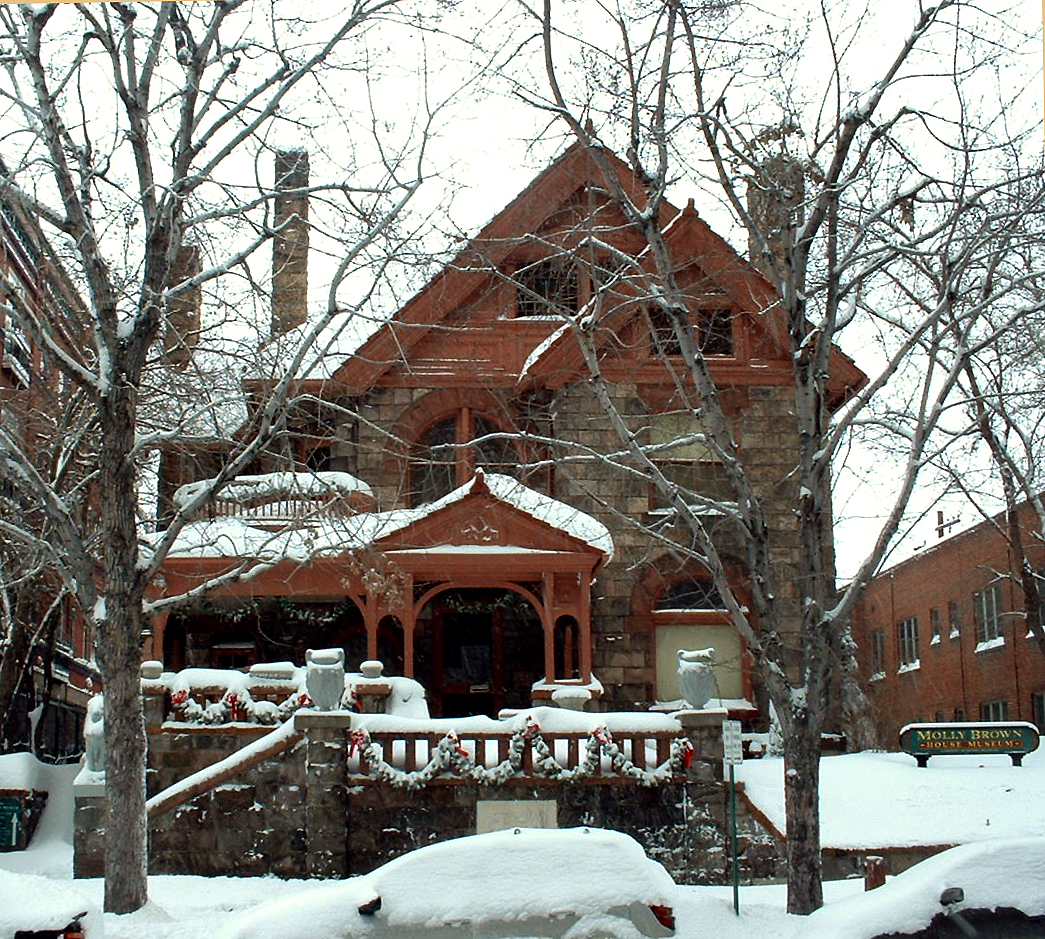
Molly Brown House Museum

The Victorian home of Margaret Brown, the Titanic survivor and activist remembered as the Unsinkable Molly Brown.

This stone house on Pennsylvania Street was built around 1889 in the Queen Anne style, at a time when Capitol Hill was filling with the mansions of Denver's newly rich.

In the 1890s it became the home of James Joseph Brown, who had made a fortune in mining, and his wife, Margaret Tobin Brown, who would become one of the most famous women of her era.

Margaret Brown survived the sinking of the Titanic in 1912 and became known for helping other passengers in her lifeboat and for raising money for survivors.

Long before and after that night, she was an activist for women's rights, workers' rights, children's welfare and historic preservation. The nickname the Unsinkable Molly Brown came later, popularized by a Broadway musical and a film.

In the 1970s the house was threatened with demolition, and its rescue led to the creation of Historic Denver, one of the city's leading preservation organizations.

Today the restored house is a museum filled with period furnishings and objects, and guided tours tell the story of Margaret Brown's life and of Denver at the turn of the 20th century.

Visiting

The museum is open for guided tours most days except Mondays; check the museum's website for current hours and ticket options, and book ahead on weekends. It is located in the Capitol Hill neighborhood, a short walk from the Colorado State Capitol. Allow about an hour for a tour.

Insider tip: Ask your guide about Margaret Brown's activism beyond the Titanic story; it is the most surprising part of the visit and explains why she remains a Denver icon.

📍 View on Google Maps →

Historic Building · Civic Center · 1906

U.S. Mint at Denver

A working federal mint in a stately downtown building, producing billions of coins and offering free tours.

The United States Mint at Denver struck its first coins in 1906 and remains one of the main coin production facilities in the United States.

Its granite and marble building, inspired by Italian Renaissance palaces, stands on Colfax Avenue near Civic Center Park, and it has expanded over the years as production grew. Coins made here carry a small D mint mark.

The Mint has its share of history. In 1922, robbers attacked a Federal Reserve truck outside the building, a dramatic episode that became part of Denver lore.

Over the decades, the facility has produced coins for everyday use as well as commemorative and collector coins, and it also stores a portion of the country's gold reserves.

Guided tours take visitors through exhibits on the history of coinage and the Denver Mint, and offer a view of the production floor where blanks are pressed into coins. It is a fascinating and free look at a working government facility in the middle of the city.

Visiting

Tours are free but must be reserved online in advance, and spaces are limited. Tours generally run Monday through Thursday, and visitors must be at least seven years old. Security is strict: bags and many personal items are not allowed, so check the U.S. Mint's website for the current rules before you go. Allow about an hour.

Insider tip: Book your tour as soon as reservations open for your dates, since they go quickly, and leave your bag at the hotel to make security easy.

📍 View on Google Maps →

Stadium · LoDo · 1995

Coors Field

The home of the Colorado Rockies, a classic ballpark whose purple row of seats marks one mile above sea level.

Coors Field opened in 1995 as the home of the Colorado Rockies, Major League Baseball's team in Denver.

Built of red brick in a traditional style, it fits into the warehouse district around it, and its arrival helped transform Lower Downtown from a neglected area into one of the liveliest neighborhoods in the city.

The ballpark is known for several details. A row of purple seats in the upper deck marks the elevation of exactly one mile above sea level.

The thin air at this altitude means baseballs travel farther than at most other stadiums, which has given Coors Field a reputation for high-scoring games. Beyond the outfield, a view of the Rocky Mountains appears on clear days.

A large rooftop deck in the upper level, with bars and views of the skyline and the mountains, is a popular place to watch a game, especially in the evening.

On game days, the surrounding streets fill with fans, and the bars and restaurants of LoDo stay busy long after the final out.

Visiting

The Rockies' season runs from spring to early fall, and tickets for most games are easy to find, including inexpensive seats. Guided ballpark tours are offered on many days; check the team's website for schedules. Coors Field is a short walk from Union Station and Larimer Square.

Insider tip: Find the purple row in the upper deck before the game, then head to the rooftop deck at sunset for a view of the mountains behind the field.

📍 View on Google Maps →

Botanical garden · Cheesman Park · Founded in 1951

Denver Botanic Gardens

A garden of themed landscapes and a tropical conservatory, showcasing plants that thrive in Colorado's dry, high-altitude climate.

Denver Botanic Gardens was founded in 1951 and moved in the following decade to its main site on York Street, next to Cheesman Park.

Over the years it has grown into one of the leading botanic gardens in the United States, with dozens of distinct gardens spread over its grounds and a strong focus on plants adapted to the dry climate of the American West.

The gardens' most recognizable building is the Boettcher Memorial Tropical Conservatory, a concrete-and-glass structure opened in 1966 that shelters a humid world of tropical plants under its curved roof.

Outdoors, visitors can explore a Japanese garden, water gardens with lilies, rock alpine gardens, plains and steppe gardens, and collections of plants from around the world.

The gardens are also a cultural venue, with art exhibitions, a summer concert series and a winter light show that draws large crowds during the holidays.

A second location, Chatfield Farms in the southwest suburbs, offers a working farm and natural areas, and is known for seasonal events.

Visiting

The York Street gardens are open daily, with timed tickets recommended on weekends and during special events. Summer concerts and the winter lights event require separate tickets that often sell out, so book early. Allow two to three hours. The gardens are a short drive or bus ride from downtown.

Insider tip: Visit in late spring or early summer, when the water lilies and perennial gardens are at their best, and end in the tropical conservatory if the weather turns.

📍 View on Google Maps →

Luxury hotel · Downtown · 1892

Brown Palace Hotel

A grand Victorian hotel with a soaring atrium, famous for its afternoon tea and its long list of famous guests.

The Brown Palace Hotel opened in 1892, built by Henry Cordes Brown, a businessman who had arrived in Denver in its early years and donated the land for the Capitol. Designed by the architect Frank E.

Edbrooke, the hotel occupies a triangular lot downtown, and its exterior of red granite and sandstone is decorated with carved medallions of Rocky Mountain animals.

Inside, the hotel's main feature is its atrium lobby, which rises through several floors of cast-iron balconies to a stained-glass ceiling.

The Brown Palace has hosted many presidents, celebrities and performers over the decades, including the Beatles during their 1964 visit to Denver, and it has operated continuously since it opened.

The hotel is also known for its traditions. Afternoon tea is served in the atrium lobby, accompanied by live music, and the hotel's restaurants and bars, including a classic steakhouse, have long been part of Denver's social life.

The hotel even has its own artesian well, which supplies water to the building.

Visiting

You do not need to stay at the hotel to visit: the atrium lobby, restaurants and bars are open to the public. Afternoon tea requires a reservation, especially on weekends and during the holidays. The hotel is located downtown at the corner of 17th Street and Tremont Place, a short walk from the Capitol and the 16th Street corridor.

Insider tip: Book afternoon tea in the atrium, then look up at the stained-glass ceiling and find the carved animal medallions on the building's exterior on your way out.

📍 View on Google Maps →

Science Museum · City Park · Founded in 1900

Denver Museum of Nature & Science

A large natural history and science museum in City Park, with dioramas, dinosaurs, a planetarium and a famous view of the mountains.

The Denver Museum of Nature & Science was founded in 1900 as the Colorado Museum of Natural History and opened its first building in City Park in 1908.

It has grown into one of the largest natural history museums in the United States, with collections that range from fossils and minerals to anthropology and space science.

The museum is famous for its wildlife dioramas, which recreate habitats from around the world and from Colorado with remarkable realism.

Its Prehistoric Journey exhibit traces the history of life on Earth through fossils and dinosaur skeletons, while other galleries cover gems and minerals, Egyptian mummies, the human body and space exploration. A planetarium and a giant-screen theater add immersive shows.

The museum's setting is part of its appeal. From the steps and terraces at the back of the building, visitors enjoy one of the classic views of Denver: the lake in City Park, the downtown skyline and, on clear days, the long line of the Rocky Mountains on the horizon.

Visiting

The museum is open daily. Tickets for the planetarium and giant-screen theater are sold separately, and some special exhibitions require an additional ticket. City Park is a short drive or bus ride east of downtown, and the Denver Zoo is next door, making it easy to combine the two. Allow half a day.

Insider tip: Before or after your visit, walk to the terrace on the west side of the museum for the view of the skyline and the mountains, especially beautiful in the late afternoon.

📍 View on Google Maps →

Frequently Asked Questions

What are the best landmarks to see if I only have limited time in Denver?

Start downtown at Union Station, walk to Larimer Square and continue to the Colorado State Capitol for the mile-high step and the gold dome. If you have half a day more, drive west to Red Rocks Park and Amphitheatre, about half an hour from downtown, for the views and the rock formations.

Which Denver landmarks are free to visit?

Union Station's Great Hall, Larimer Square, the grounds of the Colorado State Capitol and Red Rocks Park outside of ticketed events are free. Guided tours of the Capitol and of the U.S. Mint are also free, though the Mint requires an online reservation. Museums and the Botanic Gardens charge admission.

Where is the mile-high marker in Denver?

On the west steps of the Colorado State Capitol. Several markers have been placed over the years; the most recent survey, in 2003, placed a brass benchmark on the 13th step, which is now treated as the official one-mile point. The older engraving on the 15th step is still there.

Can I visit Red Rocks if I don't have concert tickets?

Yes. The park and the amphitheatre are open to visitors on most days, and you can walk the seats, climb the stairs and explore the trails among the rock formations. On show days the venue closes to the public in the afternoon, so check the event calendar and visit in the morning.

How do I get around Denver's main landmarks without a car?

Downtown landmarks such as Union Station, Larimer Square, the Capitol, the Brown Palace and the Denver Art Museum are within walking distance or a short bus ride of one another. The A Line train links Union Station with the airport. Red Rocks is best reached by car, rideshare or a shuttle on concert nights.

Does the altitude affect visitors to Denver?

At about 5,280 feet, Denver's altitude can make some visitors tired or short of breath at first, and alcohol and sun feel stronger. Drink plenty of water, use sunscreen and take it easy on your first day, especially before hiking or climbing the stairs at Red Rocks.