Honolulu landmarks
Photo: Ossewa · CC BY-SA 4.0

Landmarks

Honolulu's Most Iconic Landmarks

A deep guide to Honolulu's iconic landmarks: Iolani Palace, Diamond Head, Pearl Harbor, Waikiki Beach and the Bishop Museum, with practical visiting tips.

Honolulu grew from a sheltered harbor on the south shore of Oahu into the capital of the Kingdom of Hawaii, then of the territory and finally of the 50th state.

Its name means sheltered bay in Hawaiian, and its history is written in its landmarks: royal palaces and churches from the time of the Hawaiian monarchy, a harbor that welcomed whalers, traders and ocean liners, and military sites that recall the attack on Pearl Harbor in 1941.

The city stretches between the Pacific and the green ridges of the Koolau Range, with the crater of Diamond Head standing guard over Waikiki.

Honolulu's landmarks tell that story. Iolani Palace, completed in 1882, recalls the reign of the last Hawaiian monarchs and the overthrow of Queen Liliuokalani in 1893.

Kawaiahao Church was built from blocks of coral, the Bishop Museum preserves the treasures of the Hawaiian royal family, and the USS Arizona Memorial honors those who died on December 7, 1941.

Waikiki, once a retreat for Hawaiian royalty, became the birthplace of modern surfing and one of the most famous beaches in the world.

This guide gathers eleven landmarks that define Honolulu: royal and religious buildings, museums, memorials, natural sites and modern icons. For each one you will find what it is, why it matters, what to look for and how to visit sensibly.

Read it from start to finish for a portrait of the city, or jump to the places that interest you and build your own route between downtown, Waikiki and the coast.

Royal Palace · Downtown · 1882

Iolani Palace

The only royal palace on American soil, home of the last monarchs of the Kingdom of Hawaii.

Iolani Palace was completed in 1882 for King Kalakaua, who wanted a residence worthy of a modern kingdom. It had electric lighting by 1887 and a telephone, innovations that were rare at the time.

After the king's death, his sister, Queen Liliuokalani, reigned here until the overthrow of the Hawaiian monarchy in 1893.

In 1895, the queen was imprisoned in an upstairs room of the palace for several months. The building later served as the seat of government of the territory and then of the state, until the new State Capitol opened in 1969.

Restored and opened as a museum, it now displays the throne room, the royal bedrooms, the grand staircase of koa wood and many original furnishings.

On the grounds, the coronation pavilion, the royal burial mound and the Iolani Barracks recall the life of the court.

Visiting

Guided and self-guided tours are available on set days and should be booked in advance. Allow one to two hours. The palace is downtown, across from the King Kamehameha statue, and is easy to combine with the State Capitol and Kawaiahao Church.

Insider tip: Take the guided tour if you can, as the docents bring the history of the monarchy to life, and visit the galleries in the basement for the crown jewels and royal objects.

📍 View on Google Maps →
Volcanic Crater · Diamond Head · 1908

Diamond Head State Monument

The volcanic crater that rises above Waikiki, with a summit trail and sweeping views of the coast.

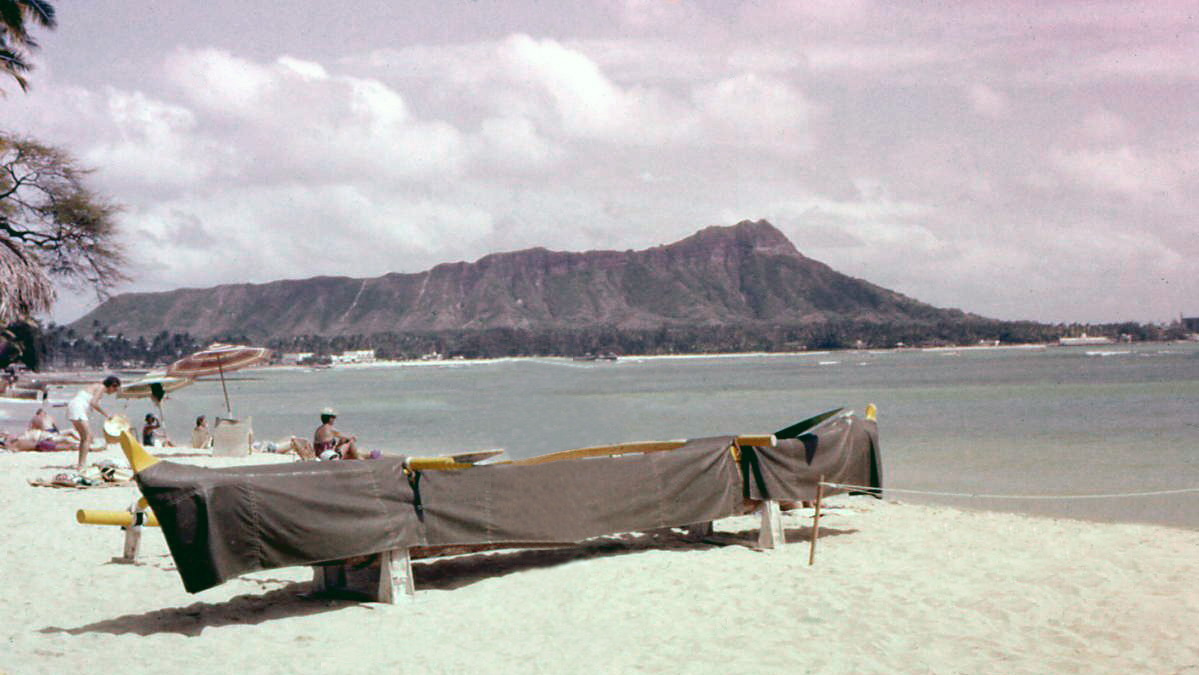
Diamond Head is a volcanic tuff cone formed by an eruption long ago. Its Hawaiian name, Leahi, is often linked to the shape of the ridge, and the English name came from 19th-century sailors who mistook calcite crystals on its slopes for diamonds.

Its silhouette behind Waikiki is the most recognizable image of Honolulu.

In the early 20th century, the crater became part of Oahu's coastal defense system. The summit trail was built in 1908 to reach a fire control station on the rim, and visitors still pass through bunkers, a tunnel and steep stairs on the way up.

From the summit, the views take in Waikiki, the Honolulu skyline, the Koolau Range and the coast toward Koko Head, and in winter you may see whales offshore.

Visiting

Nonresidents must reserve a time slot for entry, and for parking if arriving by car, through the state parks system. Allow about one and a half to two hours. The crater is reached by bus, trolley, rideshare or on foot from Waikiki, and there is little shade on the trail.

Insider tip: Book one of the earliest slots, bring water, sun protection and good shoes, and take your time on the stairs near the summit.

📍 View on Google Maps →

Memorial & Museums · Pearl Harbor · 1962

Pearl Harbor National Memorial

The site of the attack of December 7, 1941, with the USS Arizona Memorial and several museums.

On the morning of December 7, 1941, Japanese aircraft attacked the American fleet and military bases at Pearl Harbor, pulling the United States into World War II. The battleship USS Arizona exploded and sank, and 1,177 of its crew died. Most of them remain inside the hull.

The USS Arizona Memorial, dedicated in 1962, is a white structure that spans the sunken battleship without touching it. Visitors reach it by boat after a documentary film, and drops of oil still rise to the surface from the wreck.

The visitor center has museums, exhibits and a waterfront walk.

Nearby, the Battleship Missouri, on whose deck Japan's surrender was signed in 1945, the Pacific Fleet Submarine Museum and the Pearl Harbor Aviation Museum complete the visit.

Visiting

The visitor center is free, and USS Arizona Memorial tickets are booked online with a small reservation fee. The Battleship Missouri, the Submarine Museum and the Aviation Museum require paid tickets. Bags are not allowed, but storage is available. Allow half a day or more.

Insider tip: Reserve the USS Arizona program as early as possible, arrive before your time slot and leave bags at your hotel to save time.

📍 View on Google Maps →

Beach & District · Waikiki · 1901

Waikiki Beach

The world-famous beach where modern surfing was born, with Diamond Head on the horizon.

Long before the hotels, Waikiki was a place of fishponds, taro fields and coconut groves, and a retreat for Hawaiian chiefs and royalty, who surfed its gentle waves.

In 1901, the Moana Hotel, now the Moana Surfrider, opened as Waikiki's first large hotel, and the pink Royal Hawaiian followed in 1927. In the 1920s, the Ala Wai Canal drained the surrounding wetlands, opening the way for the resort district.

Waikiki is also where Duke Kahanamoku, the Olympic swimming champion born in Honolulu, helped spread surfing around the world. His bronze statue, unveiled in 1990 at Kuhio Beach, is often draped with lei.

Today the beach is divided into sections, from Kahanamoku Beach and Fort DeRussy to the central beach and Kuhio Beach, with surf schools, outrigger canoes and calm swimming areas behind breakwaters.

Visiting

The beach is free and public. Surf lessons, canoe rides and board rentals are available along the sand. Waikiki is easy to explore on foot, and buses and trolleys connect it with the rest of the city.

Insider tip: Come early in the morning for calm water and soft light, and stay until sunset, when the beach is at its most beautiful.

📍 View on Google Maps →

Monument · Downtown · 1883

King Kamehameha Statue

A gilded bronze statue of the king who united the Hawaiian Islands, facing Iolani Palace.

Kamehameha I united the Hawaiian Islands under a single kingdom in the early 19th century. His statue in Honolulu was designed by the American sculptor Thomas Gould and cast in Europe.

The first casting was lost at sea, so a second one was made and unveiled in front of Aliiolani Hale in 1883. The original was later recovered and now stands in Kapaau, on Hawaii Island, near the king's birthplace.

The statue shows the king with a feathered cloak, a helmet and a spear, his right arm outstretched in welcome. Every year on June 11, King Kamehameha Day, it is draped with long lei during a ceremony.

Visiting

The statue is free to see at any time. It stands on King Street in front of Aliiolani Hale, home of the Hawaii State Supreme Court, across from Iolani Palace. Allow 15 minutes.

Insider tip: Visit around June 11 to see the statue draped with lei that can measure several meters long.

📍 View on Google Maps →

Historic Church · Downtown · 1842

Kawaiahao Church

A church built of coral blocks, long known as the royal church of the Hawaiian Kingdom.

Kawaiahao Church was built between 1836 and 1842 under the direction of missionary Hiram Bingham. Hawaiians cut about 14,000 blocks of coral from the reefs offshore to build it, a huge collective effort.

It served as the royal chapel of the kingdom, and several kings and queens were crowned, married or honored here.

The church remains an active congregation, with services that include Hawaiian language and hymns. On its grounds is the tomb of King Lunalilo, who asked to be buried here rather than in the Royal Mausoleum, among his people.

Visiting

The church can be seen from the outside at any time, and visitors are welcome to respectful visits and Sunday services. It is a short walk from Iolani Palace. Allow 30 minutes.

Insider tip: Look closely at the walls to see the texture of the coral blocks, and visit the royal portraits inside if the church is open.

📍 View on Google Maps →

Museum · Kalihi · 1889

Bishop Museum

Hawaii's largest museum, with the world's greatest collection of Hawaiian and Pacific cultural objects.

The Bishop Museum was founded in 1889 by Charles Reed Bishop in memory of his wife, Princess Bernice Pauahi Bishop, the last direct descendant of the Kamehameha royal family. It was created to house her collection of Hawaiian artifacts and heirlooms.

Its grand Hawaiian Hall, with three floors of dark koa wood galleries, tells the story of Hawaiian culture, gods, royalty and daily life. Featherwork capes and royal objects are among its treasures.

The Pacific Hall presents the cultures of Polynesia, Micronesia and Melanesia, and the museum also has a planetarium and a science center devoted to volcanoes and the natural history of the islands.

Visiting

Tickets are sold online and at the entrance. Allow half a day. The museum is in Kalihi, northwest of downtown, reachable by bus, rideshare or car, with parking on site.

Insider tip: Join one of the guided tours or cultural demonstrations offered during the day to understand the Hawaiian Hall's collections.

📍 View on Google Maps →

Architecture · Downtown · 1969

Hawaii State Capitol

A modernist capitol whose design evokes Hawaii's volcanoes, ocean and palm trees.

The Hawaii State Capitol was completed in 1969, ten years after statehood.

Its architects designed it as a symbol of the islands: the two cone-shaped legislative chambers recall volcanoes, the columns around the building evoke palm trees, and the reflecting pool that surrounds it represents the ocean.

The central courtyard is open to the sky, and a large mosaic of the sea by artist Tadashi Sato decorates its floor. Nearby stand a statue of Queen Liliuokalani, facing Iolani Palace, and a statue of Father Damien, who cared for patients with Hansen's disease on Molokai.

Visiting

The grounds and courtyard are free to visit during the day. The Capitol is next to Iolani Palace downtown. Allow 30 minutes.

Insider tip: Look up from the open courtyard to see the sky framed by the building, and walk around to the Queen Liliuokalani statue.

📍 View on Google Maps →

Historic Tower · Downtown · 1926

Aloha Tower

The clock tower that once welcomed ocean liners to Honolulu Harbor.

Aloha Tower opened in 1926 at Pier 9 of Honolulu Harbor. For decades it was the tallest building in Hawaii, and in the era of ocean liners, its clock faces, with the word Aloha written above them, greeted passengers arriving by sea.

Crowds and musicians gathered on the pier to welcome ships with lei.

Today the tower stands among taller buildings, but it remains a symbol of the harbor. Its observation deck on the top floor offers views of the port, downtown and the ocean, and cruise ships still dock nearby.

Visiting

The tower is at the waterfront downtown, a short walk from the historic district. Check the observation deck's hours before you go. Allow 30 minutes to an hour.

Insider tip: Visit when a cruise ship is in port to imagine the boat days of the past, and look for the Aloha lettering above the clocks.

📍 View on Google Maps →

Museum · Makiki · 1927

Honolulu Museum of Art

A museum of art from Hawaii, Asia, Europe and the Americas, set around peaceful courtyards.

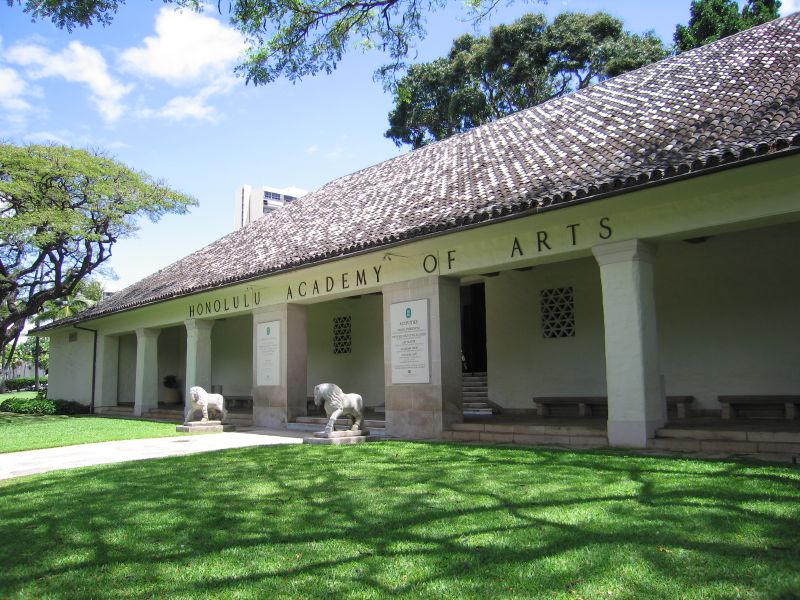
The Honolulu Museum of Art was founded by Anna Rice Cooke and opened in 1927 in a building designed to reflect Hawaii's mix of cultures, with tile roofs, open-air courtyards and galleries arranged around gardens. Its collection grew to include tens of thousands of works.

The museum is known for its Asian art, including an important collection of Japanese woodblock prints, as well as European and American paintings, art from Hawaii and the Pacific and contemporary works.

The museum also organizes the guided tours of Shangri La, Doris Duke's estate of Islamic art near Diamond Head.

Visiting

Tickets are sold online and at the entrance. Allow two hours. The museum is on Beretania Street, near downtown, reachable by bus or car, with parking nearby.

Insider tip: Take a break in one of the courtyards, and book a Shangri La tour well in advance if you want to see Doris Duke's estate.

📍 View on Google Maps →

Nature Preserve · Hawaii Kai · 1967

Hanauma Bay Nature Preserve

A protected bay in a volcanic crater, famous for snorkeling over coral reef.

Hanauma Bay formed when the sea broke into a volcanic crater on Oahu's southeast shore, creating a curved bay sheltered from the open ocean. A coral reef lines its floor, home to tropical fish and sea turtles.

In 1967, the bay became a Marine Life Conservation District, and fishing is prohibited.

To protect the reef from heavy use, the city limits the number of visitors with reservations, closes the preserve on two days each week and requires every visitor to watch an educational video about the reef before going down to the beach.

Visiting

Nonresidents must reserve online a few days in advance and pay an entrance fee; Hawaii residents enter free. The preserve is closed on Mondays and Tuesdays. Allow half a day. It is about 30 minutes by car from Waikiki.

Insider tip: Book as soon as reservations open, use reef-safe sunscreen and never stand on or touch the coral.

📍 View on Google Maps →

Frequently Asked Questions

What are the best landmarks to see if I only have limited time in Honolulu?

Start early with the Diamond Head summit hike, then spend the late morning at Iolani Palace and the King Kamehameha statue downtown. In the afternoon, visit Pearl Harbor with a reserved USS Arizona Memorial ticket, and end the day at Waikiki Beach for the sunset.

Which Honolulu landmarks are free to visit?

Waikiki Beach, the Duke Kahanamoku statue, the King Kamehameha statue, the grounds of Iolani Palace, the Hawaii State Capitol and Kawaiahao Church from the outside are free. The Pearl Harbor Visitor Center is free, and the USS Arizona Memorial program only has a small online reservation fee.

Do I need a reservation for Pearl Harbor?

Yes for the USS Arizona Memorial. Tickets for the program are booked online through Recreation.gov, with a small booking fee, and same-day walk-up tickets are no longer offered. The visitor center and its museums can be visited without a ticket. Bags are not allowed, but paid storage is available.

How hard is the Diamond Head hike?

The trail is short but steep, with switchbacks, stairs and a tunnel on the way to the summit. Most people need about one and a half to two hours round trip. Nonresidents must reserve entry in advance, and it is best to start early before the heat.

How do I get around Honolulu's main landmarks without a car?

Waikiki and downtown are linked by TheBus and trolleys, and downtown's historic sites are within walking distance of one another. Buses reach Pearl Harbor, the Bishop Museum and Diamond Head, and rideshare is widely available.

What is the best season to visit Honolulu's landmarks?

Honolulu is warm all year. April, May, September and October offer pleasant weather with fewer crowds. The winter months bring more showers but also whale season, and summer is busy and hot, so plan outdoor sights for the morning.