Los Angeles
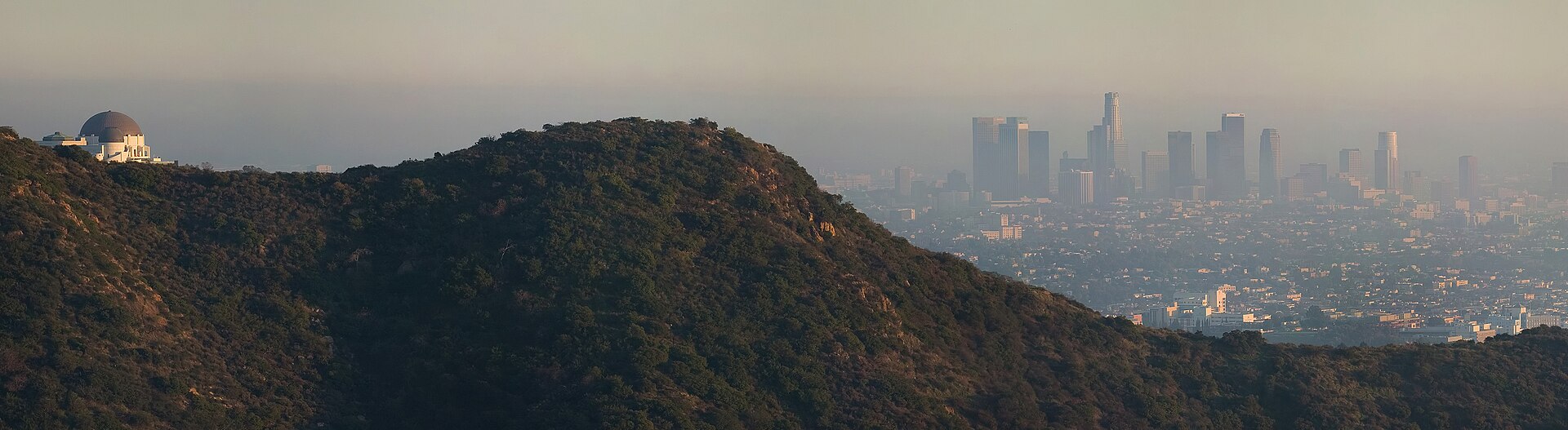
Photo: Diliff · CC BY-SA 3.0

Photo Spots

Most Instagrammable Places & Best Views in Los Angeles

The best photo spots in Los Angeles: Griffith Observatory, the Hollywood Sign, skyline views, beach sunsets, murals, and the most photogenic streets.

Los Angeles is one of the most photogenic cities in the world, a sprawling place where hilltop observatories, mid-century signage, Frank Gehry's steel curves, and a wide-open Pacific horizon all reward a photographer willing to chase the light.

The city runs on golden hour: the downtown skyline stacks up behind the Hollywood Sign from Griffith Observatory at sunset, the marine layer softens the hills at dawn, and the beaches from Santa Monica to Malibu give you clean, uninterrupted sunsets over open ocean that few big cities can match.

This guide is built from real, specific locations, organized so you can shoot skyline panoramas, iconic Instagram frames, elevated viewpoints, night scenes, ocean sunsets, palm-lined streets, and mural-covered neighborhoods.

Bring a wide lens for the architecture and the murals, a longer lens to compress the skyline behind the sign, and plan your driving, because the best Los Angeles photos usually come from stringing several of these spots together across a single golden-hour route.

5 places on the map · tap a pin for details

At a glance

The top pick in each category, at a glance.

CategoryOur pick
Best overallGriffith Observatory📍 View
Skyline ViewsGriffith Observatory📍 View
Most Iconic & Instagrammable SpotsHollywood Sign📍 View
Views From Above: Observation Decks & High PointsGriffith Observatory📍 View
Spots to Photograph Los Angeles at NightEcho Park Lake📍 View
Sunset SpotsEcho Park Lake📍 View
Views From the WaterLos Angeles Harbor Cruise (San Pedro)📍 View
Aesthetic Streets & ArchitectureBradbury Building📍 View

Top Picks

⛴️GetYourGuide skyline & sunset cruises, see Los Angeles from the water. Affiliate slot (stub).
Griffith Observatory

📍 Los Feliz / Griffith Park

Griffith Observatory

◷ Blue hour

Los Angeles's signature skyline-and-hills shot. The Art Deco domes sit above the whole basin, with downtown towers glittering to the southeast and the Hollywood Sign visible to the west. Blue hour turns the copper domes and city grid into a two-layer glow.

Where to shoot: Stand on the west lawn or the front terrace with the building on one side and the downtown skyline spread across the basin.

Pro tip: Use a 24–35mm to keep both the lit building and the distant grid in frame, and shoot a 2–4s exposure at f/8 as the sky deepens to balance the domes against the city lights.

📍 View on Google Maps →
Lake Hollywood Park (Hollywood Sign)

📍 Hollywood Hills

Lake Hollywood Park (Hollywood Sign)

◷ Golden hour

The cleanest unobstructed view of the Hollywood Sign, close enough to fill a long lens. A grassy park with the letters riding the ridge of Mount Lee, framed by chaparral and the occasional palm.

Where to shoot: Set up at the north end of the lawn on Canyon Lake Drive with the sign centered on the ridgeline above.

Pro tip: Compress the letters with a 100–200mm and wait for late golden light to rake across the ridge, adding a person low in the frame for scale.

📍 View on Google Maps →
Walt Disney Concert Hall

📍 Downtown / Bunker Hill

Walt Disney Concert Hall

◷ Golden hour

Frank Gehry's billowing stainless-steel sails are pure sculptural chaos. The curves catch and warp light and reflected sky, giving endless abstract compositions from street level up to the rooftop garden.

Where to shoot: Work the Grand Avenue and Second Street corners where the panels overlap, then climb to the Blue Ribbon Garden for curving abstracts.

Pro tip: Shoot at 24–35mm to exaggerate the sweeping curves and use a polarizer to control glare, exposing for the bright steel so the reflected sky holds tone.

📍 View on Google Maps →
Urban Light at LACMA

📍 Miracle Mile

Urban Light at LACMA

◷ Blue hour

Chris Burden's grid of 202 restored cast-iron street lamps is one of LA's most photographed installations. The columns line up into deep symmetrical corridors that glow the moment the lamps switch on at dusk.

Where to shoot: Step into the middle of the grid and shoot straight down a row of lamps for repeating leading lines.

Pro tip: Time your visit for the exact moment the lamps flick on against a still-blue sky, then use f/8 and a low angle to stack the columns into an endless corridor.

📍 View on Google Maps →
Venice Canals

📍 Venice

Venice Canals

◷ Golden hour

A quiet grid of narrow waterways, arched footbridges, and eclectic homes left over from Abbot Kinney's 1905 dream of a California Venice. Reflections, moored dinghies, and lush gardens make an intimate, storybook walk.

Where to shoot: Frame from the crest of one of the arched pedestrian bridges looking down the canal toward the reflected houses.

Pro tip: Use a 35–50mm and get low near the water to catch mirror reflections, shooting at f/8 with warm evening light on the pastel facades.

📍 View on Google Maps →
Santa Monica Pier

📍 Santa Monica

Santa Monica Pier

◷ Night

The neon Ferris wheel of Pacific Park glowing over the ocean is a classic LA night frame, and the pier's pilings and the Route 66 end sign add options day or night.

Where to shoot: Shoot the illuminated Ferris wheel and roller coaster from the beach just north of the pier, or from the pier deck itself.

Pro tip: Use a tripod and a 4–10s exposure at f/11 to let the spinning wheel render as light trails while keeping the pier structure sharp.

📍 View on Google Maps →
Bradbury Building

📍 Downtown / Historic Core

Bradbury Building

◷ Midday

A plain brick exterior hides an 1893 atrium of wrought-iron railings, open-cage elevators, marble stairs, and a glass roof that floods the court with light. A cinematic interior seen in Blade Runner and countless films.

Where to shoot: Stand on the ground floor of the light court looking up the ironwork and staircases toward the skylight.

Pro tip: Go at midday when sun fills the atrium, brace on a railing or the floor, and bracket exposures to hold the bright skylight and shadowed ironwork.

📍 View on Google Maps →
Angels Flight Railway

📍 Downtown / Bunker Hill

Angels Flight Railway

◷ Golden hour

A tiny orange funicular, billed as the world's shortest railway, climbing a steep incline between Hill Street and Bunker Hill. The two counterbalanced cars and their arched station make a bold graphic subject.

Where to shoot: Shoot up the tracks from the lower Hill Street station as the two cars pass mid-slope.

Pro tip: Frame straight up the incline with a 35–50mm to compress the tracks and catch both cars crossing, exposing for the bright orange bodies at f/8.

📍 View on Google Maps →
Watts Towers

📍 Watts

Watts Towers

◷ Golden hour

Simon Rodia's soaring folk-art spires, built by hand over 33 years from steel, mortar, and embedded tile, shells, and glass. Intricate, glittering, and utterly singular against the sky.

Where to shoot: Work the perimeter fence and the entry courtyard to isolate the tallest spires against open sky.

Pro tip: Use low golden light to make the embedded glass and pottery sparkle, shooting at f/8 and moving to layer the lacy steelwork against a clean background.

📍 View on Google Maps →
El Matador State Beach

📍 Malibu

El Matador State Beach

◷ Sunset

Weathered sea stacks, arches, and sea caves rising from the sand below crumbling bluffs. One of Southern California's most dramatic coastlines, glowing amber as the sun drops into the Pacific.

Where to shoot: Descend the bluff stairs and shoot the sea stacks and arches with the sun setting behind them over the water.

Pro tip: Bring a tripod and ND filter for a 1–2s exposure at f/11 to smooth the surf around the rocks, and check the tide chart so the caves and arches are accessible.

📍 View on Google Maps →
Point Dume

📍 Malibu

Point Dume

◷ Golden hour

A headland bluff with a boardwalk overlook gazing down a long curve of coast toward Zuma Beach. Wide ocean, kelp beds, and a sweeping golden shoreline, with winter whales offshore.

Where to shoot: Walk the bluff-top boardwalk to the overlook and shoot northwest along the curving Zuma shoreline.

Pro tip: Use a 24–70mm to trace the shoreline curve as a leading line and place the horizon high, exposing for the sky at f/11 in warm late light.

📍 View on Google Maps →
Manhattan Beach Pier

📍 Manhattan Beach

Manhattan Beach Pier

◷ Sunset

A clean concrete pier with a round Mediterranean-style roundhouse at its end, reaching straight into the surf. Symmetrical, minimal, and beautiful backlit at sunset.

Where to shoot: Shoot straight down the pier deck toward the roundhouse, or from the beach with the pilings receding into the sun.

Pro tip: Center the pier for symmetry with a 24–35mm and expose for the sky as the sun sinks behind the roundhouse, using the pilings as repeating foreground.

📍 View on Google Maps →
Sixth Street Viaduct

📍 Boyle Heights / Arts District

Sixth Street Viaduct

◷ Blue hour

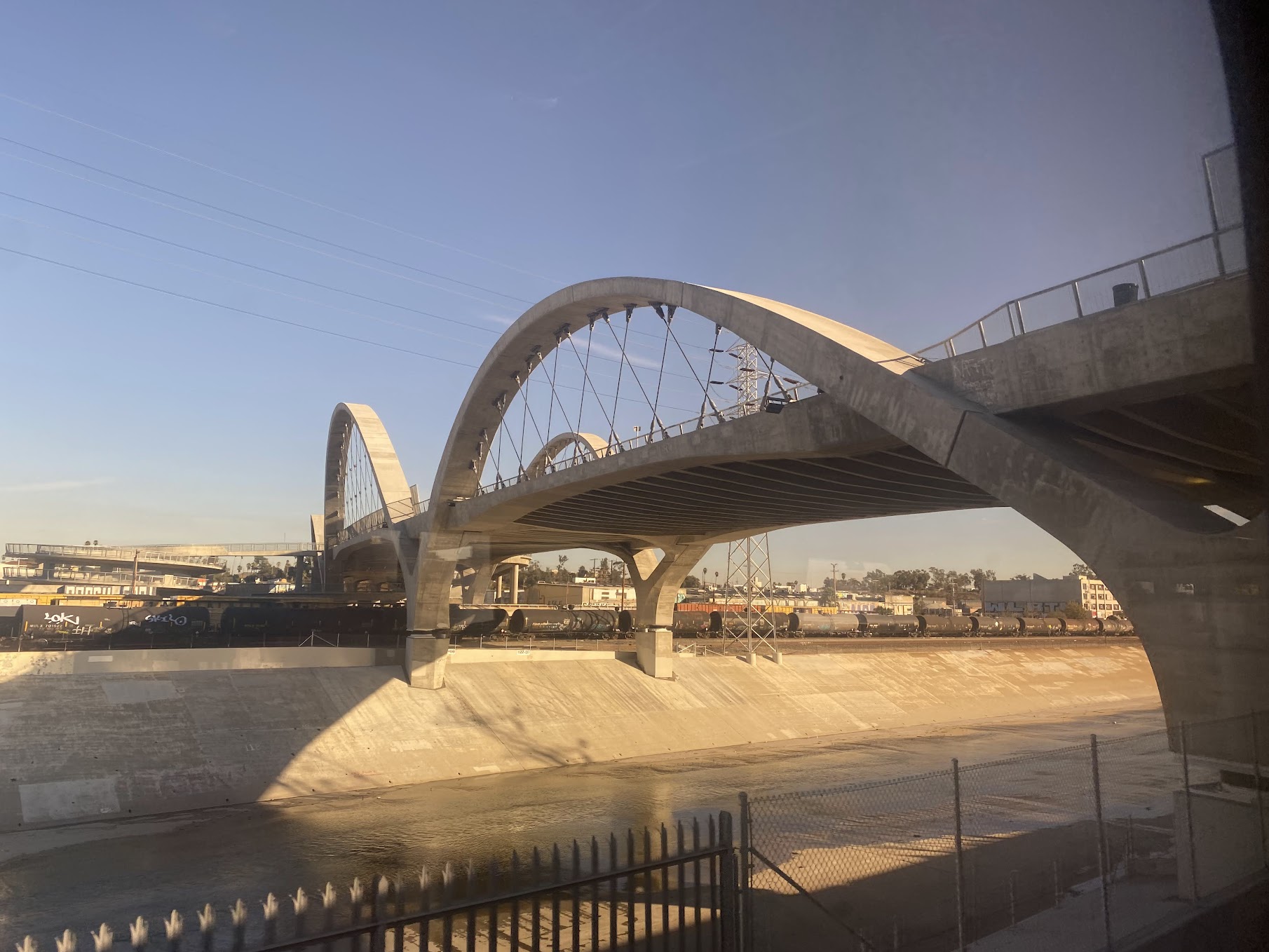
The 'Ribbon of Light' bridge over the LA River, a series of paired arches sweeping across the concrete channel. The rhythmic arches and downtown skyline behind make a striking modern-infrastructure frame.

Where to shoot: Drop to the river channel or the access ramps to shoot along the repeating arches toward the downtown skyline.

Pro tip: Use the arches as leading lines with a 24–35mm and shoot a long exposure at f/11 during blue hour to streak passing car lights beneath the lit arches.

📍 View on Google Maps →
Vista Hermosa Natural Park

📍 Westlake / Echo Park

Vista Hermosa Natural Park

◷ Sunset

A hillside park minutes from downtown with meadows, oaks, and a clean view of the skyline framed by grasses. An underrated close-in skyline vantage that feels rural.

Where to shoot: Climb to the upper meadow overlook where native grasses foreground the downtown towers.

Pro tip: Use a 50–85mm to compress the skyline behind swaying grasses, shooting into warm side light at f/8 with the towers on the upper third.

📍 View on Google Maps →
Baldwin Hills Scenic Overlook

📍 Culver City / Baldwin Hills

Baldwin Hills Scenic Overlook

◷ Golden hour

A steep stairway climb rewarded with a panorama stretching from downtown across the basin to the ocean on clear days. The best big-picture view of the LA sprawl.

Where to shoot: Reach the summit platform and shoot east toward the downtown cluster or west toward the coast.

Pro tip: Use a 70–200mm to pull the distant downtown towers over the layered basin haze, and shoot in low golden light when the air is clearest after rain.

📍 View on Google Maps →
Union Station

📍 Downtown

Union Station

◷ Midday

The last of America's grand rail terminals, blending Spanish Colonial, Mission, and Art Deco style. Cathedral-height waiting-room windows, leather seats, and travertine floors flood with warm afternoon light.

Where to shoot: Sit low in the historic ticketing hall to shoot the tall arched windows raking light across the floor and seats.

Pro tip: Wait for a shaft of afternoon sun across the empty benches, level a wide lens to avoid keystoning, and bracket for the bright windows against the dim hall.

📍 View on Google Maps →
The Getty Center

📍 Brentwood

The Getty Center

◷ Golden hour

Richard Meier's travertine-clad campus of clean geometry, courtyards, and a Central Garden, perched on a hilltop with a sweeping view of the city and sea. Architecture, gardens, and skyline in one visit.

Where to shoot: Work the travertine courtyards and pools for graphic geometry, then move to the south promontory for the city-to-ocean view.

Pro tip: Shoot the pale stone in warm late light to bring out its texture, using a polarizer on the reflecting pools and f/8 for crisp lines.

📍 View on Google Maps →
Abbot Kinney Boulevard

📍 Venice

Abbot Kinney Boulevard

◷ Midday

A walkable strip of boutiques, cafes, and one of the city's densest concentrations of large-scale murals, including the famous winged-heart wall. A colorful street-photography and portrait corridor.

Where to shoot: Walk the side walls and alleys off the boulevard to isolate individual murals head-on.

Pro tip: Shoot murals flat and parallel at f/8 to avoid keystoning, and place a person against the wall for scale and a pop of color contrast.

📍 View on Google Maps →
Runyon Canyon

📍 Hollywood Hills

Runyon Canyon

◷ Sunrise

A rugged trail climbing fast above the flats, delivering open ridge-top views of the Hollywood grid, downtown, and the sign. A favorite for sunrise haze and city-below compositions.

Where to shoot: Hike to the Cloud's Rest or Indian Rock overlook and shoot south across the city with the ridgeline in the foreground.

Pro tip: Use a 35–70mm to layer the near ridge, the sprawl, and the distant towers in morning haze, exposing for the sky at f/11.

📍 View on Google Maps →
The Last Bookstore

📍 Downtown / Historic Core

The Last Bookstore

◷ Midday

A cavernous former bank turned bookstore with towering shelves, a tunnel of arched books, and a mezzanine of book-art sculpture. A whimsical, texture-rich interior for creative frames.

Where to shoot: Head upstairs to the labyrinth and shoot through the arched book tunnel and around the paper sculptures.

Pro tip: Bump ISO to 1600 in the dim upper level, brace against a shelf, and use a 24–35mm to capture the arch tunnel with a person centered for scale.

📍 View on Google Maps →

Best Skyline Views in Los Angeles

Los Angeles hides its skyline in plain sight, best understood from the ring of hills and open parks that circle the basin rather than from within downtown itself.

These vantage points give you clean, layered panoramas over a vast bowl of city, most of them free and outdoors, and each works differently depending on the light and the marine layer.

  • Griffith Observatory

    ◷ Blue hour

    The definitive vantage: the downtown cluster sits far across the basin from the observatory's south-facing terraces, superb at blue hour when the towers ignite.

    Pro tip: Use a 70-135mm on a tripod to compress downtown across the basin, and time the afterglow to balance the tower lights against the deep sky.

  • Baldwin Hills Scenic Overlook

    ◷ Golden hour

    A stair climb of roughly 280 steps rewards you with a wide panorama that lines up downtown to the northeast and the ocean to the west.

    Pro tip: Shoot at 100mm to isolate the downtown stack, then swing wide to 24mm for the full sweep of basin and coastline.

  • Vista Hermosa Natural Park

    ◷ Blue hour

    The closest natural parkland to downtown, with grassy slopes framing the towers just to the southeast, an easy walk from the crowds.

    Pro tip: Use the meadow rise as a foreground and shoot at 35mm to keep the nearby skyline crisp against the darkening sky.

  • Los Angeles State Historic Park

    ◷ Blue hour

    The open lawn near Chinatown offers uninterrupted skyline angles with room to reposition along the park's length.

    Pro tip: Walk the path to find a lamppost or bench as a foreground anchor, then shoot at 35mm to keep the towers sharp behind it.

  • Angels Point, Elysian Park

    ◷ Sunrise

    A hilltop clearing above the arroyo that stacks the downtown towers into a compact skyline through the trees.

    Pro tip: Reach for a 135-200mm to compress the distant towers into a dense group above the ridgeline eucalyptus.

  • Kenneth Hahn State Recreation Area

    ◷ Golden hour

    An elevated vantage in the Baldwin Hills that lifts the whole basin skyline over rolling parkland, quieter than the coastal overlooks.

    Pro tip: Frame the ridgeline trail as a leading line at 24mm and expose for the warm-lit tower faces across the basin.

  • Ernest E. Debs Regional Park

    ◷ Blue hour

    A wooded hill in Montecito Heights with a pond and clearings that open toward downtown rising to the southwest.

    Pro tip: Place the pond off-center in the foreground and use a small aperture (f/11) to keep both the water and the towers sharp.

  • Ascot Hills Park

    ◷ Golden hour

    Rugged trails in El Sereno deliver a far-east vantage that makes the city feel like it rises out of open grassland.

    Pro tip: Use the hilltop grasses as a reflective foreground and shoot wide to let the slopes lead toward the skyline.

  • Barnsdall Art Park

    ◷ Golden hour

    The olive-topped knoll below Hollyhock House frames downtown beyond a sweep of lawn and the flats of East Hollywood.

    Pro tip: Follow the lawn's curve as an S-line at 24mm, keeping the olive trees in the lower third of the frame.

  • Grand Park

    ◷ Sunrise

    A downtown-level vantage between City Hall and the Music Center, with the fountain and tower bases stacked up close.

    Pro tip: Set up near the pink fountain with a 24mm to pull the tower faces large over the foreground water.

Most Iconic & Instagrammable Spots

These are the frames people recognize instantly, the signs, sculptures, and buildings that say 'Los Angeles' at a glance. Arrive early to shoot them without crowds, and look for fresh angles that go beyond the obvious tourist snapshot.

  • Hollywood Sign

    ◷ Blue hour

    The nine white letters on Mount Lee, the ultimate LA backdrop; shoot with a long lens to fill the frame or wide for the hillside sweep.

    Pro tip: From Lake Hollywood Park use a 200mm to compress the letters against the ridgeline, or climb the Griffith Park trails for a higher angle.

  • El Capitan Theatre Marquee

    ◷ Blue hour

    The glowing marquee and vertical blade on Hollywood Boulevard, a restored 1926 movie palace dripping with old-Hollywood neon.

    Pro tip: Stand across Hollywood Boulevard and use a 50mm to isolate the lit vertical blade sign against the dusk sky.

  • Urban Light (LACMA)

    ◷ Golden hour

    Chris Burden's grid of 202 restored cast-iron street lamps at LACMA's entrance, playful and glowing, especially once they switch on at dusk.

    Pro tip: Weave low through the columns with an ultrawide and wait for a silhouette to walk between the rows as the lamps warm on.

  • Walt Disney Concert Hall

    ◷ Blue hour

    Frank Gehry's billowing stainless-steel sails on Grand Avenue, one of the most photographed structures downtown, endlessly reframable.

    Pro tip: Find the curving steel panels off Grand Avenue and use the folds and reflections as abstract lines at 35mm.

  • Griffith Observatory

    ◷ Night

    The white Art Deco domes above the LA basin, glowing warmly against the city lights after dark.

    Pro tip: Set up on the front lawn and use a long exposure to smooth the sky while the domes and the skyline below stay lit.

  • Santa Monica Pier (Pacific Park)

    ◷ Night

    The solar-powered Ferris wheel and neon of Pacific Park over the ocean, vivid color after dark with the Pacific behind.

    Pro tip: Shoot from the beach below the pier during a lighting cycle and use f/11 for crisp starbursts off the wheel's bulbs.

  • Watts Towers

    ◷ Midday

    Simon Rodia's soaring mosaic spires of steel, tile, and glass in Watts, a bold color-and-geometry frame against the sky.

    Pro tip: Circle the tallest tower and use a 35mm to play its spiraling lattice off the blue midday sky.

  • 6th Street Viaduct

    ◷ Blue hour

    The 'Ribbon of Light' arches of the 2022 bridge over the LA River, a leading-line dream between Boyle Heights and the Arts District.

    Pro tip: Stand at the deck's edge and let the repeating arches march diagonally through the frame as a leading line.

  • Angels Flight

    ◷ Blue hour

    The orange funicular railway climbing Bunker Hill since 1901, its narrow track and railcars framing a vintage rising line.

    Pro tip: Shoot from the Hill Street base looking up the incline so the track and a passing railcar point toward the towers at 24mm.

  • 2nd Street Tunnel

    ◷ Anytime

    The white-tiled downtown tunnel famous from countless films and car ads delivers quintessential glossy-urban LA photos.

    Pro tip: Wait for headlights and use a slower shutter (1/30s) to blur a car streaking through the glowing tiled arch.

  • Levitated Mass (LACMA)

    ◷ Blue hour

    Michael Heizer's 340-ton granite boulder suspended over a concrete slot at LACMA, surreal, monumental, and endlessly composable.

    Pro tip: Walk down into the slot and shoot up at the hovering rock with a 24mm for a disorienting, weightless frame.

Views From Above: Observation Decks & High Points

For the god's-eye view, Los Angeles trades a wall of downtown decks for a mix of hilltop parks, one true skyscraper restaurant, and a deep bench of rooftops. Spots behind glass reward a lens hood or a rubber lens skirt pressed to the pane to kill reflections.

  • Griffith Observatory

    ◷ Golden hour

    From Mount Hollywood's south slope the lawns and terraces open onto the whole basin and the downtown skyline, with the Hollywood Sign off to the west.

    Pro tip: Work the west-facing terraces for the sunset over the basin, then wait for the grid to light up and shoot the skyline at 35mm.

  • 71Above

    ◷ Blue hour

    A restaurant on the 71st floor of the U.S. Bank Tower, the highest dining room in the West, wrapped in floor-to-ceiling glass for a true skyscraper vantage.

    Pro tip: Press the lens hood flat to the window to kill reflections and expose for the mix of street lights and lingering sky.

  • Perch LA

    ◷ Blue hour

    A two-level French rooftop atop the historic Pershing Square Building, looking straight over the square into the cluster of downtown towers.

    Pro tip: Use the upper terrace to look down on Pershing Square and frame the towers behind it with a 35mm.

  • Baldwin Hills Scenic Overlook

    ◷ Golden hour

    A steep stair climb rewards you with a sweeping panorama across the basin, from the downtown cluster to the ocean on a clear day.

    Pro tip: Point west for the ocean-side sunset, then turn to compress the distant downtown towers with an 85mm as the haze glows.

  • Jerome C. Daniel Overlook

    ◷ Night

    The Mulholland Drive pullout above the Hollywood Bowl gives a broad look south over the basin, with downtown and the Hollywood Sign both in view.

    Pro tip: Brace on the rail for a long exposure that catches the carpet of city lights spreading south toward downtown.

  • Upstairs at the Ace Hotel

    ◷ Blue hour

    A rooftop pool deck over the United Artists Theatre, looking across to the theatre's spire sign and the downtown high-rises.

    Pro tip: Frame the neon United Artists sign against the towers and expose for the sign before the sky goes fully dark.

  • E.P. & L.P. Rooftop

    ◷ Golden hour

    A West Hollywood rooftop that faces the Hollywood Hills, with the sunset dropping behind the ridgeline and the sign in the distance.

    Pro tip: Shoot toward the hills at 35mm as the sun sinks, then use the string lights on the deck as a warm foreground.

  • Mama Shelter Rooftop

    ◷ Blue hour

    A lively Hollywood rooftop on Selma Avenue looking out over the low rooftops toward the hills and the sign.

    Pro tip: Rest the camera on the rail and layer the Hollywood rooftops under the ridgeline with a 50mm as the blue hour sets in.

  • The Getty Center

    ◷ Golden hour

    A hilltop campus in Brentwood reached by tram, with terraces that look east across the basin to downtown and west toward the ocean.

    Pro tip: Use the travertine walls and colonnades as a frame-within-a-frame around the distant downtown skyline at 35mm.

  • Vista Hermosa Natural Park

    ◷ Blue hour

    A grassy knoll on the edge of downtown that offers a clean, unobstructed look at the skyline with almost no clutter in the way.

    Pro tip: Set up low on the slope so the meadow leads the eye up to the towers, and expose for the lights at 24mm.

Best Spots to Photograph Los Angeles at Night

After dark the city spreads out in a carpet of light: the hillside overlooks glitter, the bridges and marquees glow, and long exposures turn freeway traffic into red and white streaks.

Bring a tripod (or brace on railings) and shoot through blue hour into full night for the richest color.

  • Echo Park Lake

    ◷ Night

    Reflections of the downtown towers ripple across the water; the lit fountain gives a strong foreground.

    Pro tip: Set a tripod at the water's edge and use a 4-8s exposure to let the tower reflections ripple smoothly.

  • Sixth Street Viaduct

    ◷ Blue hour

    The Ribbon of Light arches all glow at once, framing the skyline in one classic postcard shot.

    Pro tip: Center the lit arches and downtown towers for postcard symmetry, exposing for the glowing spans at 35mm.

  • Walt Disney Concert Hall

    ◷ Night

    The curved stainless steel and street lights make dazzling long-exposure abstracts at night.

    Pro tip: Use a 15-30s exposure to turn the sweeping steel curves and passing headlights into flowing abstract streaks.

  • Griffith Observatory

    ◷ Blue hour

    The full skyline glitters below the terraces at blue hour, arguably the best night skyline shot in the city.

    Pro tip: Bracket exposures on a tripod to hold both the glittering skyline and the deepening sky above the basin.

  • Grand Park Fountain

    ◷ Night

    Colored light shows on the Arthur J. Will Memorial Fountain with the glowing City Hall behind.

    Pro tip: Time the colored fountain lighting and use f/11 with a long exposure to render the jets silky against City Hall.

  • Vincent Thomas Bridge

    ◷ Night

    The green suspension bridge glows over the harbor, perfect for long-exposure streaks of passing ships and traffic.

    Pro tip: Use a 15-30s exposure from the San Pedro side to turn the harbor lights and cable sweep into flowing lines.

  • El Capitan Theatre Marquee

    ◷ Night

    The bright marquee is at its best after sunset, a beacon over Hollywood Boulevard.

    Pro tip: Isolate the marquee with an 85mm and expose for the sign so the surrounding boulevard falls dark.

  • Figueroa Street Canyon

    ◷ Night

    Looking toward the Wilshire Grand Center, lit towers form a dramatic downtown corridor.

    Pro tip: Stand mid-canyon and use a 50mm to stack the lit towers toward the Wilshire Grand's illuminated spire.

  • MacArthur Park Lake

    ◷ Night

    Long exposures of the skyline mirrored in the calm lake edge.

    Pro tip: Use a 10-stop ND and a 30s exposure to glass off the lake into a perfect skyline mirror.

  • Mulholland Drive Overlook

    ◷ Night

    The Universal City turnouts give layered night angles over the studios and the valley lights.

    Pro tip: Shoot from a turnout with a 24mm to layer the foreground ridgelines over the lit basin below.

Best Sunset (and Sunrise) Spots

Because the Pacific lies to the west, Los Angeles is a sunset machine, with the ocean swallowing the sun off Malibu and Santa Monica, while the San Gabriel Mountains to the east make dawn a skyline show as first light rakes across Downtown.

These spots let you play both ends of the day, check which direction each one faces so you can plan light accordingly.

  • Echo Park Lake

    ◷ Sunrise

    Sunrise light on the Downtown towers with the skyline mirrored in the still lake and lotus beds.

    Pro tip: Arrive pre-dawn and use the calm water for reflections with a 24mm as the Downtown skyline glows to the southeast.

  • Vista Hermosa Natural Park

    ◷ Sunrise

    A hillside meadow with the Downtown skyline rising close to the east, a two-in-one city foreground.

    Pro tip: Let the native grasses anchor the foreground and use a graduated ND to hold the bright sky behind the towers at 35mm.

  • Angels Point, Elysian Park

    ◷ Sunrise

    An elevated ridge with an uncluttered view of the skyline catching warm first light.

    Pro tip: Face the towers to the south with a 70-200mm and compress the skyline against the dawn color.

  • Baldwin Hills Scenic Overlook

    ◷ Sunrise

    A stair-climb summit with a wide basin panorama and Downtown lit warm to the northeast.

    Pro tip: Climb the steps before dawn and use the open horizon with a 35mm; on clear mornings the ocean glints to the west.

  • Griffith Observatory

    ◷ Golden hour

    West-facing terraces catch the sun sinking over the basin toward the ocean with the city grid below.

    Pro tip: Shoot the sun setting over the grid from the west lawn, bracketing for dynamic range as the Art Deco dome warms.

  • Jerome C. Daniel Overlook

    ◷ Golden hour

    A Mulholland pullout above the Hollywood Bowl with warm evening light across Hollywood and Downtown.

    Pro tip: Compress Hollywood and the distant towers with a 70-200mm as low side-light rakes the buildings to the south.

  • Santa Monica Pier

    ◷ Golden hour

    West-facing pier with the Ferris wheel and Pacific Ocean swallowing the sun straight off the boardwalk.

    Pro tip: Use the pier pilings as a leading line and a 35mm to silhouette the Ferris wheel against the ocean sunset.

  • El Matador State Beach

    ◷ Golden hour

    Malibu sea stacks and arches framing a clean western ocean horizon for dramatic sunsets.

    Pro tip: Frame the sun through an arch with a 16-24mm and use a slow shutter to smooth the surf around the stacks.

  • Point Dume

    ◷ Golden hour

    A Malibu bluff with a broad Pacific horizon and warm light wrapping the headland cliffs.

    Pro tip: Shoot from the clifftop trail with a 35mm and keep the foreground minimal for a clean ocean sunset.

  • Manhattan Beach Pier

    ◷ Golden hour

    A South Bay pier facing due west, with warm light on the round-end roundhouse and open surf.

    Pro tip: Line up the pier as a diagonal into the setting sun and expose for the sky to silhouette strollers on the deck.

Views From the Water

Some of Los Angeles reveals itself best from the harbors and open bay, where you get clean sightlines across the marinas, the piers, and the coastline you can't reach on foot.

Whether by harbor cruise, kayak, or a walk out to the water's edge along the marina channels, water-level angles are worth building into a photo trip.

  • Los Angeles Harbor Cruise (San Pedro)

    ◷ Golden hour

    The reliable way to shoot the port and Vincent Thomas Bridge from the water, with sightlines across the cranes and channels.

    Pro tip: Shoot from the boat's open stern with a 24-70mm and use a fast shutter to stay sharp against engine vibration.

  • Marina del Rey (Water's Edge)

    ◷ Blue hour

    The closest you get to water level on foot, with masts and boats reflected in the main channel.

    Pro tip: Get down to water level along Burton Chace Park and use a docked hull as a foreground frame around the reflected masts.

  • Kayaking the Naples Island Canals

    ◷ Golden hour

    A low, immersive vantage that puts you right beneath the footbridges and waterfront homes of Long Beach.

    Pro tip: Keep the camera in a waterproof housing low to the surface and shoot up at the arched footbridges with a 24mm.

  • Santa Monica Bay Sunset Cruise

    ◷ Golden hour

    The offshore angle stacks the pier, the palisades, and the Malibu hills into one clean coastal line over open water.

    Pro tip: From offshore use an 85-135mm to compress the coastline into a clean stack over open water.

  • Santa Monica Pier

    ◷ Blue hour

    The Pacific Wheel and pier pilings frame the bay and the sunset out over the water to the west.

    Pro tip: Use the Ferris wheel's lights as a colorful foreground and a 35mm to include the bay behind it.

  • Fisherman's Village, Marina del Rey

    ◷ Blue hour

    Boats and masts in the foreground with the marina channel opening toward the bay behind.

    Pro tip: Line up the masts and boats as vertical foreground rhythm beneath the fading sky at 35mm.

  • Rainbow Harbor, Long Beach

    ◷ Blue hour

    A classic boats-and-waterfront composition just off the Aquarium of the Pacific and Shoreline Village.

    Pro tip: Use the moored boats as foreground layers and expose for the lit waterfront just after sunset.

  • Cabrillo Beach Vantage, San Pedro

    ◷ Golden hour

    Near-shore water angles looking back at the Point Fermin bluffs and the harbor breakwater.

    Pro tip: Shoot from the near-shore sand back toward the bluffs with a 50mm to pack the coastline tight.

  • King Harbor, Redondo Beach

    ◷ Blue hour

    A South Bay water vantage with the pier and marina neatly framed beyond the moored boats.

    Pro tip: Frame the pier beyond the marina rows and use the harbor water as a calm reflective base.

  • Ballona Creek Jetty, Marina del Rey

    ◷ Blue hour

    Where the channel meets the open bay, giving a wide water-level sweep back toward the marina.

    Pro tip: Stand near the jetty with a 24mm to sweep the widening channel into the marina behind.

Aesthetic Streets & Architecture

Beyond the skyline, Los Angeles is a living museum of architecture and neighborhood character, from Gilded Age atriums to mural-covered side streets. These stops reward slow, detail-oriented shooting with a wide lens for interiors and a normal lens for street scenes.

  • Bradbury Building

    ◷ Midday

    A glowing wrought-iron atrium with open-cage elevators and a vast skylight, a must for architecture photographers.

    Pro tip: Public access is limited to the ground floor and first landing, so bracket exposures for the bright skylight and shoot straight up to catch the ironwork symmetry.

  • Los Angeles Central Library Rotunda

    ◷ Midday

    A painted rotunda ceiling and the bronze Zodiac chandelier crown Dean Cornwell's history murals in luminous frames.

    Pro tip: Use a tripod and a wide lens beneath the chandelier, exposing for the ceiling to keep the mural colors saturated.

  • Arts District Murals

    ◷ Golden hour

    Block after block of vivid large-scale murals and painted warehouse facades east of Downtown.

    Pro tip: Shoot the murals with raking side-light at 35mm and square up to the wall to keep the artwork undistorted.

  • Venice Canals

    ◷ Golden hour

    Crooked footbridges and reflected bungalows along quiet waterways just off the boardwalk.

    Pro tip: Use the arched footbridges as leading lines and a 35mm to catch cottages mirrored in the still canal water.

  • Walt Disney Concert Hall

    ◷ Golden hour

    Frank Gehry's billowing stainless-steel sails catch light for bold, sculptural street shots.

    Pro tip: Shoot the curving panels with an 85mm to compress the steel folds as they glow with reflected sunset.

  • Union Station Waiting Hall

    ◷ Midday

    A soaring 1939 concourse of leather chairs, tall arched windows, and inlaid marble floors.

    Pro tip: Stand centered in the hall and use a wide lens with a small aperture to hold the full length of the coffered ceiling in focus.

  • The Oviatt Building Lobby

    ◷ Anytime

    An opulent Art Deco entry with René Lalique glass and gilded detailing, a jaw-dropping indoor detail shot.

    Pro tip: Point straight up at the Lalique ceiling glass with a wide lens and bracket exposures to capture the gilded Deco detail.

  • Chinatown Central Plaza

    ◷ Golden hour

    Painted pagoda roofs, vintage neon, and lantern-strung lanes for lively street photography.

    Pro tip: Roam the plaza with a 35mm and catch warm light on the painted eaves before the neon signage flickers on.

  • Angels Flight Railway

    ◷ Anytime

    Historic orange funicular cars and a wooden trestle full of vintage Bunker Hill character.

    Pro tip: Use the steep track as a diagonal and a 35mm to frame the passing cars against the Grand Central Market facade.

  • The Broad Facade

    ◷ Midday

    A honeycombed white veil wraps the museum for graphic, cell-like architectural compositions.

    Pro tip: Come when overhead sun rakes across the veil and use a wide lens low at the corner for depth along the perforated panels.

  • The Getty Center

    ◷ Golden hour

    Travertine terraces, curved pavilions, and hilltop cloisters make for storybook architectural frames.

    Pro tip: Frame a travertine archway as a foreground portal and use a 35mm to catch the fossil-flecked stone glowing in low sun.

Frequently Asked Questions

What is the single best photo spot in Los Angeles?

Griffith Observatory is the city's most iconic vantage point, framing the downtown skyline, the Hollywood Sign, and the whole LA basin from one hilltop terrace. It is free to enter and best at sunset into blue hour, when the building lights up and the skyline glows. For a pure Instagram frame, Urban Light at LACMA and the Venice Beach boardwalk are close seconds.

Where can I get the best skyline view without paying for an observation deck?

The hills offer free, world-class views. Griffith Observatory is the classic, but the Baldwin Hills Scenic Overlook, Kenneth Hahn State Recreation Area, Elysian Park's Angels Point, and Radio Hill Gardens near Chinatown all deliver wide downtown panoramas, especially at sunset and blue hour.

When is the best time of day for Los Angeles photos?

Golden hour is king here. The hills and skyline catch warm light at sunset, while the beaches give you long ocean sunsets over the Pacific. Early mornings often bring a soft marine layer over the hills, and blue hour, the 20 to 30 minutes after sunset, is ideal for downtown once the towers light up.

Which viewpoint is better, Griffith Observatory or a Downtown rooftop bar?

Griffith Observatory is elevated, free, and gives you the skyline with the Hollywood Sign and the mountains behind it, but it is a distant view. For a high, close-up angle on the towers, Spire 73 at the InterContinental (the tallest open-air bar in the Western Hemisphere) or Perch put you right among the skyscrapers. Pick Griffith for the classic postcard, a rooftop bar for height and night lights.

Where can I photograph the Hollywood Sign?

Lake Hollywood Park gives the cleanest unobstructed view from below, while the Hollywood Reservoir trail and Griffith Observatory frame it against the skyline. Beachwood Canyon and the Mulholland Highway overlook offer roadside angles. For the sign directly overhead, hike up to the Wisdom Tree or the Mount Lee summit trail behind it.

Are there good indoor photo spots for cloudy or rainy days?

Yes. The Broad's Infinity Mirrored Room (free with a timed reservation), the Bradbury Building's cast-iron atrium downtown, Union Station's grand waiting hall, the Getty Center's travertine courtyards, and the sculptural interior of the Walt Disney Concert Hall are all excellent regardless of weather.