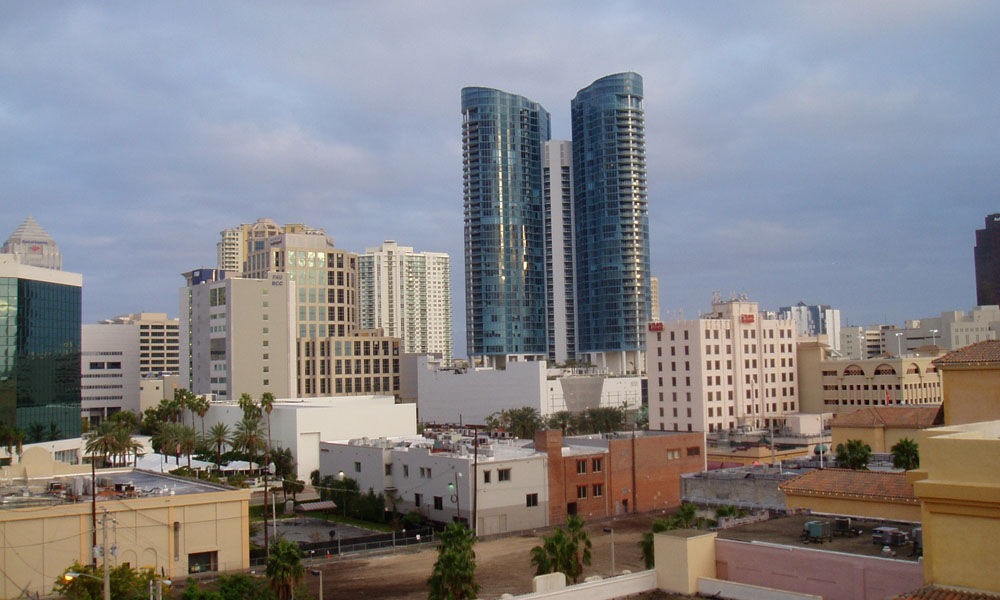
Fort Lauderdale landmarks
Photo: No machine-readable author provided. Bastique assu · CC BY-SA 3.0

Landmarks

Fort Lauderdale's Most Iconic Landmarks

A deep guide to Fort Lauderdale's iconic landmarks: Bonnet House, Stranahan House, and the Riverwalk, with history and insider visiting tips.

Fort Lauderdale wears its history in coral rock, coquina, and the slow brown current of the New River.

This is the city that grew from a trading post beside the water into the self-styled Venice of America, threading more than three hundred miles of navigable canals through its neighborhoods and earning a reputation as the yachting capital of the world.

To move through it is to travel by water as much as by road, where a pioneer's 1901 trading house sits within sight of superyachts, and where a barrier-island estate hides a jungle of orchids a short walk from the open Atlantic.

What makes Fort Lauderdale's landmarks so compelling is that they are not isolated monuments. They gather along the New River downtown, line the Riverwalk and Las Olas Boulevard, and follow the beach promenade where a low white wave wall separates sand from A1A.

The city's story reads outward from the water: the Seminole War era fort that gave it a name, the Bartlett family's winter retreat, the mansions of Rio Vista, and the mid-century glamour of a spring-break shoreline reinvented as a polished resort strand.

The Atlantic, warm and bright, ties it all together and gives the city its light.

This guide gathers ten landmarks that define Fort Lauderdale: the historic homes, the beloved museums, the celebrated beachfront, and the quiet gardens that preserve a vanished subtropical wilderness.

For each you will find what it is, why it matters, what to look for, and how to visit sensibly.

Read it front to back for a narrative of the city's growth from frontier outpost to waterfront destination, or skip to the places that call to you and build your own route along the river and the shore.

Historic · Downtown / Las Olas · 1917

Las Olas Boulevard

A brick-lined ribbon of boutiques, galleries, and sidewalk cafes running straight from the heart of downtown to the sand.

Las Olas Boulevard, Spanish for the waves, is Fort Lauderdale's signature street, a genteel stretch of low-rise storefronts, palm shade, and red-brick sidewalks that has anchored the city's social life for a century.

Laid out in the early boom years as the grand connector between the young downtown and the ocean, it remains the place locals mean when they say they are going out.

The central blocks near downtown are the boulevard's most beloved, a walkable run of independent boutiques, art galleries, jewelers, and restaurants whose tables spill onto the pavement beneath awnings and string lights.

Fashion Week, art strolls, and holiday displays turn the sidewalks into an ongoing promenade, and the scale stays human: no towers crowd the street, just two- and three-story facades that keep the light and the breeze coming through.

East of downtown the boulevard changes character entirely, striding across the Intracoastal and threading through the manicured finger islands known as the Isles, where waterfront mansions and yacht slips line the canals on the way to the beach.

To walk or drive the full length of Las Olas is to sample Fort Lauderdale in a single line: cafe culture, canal living, and the Atlantic at the far end.

Visiting

Las Olas Boulevard is a public street, free to stroll at any hour, and the liveliest stretch runs between roughly Southeast Sixth and Eleventh Avenues downtown. Evenings and weekends bring the biggest crowds and the best people-watching, while weekday mornings are calm and good for browsing the galleries. Metered parking and several garages sit just off the boulevard, and it is an easy walk from the Riverwalk and the downtown hotels. Allow a couple of hours to wander, shop, and eat.

Insider tip: Park downtown and walk the central blocks in the early evening, then, if you want the full sweep, catch the trolley or drive the eastern stretch across the Isles to see the boulevard end at the ocean.

📍 View on Google Maps →

Historic · Downtown / New River · 1901

Stranahan House

The oldest surviving building in the city, a pioneer trading post perched on the bank of the New River.

The Stranahan House is the birthplace of Fort Lauderdale as a town, the oldest surviving structure in the city and in all of Broward County.

Built by Ohio transplant Frank Stranahan on the north bank of the New River, it began as a trading post where he did business with the Seminole, who poled their dugout canoes downriver to exchange otter pelts, alligator hides, and egret plumes for cloth, tools, and staples.

The two-story frame building of Dade County pine grew from trading post to community hub, serving in turn as a post office, town hall, bank, and general store before Frank and his wife Ivy, the area's first schoolteacher, made it their family home.

Its wide verandas, tall shuttered windows, and steep roof are a textbook of practical Florida pioneer design, built to catch the river breeze and shed the subtropical rain long before air conditioning.

Restored and operated as a house museum, the Stranahan House preserves period furnishings and tells the story of the frontier settlement that grew up around this landing, including the complicated relationship between the settlers and the Seminole.

Tucked improbably beneath the towers of modern downtown and beside the Las Olas bridge, it is a small, human-scaled window into the swampy trading outpost that became a metropolis.

Visiting

The Stranahan House is open for guided tours most days, typically running several times daily, and reserving ahead is wise since the docent-led tour is the only way to see the interior and hear the history. It stands just off Las Olas Boulevard beside the New River, an easy walk from downtown hotels, the Riverwalk, and the shops. Plan for about an hour, and check the schedule, since private events occasionally close the house to the public. The riverside setting makes it a natural pairing with a water taxi ride.

Insider tip: Take the guided tour rather than just admiring the exterior: the docents' stories about the Stranahans and the Seminole trade turn what looks like a modest wooden house into the whole origin story of the city.

📍 View on Google Maps →

Historic · Central Beach · 1920

Bonnet House Museum & Gardens

A whimsical plantation-style estate on thirty-five wild acres between the ocean and the Intracoastal, alive with monkeys and orchids.

Bonnet House is a dreamlike artist's estate hidden on a barrier-island tract between Fort Lauderdale beach and the Intracoastal Waterway, one of the last undeveloped stretches of its kind on the coast.

Built by Chicago painter Frederic Clay Bartlett and named for the bonnet lily, a yellow water flower that grows in its slough, the house is a low, breezy, plantation-style compound wrapped around a courtyard and painted in cheerful colors.

Bartlett designed the estate as a winter retreat and a total work of imagination, filling it with his own murals, carved animals, shells, and playful architectural jokes, and his wife Evelyn continued to shape it for decades.

The rooms are less a museum of fine furniture than a portrait of two artists at play, from the whimsical bar to the studio to the courtyard where carved swans and monkeys keep watch.

The grounds are the other half of the magic: thirty-five acres of subtropical hammock, orchid houses, a desert garden, mangrove wetlands, and a resident troop of squirrel monkeys descended from long-ago pets.

Herons stalk the slough and ospreys nest overhead, so a visit is as much a nature walk as a house tour, a rare survival of what this coastline looked like before the high-rises arrived.

Visiting

Bonnet House is open for house tours and self-guided grounds admission most days of the week, though it usually closes one or two days, so check hours before you go. The entrance is off Sunrise Boulevard just west of the beach, with parking on site, and it pairs naturally with the adjacent Hugh Taylor Birch State Park. Guided house tours run at set times and are the only way to see the interior, while the gardens can be explored at your own pace. Allow two hours for both.

Insider tip: Bring a camera and a little patience for the grounds: the squirrel monkeys and the orchid displays reward a slow walk, and the light through the courtyard in late morning is when the painted house looks its most enchanting.

📍 View on Google Maps →

Park · Central Beach · 1949

Hugh Taylor Birch State Park

A green island of maritime forest and freshwater lagoon squeezed between the beach and the Intracoastal.

Hugh Taylor Birch State Park is a improbable pocket of wilderness wedged between the high-rises of the beach and the yachts of the Intracoastal, roughly a hundred and eighty acres of one of the last significant tropical hammocks left on this stretch of coast.

The land was the private winter estate of attorney Hugh Taylor Birch, who bought the oceanfront tract cheaply around the turn of the century and later gave it to the people of Florida to keep it from being paved over.

Today the park protects a mosaic of coastal habitats: a canopy of gumbo limbo, sea grape, and strangler fig, a long freshwater lagoon threading its length, and mangrove edges along the Intracoastal.

Trails and a scenic loop road wind through the shade, popular with walkers, cyclists, and skaters, and canoes and kayaks can be rented to paddle the tea-colored lagoon beneath the trees.

A short tunnel under the beachfront highway links the park directly to the sand, so visitors can pass from cool forest to open Atlantic in a few minutes.

With its picnic grounds, birdlife, and quiet water, the park offers a genuine breath of old Florida and a shaded refuge from the sun and traffic just steps from the busiest beach in the city.

Visiting

Hugh Taylor Birch State Park is open daily from early morning until sundown, with a modest per-vehicle entrance fee typical of Florida state parks. The entrance is off Sunrise Boulevard near the beach, and inside you will find picnic pavilions, a paved loop for walking and cycling, canoe and kayak rentals on the lagoon, and a pedestrian tunnel to the ocean. Mornings are coolest and best for birdwatching. Allow a couple of hours, more if you paddle the lagoon or combine it with beach time.

Insider tip: Rent a kayak or canoe and paddle the quiet freshwater lagoon in the morning: gliding under the hammock canopy with herons in the branches is a side of Fort Lauderdale most beachgoers never see.

📍 View on Google Maps →

Park · Downtown · 1992

Riverwalk Fort Lauderdale

A palm-shaded promenade tracing the New River through the heart of downtown, linking museums, cafes, and yacht docks.

Riverwalk is downtown Fort Lauderdale's linear park, a landscaped promenade that follows the curving north and south banks of the New River through the center of the city.

Brick paths, tropical plantings, and shaded seating turn what was once a working waterfront into a continuous public ribbon connecting the city's cultural and dining district along the water's edge.

The walkway stitches together many of downtown's key destinations, passing the Broward Center for the Performing Arts, the Museum of Discovery and Science, the NSU Art Museum, and Esplanade Park, while restaurants and bars open onto the river along the way.

Yachts and water taxis glide past, drawbridges lift for passing masts, and the whole scene captures Fort Lauderdale's identity as a city organized around its water.

More than a scenic path, Riverwalk is the venue for much of the city's public life, hosting festivals, concerts, art fairs, and holiday events on its lawns and plazas throughout the year.

On an ordinary day it is simply a fine place to walk off a meal, watch the boats, and move on foot between downtown's attractions without ever leaving the shade of the palms.

Visiting

Riverwalk is a free public promenade open at all hours, running along both banks of the New River through downtown and reachable from Las Olas Boulevard, the Broward Center, and the museums. Daytime is pleasant for museum-hopping and boat-watching, while evenings bring diners and, on event weekends, festivals and live music. Water taxis stop at several points along the walk, making it easy to arrive or depart by boat. There is no set duration: stroll as much or as little as suits your day.

Insider tip: Use Riverwalk as your downtown spine: park once, then walk the river between the science museum, the art museum, and the performing arts center, catching a water taxi at one of the docks if your feet get tired.

📍 View on Google Maps →

Museum · Downtown / Riverwalk Arts District · 1992

Museum of Discovery and Science

A hands-on temple of gadgets, gators, and a towering IMAX screen at the center of the Arts District.

The Museum of Discovery and Science is South Florida's leading science center, a boisterous, interactive institution built for curiosity and aimed squarely at families.

Grown from a small children's discovery center, it moved into its purpose-built downtown home beside the New River, marked by the soaring kinetic sculpture that greets visitors at the door.

Inside, the exhibits favor doing over looking: an Everglades ecosystem gallery with living reptiles and an alligator, a flight and aviation area, an interactive human body wing, and a run of physics and engineering contraptions that beg to be pulled, spun, and launched.

The signature Florida EcoScapes exhibit walks visitors from the coral reef to the swamp, connecting the region's natural systems in a single loop.

At its heart is a giant-screen IMAX theater, one of the largest in the region, showing both educational documentaries and mainstream films on a screen several stories high.

Between the tactile exhibits, the live creatures, and the immersive cinema, the museum is a reliable refuge on a rainy or blistering day and a genuine highlight for anyone traveling with children in Fort Lauderdale.

Visiting

The Museum of Discovery and Science is open daily, with general admission covering the exhibits and separate or combination tickets available for the IMAX films, so decide in advance whether you want a movie. It sits on Southwest Second Street in the downtown Arts District, an easy walk along Riverwalk from Las Olas and the other museums, with a parking garage adjacent. Mornings are quietest before school groups and family crowds build. Plan two to three hours, more if you catch a film.

Insider tip: Check the IMAX showtimes when you arrive and buy a combination ticket if a film interests you: timing your exhibit visit around a screening lets you rest your feet on the big screen partway through the day.

📍 View on Google Maps →

Museum · Downtown / Riverwalk Arts District · 1986

NSU Art Museum Fort Lauderdale

A crisp modernist landmark holding the country's great trove of CoBrA painting and a deep well of American art.

The NSU Art Museum Fort Lauderdale is the city's principal fine-art museum, housed in a spare, elegant building on Las Olas Boulevard designed by the noted modernist architect Edward Larrabee Barnes.

Founded decades earlier as a community art association, it has grown into a serious collecting institution now affiliated with Nova Southeastern University, its clean geometric galleries a deliberate contrast to the tropical bustle outside.

The museum is internationally known for holding the largest collection in the United States of work by the CoBrA movement, the vivid, expressionist postwar group of artists from Copenhagen, Brussels, and Amsterdam, whose raw color and playful figures fill several galleries.

It is equally strong in American art through its major holding of works by the realist painter William Glackens, a founder of the Ashcan School, whose canvases anchor the American collection.

Beyond these strengths the museum mounts ambitious traveling exhibitions and shows of modern and contemporary art, Latin American work, and photography, giving downtown a steady rotation of serious cultural programming.

Its scale is inviting rather than exhausting, a place where a visitor can see world-class painting in an hour or two and still have time for lunch on Las Olas afterward.

Visiting

The NSU Art Museum is open most days, though it typically closes one weekday, so verify hours before visiting, and it offers reduced or free admission at certain times worth checking. It stands at the west end of Las Olas Boulevard near the New River, within walking distance of the science museum, the performing arts center, and downtown parking. Allow one to two hours for the permanent collection and any current exhibition. Weekday afternoons are usually calm and uncrowded.

Insider tip: Seek out the CoBrA galleries specifically: this is the finest concentration of that colorful, little-known movement in the country, and it is the one thing here you genuinely cannot see anywhere else in the United States.

📍 View on Google Maps →

Historic · Intracoastal Waterway · 1990

The Water Taxi and the Venice of America Canals

A fleet of open-air boats turning the city's hundreds of miles of canals into a floating sightseeing highway.

Fort Lauderdale earned its nickname, the Venice of America, from the extraordinary web of canals, rivers, and waterways that lace the city, more than three hundred miles of navigable water threading between islands, estates, and downtown.

The Water Taxi is the friendliest way to experience it, a fleet of open-sided boats that has cruised these channels since 1990, functioning as both a narrated sightseeing tour and a genuine form of local transport.

Hopping aboard, visitors glide past the waterfront mansions and megayachts of the Isles and Millionaire's Row, under drawbridges that swing open for passing masts, and along the New River through the heart of downtown.

Captains narrate the passing scene with local lore about the celebrities, the boats, and the history of a city that grew up facing the water rather than the road.

Because the taxi runs a network of stops, a day pass lets riders step off at Las Olas, the beach, downtown, or a riverside restaurant, then reboard a later boat, making the water itself the main street of the city.

Sunset cruises and the evening lights of the yachts add a romance that no bus tour can match, and the constant breeze off the water is welcome relief on a hot afternoon.

Visiting

The Water Taxi operates daily along the Intracoastal and the New River, selling all-day passes that allow unlimited hop-on, hop-off travel between its many stops at hotels, restaurants, and attractions. Boarding is at any of the marked docks, including several along Las Olas, downtown, and the beach, and no reservation is usually needed. Late afternoon and sunset rides are the most scenic, when the light warms the waterfront homes. Buy the day pass rather than a single ride if you plan to explore.

Insider tip: Treat the day pass as your itinerary: ride to a waterfront restaurant for lunch, on to the beach or a museum in the afternoon, and back at sunset, letting the boat replace the car and the traffic entirely.

📍 View on Google Maps →

Historic · Downtown / Riverwalk Arts District · 1991

Broward Center for the Performing Arts

The gleaming riverside cultural anchor where touring Broadway, opera, and symphony fill two grand halls.

The Broward Center for the Performing Arts is the cultural flagship of downtown Fort Lauderdale, a sweeping modern complex set on the bank of the New River at the western edge of the Riverwalk Arts District.

Its curved, light-filled architecture opened to launch the city as a serious destination for the performing arts, and it quickly became the anchor around which the whole downtown cultural quarter grew.

The center houses two principal venues, the large Au-Rene Theater and the more intimate Amaturo Theater, together hosting a remarkable range of programming: national touring Broadway productions, opera, ballet, symphony concerts, jazz, comedy, and family shows.

It is home base for the city's resident opera, symphony, and Broadway series, giving the region a steady diet of first-rank live performance.

Beyond the stage, the building is a landmark in its own right, its glass lobbies and riverside terraces glowing over the water at night and its plaza serving as a gathering point along the Riverwalk.

Whether or not there is a show, the center's presence signals how far Fort Lauderdale has come from a beach town, and an evening performance here pairs naturally with dinner along the river.

Visiting

The Broward Center is a working performance venue, so the main way to experience it is to attend a show, with tickets sold in advance through the box office for the current season of Broadway, concerts, and other events. It sits at the west end of the Riverwalk on Southwest Fifth Avenue, with adjacent parking and easy access from downtown and the water taxi. Check the calendar and book ahead for popular Broadway runs. Arrive early to enjoy the riverside lobbies and terraces before curtain.

Insider tip: Come at least half an hour before showtime and take your drink out to the river-facing terrace: the lit water and passing yachts make the intermission view almost as memorable as the performance.

📍 View on Google Maps →

Historic · Central Beach / Bahia Mar · 1935

Jungle Queen Riverboat

A tropical-themed paddle-style riverboat that has been cruising the New River past the mansions since the 1930s.

The Jungle Queen is a Fort Lauderdale institution, a tropical-styled riverboat that has been carrying sightseers up the New River since 1935, making it one of the oldest continuously running attractions in South Florida.

Generations of visitors have boarded these broad, canopied vessels at the Bahia Mar yachting center on the beach, and the boats have become a nostalgic emblem of the city's early tourist era.

The narrated cruise winds inland from the Intracoastal along the New River, passing the extravagant waterfront homes and yachts of Millionaire's Row and Millionaires' Isles while a guide points out the celebrity estates and spins the local lore.

It is a leisurely, old-fashioned way to see the wealth and the greenery that line the city's central waterway, all from the shade of the boat's open deck.

The signature offering is the evening dinner cruise, which stops at the company's private Tropical Isle upriver for a barbecue and a lighthearted variety show before returning downriver after dark.

Corny in the best sense and beloved for it, the Jungle Queen delivers a slice of mid-century Florida tourism that has outlasted almost everything around it, a genuine piece of local heritage still afloat.

Visiting

The Jungle Queen runs daytime sightseeing cruises and a longer evening dinner-and-show cruise, both departing from the Bahia Mar Yachting Center on A1A along the beach, with tickets sold for specific departures. The dinner cruise is the most popular and includes the meal and entertainment on the Tropical Isle, so reserve ahead, especially in high season. Parking is available at Bahia Mar. Sightseeing trips run a few hours; the dinner cruise takes most of an evening.

Insider tip: Book the evening dinner cruise for the full experience, but if you only want the scenery, the shorter daytime sightseeing run gives you the same mansion-lined river views without the show, and in better light for photographs.

📍 View on Google Maps →

Park · Central Beach · 1993

Fort Lauderdale Beach and the Wave Wall Promenade

Miles of open Atlantic sand fronted by a low white serpentine wall that became the city's signature.

Fort Lauderdale Beach is the wide, bright ribbon of Atlantic sand that made the city famous, running for miles along State Road A1A within easy reach of downtown.

Once the raucous epicenter of spring break, immortalized in a beloved 1960 movie, the beachfront was reinvented in the early 1990s into the polished, palm-lined promenade that defines it today.

The emblem of that transformation is the wave wall, a low, undulating white barrier that separates the sidewalk from the road along the central stretch, its serpentine curves and sculptural forms glowing at night and instantly recognizable in photographs of the city.

The wide brick promenade beside it fills with joggers, skaters, and strollers, while across A1A a row of cafes, bars, and hotels faces the water.

The beach itself is broad, clean, and lifeguarded, sloping into the reliably warm Atlantic, with the central stretch near Las Olas the liveliest and quieter sands stretching north and south.

Between the swimming, the people-watching, the sea breeze, and the constant parade along the promenade, the beachfront remains the beating heart of the city's outdoor life, elegant now where it was once rowdy.

Visiting

Fort Lauderdale Beach is free and open to the public, with lifeguards on duty during the day along the main stretches and metered or garage parking near the wave wall along A1A. The central beach by Las Olas Boulevard is the busiest and best for the promenade scene and nearby dining, while the ends are calmer for swimming and sunbathing. Mornings are quietest and coolest, and the evening promenade comes alive at dusk. Bring water and sun protection year-round.

Insider tip: Walk the wave-wall promenade at dusk when the white wall is lit and the cafes across A1A fill up: it captures the modern, polished spirit of the beach far better than the midday crowds and glare do.

📍 View on Google Maps →

Frequently Asked Questions

What are the best landmarks to see if I only have limited time in Fort Lauderdale?

Prioritize the downtown and beach clusters: stroll the Riverwalk along the New River, tour Stranahan House, and browse the galleries and cafes of Las Olas Boulevard. Then head to Fort Lauderdale Beach for the wave-wall promenade and, if time allows, Bonnet House Museum and Gardens.

Which iconic Fort Lauderdale landmarks are free to visit?

The Riverwalk, Las Olas Boulevard, and Fort Lauderdale Beach with its promenade are all free to enjoy, as is walking the grounds of Hugh Taylor Birch State Park's paths for a small vehicle fee. Stranahan House, Bonnet House, and the NSU Art Museum charge admission.

How many days do I need to see Fort Lauderdale's iconic landmarks?

Two full days cover the essentials: one for downtown, the Riverwalk, Stranahan House, Las Olas, and the NSU Art Museum, and another for the beach, Bonnet House, and Hugh Taylor Birch State Park. Three days is ideal, adding an Everglades airboat trip and the Museum of Discovery and Science.

What is the best way to see Fort Lauderdale's waterfront?

The Water Taxi is the best introduction, cruising the New River and Intracoastal past mansions, marinas, and downtown with narrated commentary and hop-on stops. Add a walk along the Riverwalk and a beach promenade stroll to see the shoreline on foot.

Should I visit Bonnet House or Stranahan House?

Bonnet House is a 1920s barrier-island estate set in thirty-five subtropical acres of gardens with resident swans and monkeys, best for its art and grounds. Stranahan House is the oldest surviving structure in the city, a compact 1901 pioneer home on the river. Choose Bonnet House for gardens, Stranahan House for frontier history.

When is the best time of year to visit Fort Lauderdale's landmarks?

Late autumn through early spring is prime, with warm dry weather, calm seas, and lively events like the Fort Lauderdale International Boat Show and Winterfest Boat Parade. Summer is hot, humid, and prone to afternoon storms and hurricane season, though beaches and indoor museums stay appealing.