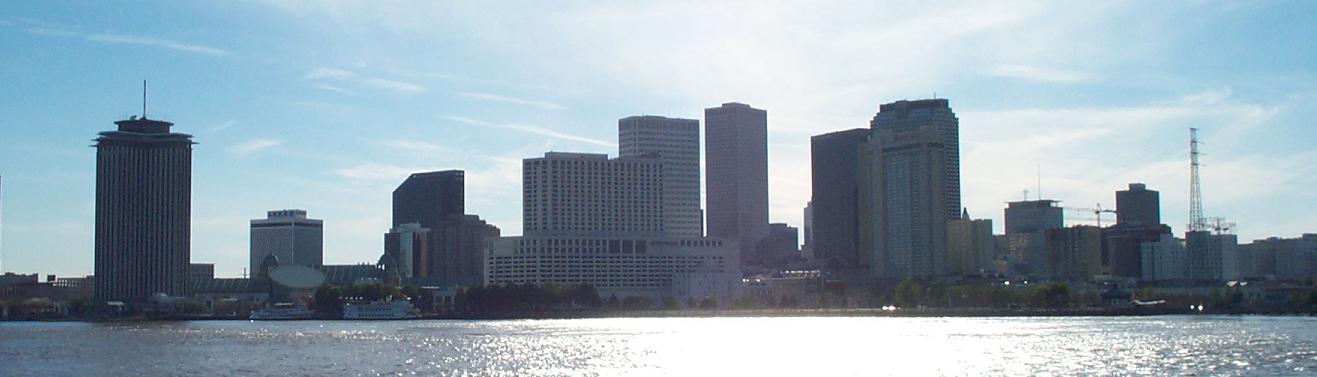
New Orleans landmarks
Photo: Justin Watt · Public domain

Landmarks

New Orleans's Most Iconic Landmarks

A deep guide to New Orleans's iconic landmarks: St. Louis Cathedral, Jackson Square, and the St. Charles streetcar, with history and insider visiting tips.

New Orleans wears its history in wrought iron, weathered brick, and Spanish stucco. This is the city that France founded in 1718, that Spain rebuilt after the fires of 1788 and 1794, and that gave the world jazz on the street corners of Storyville and Congo Square.

To walk its neighborhoods is to move through a living museum of the Atlantic world, where a French colonial square opens onto a Spanish-era cathedral, where Creole townhouses lean over the banquettes of the Vieux Carré, and where the Mississippi curls around the whole scene in the great bend that gave the Crescent City its name.

What makes New Orleans's landmarks so compelling is that they are not isolated monuments.

They gather around Jackson Square, line the oak-shaded avenues of the Garden District, and follow the river and the streetcar tracks in a way that lets you read the city's layered past block by block.

The balconies and courtyards invite you in, the music spills out of the halls onto the sidewalks, and the museums hold collections that trace everything from the Louisiana Purchase to the Second World War.

The river, wide and slow and ever-present, ties it all together and shapes the city's damp, golden light.

This guide gathers eleven landmarks that define New Orleans: the colonial heart around the cathedral, the beloved streetcars and avenues, the world-class museums, and the music halls that changed how the world hears rhythm.

For each you will find what it is, why it matters, what to look for, and how to visit sensibly. Read it front to back for a cultural narrative of the city, or skip to the places that call to you and build your own route along the river and the streetcar line.

Historic · French Quarter / Jackson Square · 1794

St. Louis Cathedral

Three slender steeples rising over Jackson Square, the soul of the French Quarter and the oldest active cathedral in the country.

The Cathedral-Basilica of St. Louis, King of France, presides over Jackson Square as the spiritual heart of the French Quarter and the oldest continuously operating Roman Catholic cathedral in the United States.

A church has stood on this spot since 1727, but the present building was completed in 1794 after fire destroyed its predecessor, and it was substantially rebuilt and enlarged in 1850 to the design of architect J.N.B.

de Pouilly, who gave it the three tapering spires that now define the skyline of the old city.

Dedicated to King Louis IX of France, the cathedral blends French and Spanish colonial sensibilities with later Gothic Revival touches.

Inside, the barrel-vaulted nave draws the eye toward a painted ceiling and a mural of Saint Louis announcing the Seventh Crusade above the main altar, while stained glass and quiet side chapels reward a slow look.

It remains a working parish church, so services, weddings, and funerals fill it throughout the week alongside a steady current of visitors.

The cathedral anchors a remarkable ensemble: the Cabildo and the Presbytere flank it, the Pontalba row houses line the square, and the pedestrian plaza out front hums with brass bands, tarot readers, and portrait artists. Behind the church, tiny St.

Anthony's Garden and the shadowy Pere Antoine Alley complete one of the most atmospheric corners in New Orleans.

Visiting

The cathedral is open to visitors most days outside of Mass and other services, and admission is free, though a small donation is welcome and self-guided visitors are asked to enter quietly and respect worshippers. It sits directly on Jackson Square in the heart of the French Quarter, so it pairs naturally with the surrounding museums and the riverfront. Mornings are calmest, and checking the parish schedule helps you avoid arriving mid-service. Allow twenty to thirty minutes for the interior.

Insider tip: Step around the back into St. Anthony's Garden at dusk: the floodlit rear facade and the deep shadows of Pirate's Alley and Pere Antoine Alley make for the most evocative photographs, well away from the square's crowds.

📍 View on Google Maps →

Park · French Quarter · 1721

Jackson Square

The green ceremonial heart of the old city, ringed by history and alive with music, artists, and street performers.

Jackson Square began as the Place d'Armes, laid out in 1721 as the military parade ground and civic center of the French colonial town, later renamed the Plaza de Armas under Spanish rule.

In the nineteenth century it was reimagined as a formal public garden, and it was rechristened Jackson Square in honor of Andrew Jackson, whose victory at the nearby Battle of New Orleans in 1815 made him a national hero.

At its center stands Clark Mills's bronze equestrian statue of Jackson, installed in 1856 and famous as one of the first equestrian statues balanced on the horse's hind legs alone. The garden's manicured paths and hedges are framed by an extraordinary architectural ensemble: St.

Louis Cathedral with the Cabildo and Presbytere at its sides, and the twin Pontalba Buildings, among the oldest apartment houses in the United States, running along the flanks.

Today the square is a National Historic Landmark and the living stage of the French Quarter.

The flagstone pedestrian mall around the fenced garden fills daily with jazz and brass musicians, fortune tellers, tap dancers, and painters who hang their canvases on the surrounding iron fence.

From the levee just across Decatur Street you can look back over the whole scene toward the cathedral, a view reproduced on countless postcards.

Visiting

The garden itself keeps daytime hours and is free, while the surrounding pedestrian plaza is open at all times, so the square can be enjoyed from early morning until late at night. It lies at the center of the French Quarter, an easy walk from the river, the French Market, and Bourbon Street. Weekend afternoons bring the most performers but also the biggest crowds, while early mornings offer near-empty paths and soft light. Plan to linger, since the people-watching is half the point.

Insider tip: Climb the steps of the Washington Artillery Park on the river side of Decatur Street: the raised overlook gives you the classic head-on view of the statue, the garden, and the cathedral's three spires all in one frame.

📍 View on Google Maps →

Museum · French Quarter / Jackson Square · 1799

The Cabildo

The Spanish colonial seat of power where the Louisiana Purchase was signed, now a museum of the city's tangled history.

The Cabildo flanks St. Louis Cathedral on Jackson Square, built between 1795 and 1799 to house the Spanish colonial governing council, the Illustrious Cabildo, from which it takes its name.

Its arcaded facade and wrought-iron balcony are a fine example of the Spanish period that reshaped the Quarter after the great fires of the late eighteenth century, and a French-style mansard roof was added later, giving the building its distinctive layered profile.

Its greatest claim to history unfolded in 1803, when the formal transfer ceremonies of the Louisiana Purchase took place in its second-floor rooms, moving the vast territory from France to the United States and doubling the size of the young nation.

That moment alone makes the Cabildo one of the most historically significant buildings in the American South.

Today it forms the flagship of the Louisiana State Museum, its galleries tracing the sweep of the region's story from Native peoples and colonial rule through slavery, the Battle of New Orleans, Reconstruction, and the layered cultures that made the city.

Among its treasures is one of the few surviving death masks of Napoleon Bonaparte. The rooms themselves, with their views over the square, are part of the experience.

Visiting

The Cabildo is open several days a week as part of the Louisiana State Museum, typically closing on Mondays, so check current hours and buy tickets, which carry a modest admission fee with discounts for students and seniors. It stands right on Jackson Square beside the cathedral, making it easy to combine with the Presbytere next door, which houses exhibits on Mardi Gras and Hurricane Katrina. Allow about ninety minutes, and note that the upper floors involve stairs.

Insider tip: Do not stop at the Cabildo alone; a combination ticket with the Presbytere on the cathedral's other side lets you pair the Louisiana Purchase history here with the moving Katrina and Mardi Gras exhibits there, two very different sides of the city under one price.

📍 View on Google Maps →

Historic · Garden District / Uptown · 1835

St. Charles Avenue Streetcar

Rattle beneath a canopy of live oaks aboard the oldest continuously running streetcar line on earth.

The St. Charles Avenue Streetcar is not merely transportation but a moving landmark, the oldest continuously operating street railway in the world, running since 1835 when it began life as the New Orleans and Carrollton Rail Road.

It has survived mule power, steam, electrification, storms, and the near-total disappearance of streetcars from most American cities, earning designation as a National Historic Landmark.

The line's olive-green cars are themselves historic: the Perley Thomas streetcars in service today were built in the 1920s and retain their mahogany seats with reversible backs, brass fittings, and hand-cranked windows, with no air conditioning to soften the ride.

Their clatter and sway are inseparable from the character of the avenue they travel.

The route is a slow, romantic tour of some of the city's most beautiful ground. From the edge of the French Quarter and downtown, it climbs St.

Charles Avenue beneath an arching tunnel of ancient live oaks, past the mansions of the Garden District, the campuses of Tulane and Loyola, Audubon Park, and the restaurants and shops of Uptown, before looping through the Carrollton neighborhood.

It is one of the great urban journeys in the United States, and a cheap one.

Visiting

The streetcar runs daily at a low flat fare paid on boarding, with exact change or a transit day pass recommended since drivers do not make change. Board along St. Charles Avenue in the Central Business District for the full uptown run, which takes roughly forty-five minutes end to end. Ride outside of rush hour for a seat, and remember there is no air conditioning, so mornings and evenings are more comfortable in the warm months. The full loop and back makes an easy half-day outing.

Insider tip: Sit on the right-hand side heading uptown for the best views of the grand Garden District mansions, and ride the whole line to Carrollton and back rather than getting off midway; the return trip through the oak tunnel at golden hour is unforgettable.

📍 View on Google Maps →

Historic · French Quarter / French Market · 1862

Cafe du Monde

Powdered beignets and chicory coffee under a green-striped awning, a ritual the city has kept up around the clock since the Civil War.

Cafe du Monde is less a restaurant than an institution, a coffee stand established in the French Market in 1862 that has grown into the single most beloved culinary landmark in New Orleans.

Its menu has barely changed in more than a century and a half: square French-style beignets buried under a snowdrift of powdered sugar, and cafe au lait made with dark-roasted coffee blended with chicory, a wartime economy that became a defining local taste.

The original stand sits at the downriver end of Jackson Square beneath its familiar green-and-white striped awning, open twenty-four hours a day and closing only on Christmas and when a hurricane forces the issue.

Waiters in paper hats shuttle between crowded marble-topped tables, and the constant clatter, the powdered sugar drifting across every surface, and the mix of tourists and locals at dawn make the scene as memorable as the food.

Beignets themselves are a legacy of the French colonists, fried dough with roots reaching back to old-world fritters, and here they arrive three to an order, hot and pillowy.

Pairing them with the bittersweet chicory coffee is a rite of passage that visitors and returning New Orleanians repeat again and again, a small, sweet, powdered-sugar-dusted ceremony that defines a morning in the Quarter.

Visiting

The original French Market location is open around the clock, cash is traditional though cards are now accepted, and there is no reservation and often a line that nonetheless moves quickly. It sits at the edge of Jackson Square along Decatur Street, perfectly placed within a French Quarter stroll. The quietest time by far is the small hours of the night or just before dawn, when you can have the beignets almost to yourself; mid-morning and mid-afternoon bring the heaviest crowds. Budget only what you order, since prices are low.

Insider tip: Go at three or four in the morning after a night out, or right at sunrise: the same hot beignets and chicory coffee taste twice as magical with an empty terrace, drifting sugar, and the Quarter still asleep around you.

📍 View on Google Maps →

Museum · Warehouse / Arts District · 2000

The National WWII Museum

The nation's official museum of the Second World War, an immersive campus that puts you inside the war that changed the world.

The National WWII Museum opened on June 6, 2000, the anniversary of D-Day, founded by historian and author Stephen Ambrose and originally dedicated to the Normandy landings.

New Orleans was chosen because the Higgins boats, the landing craft that carried troops onto the beaches of Europe and the Pacific, were designed and built here by Andrew Jackson Higgins.

Congress later designated it the country's official National WWII Museum, and it has since grown into one of the most highly regarded museums in the United States.

Spread across a multi-building campus in the Warehouse District, its exhibits move from the home front through the European and Pacific theaters using personal stories, oral histories, artifacts, and dramatic large-scale displays.

Aircraft hang overhead in the soaring US Freedom Pavilion, restored vehicles and a submarine experience bring the machinery of war to life, and a dog-tag system lets visitors follow the journey of an individual service member throughout their visit.

The museum is also a place of reflection and craft.

Its immersive galleries balance the scale of global conflict against individual sacrifice, and its widescreen film Beyond All Boundaries, produced and narrated by major Hollywood figures, distills the war into a moving cinematic experience.

Together the buildings make a full and often emotional day, one of the essential stops in the modern city.

Visiting

The museum is open daily with a general admission ticket, and the special films and the submarine experience carry additional charges, so consider a combination ticket if you want everything. It is a short streetcar ride or walk from the French Quarter into the Warehouse District, with several eateries on site. Plan for at least half a day, and consider arriving at opening, since the exhibits are extensive and the popular film shows fill up. Buying timed tickets ahead is wise in the busy season.

Insider tip: Reserve a seat for Beyond All Boundaries early in your visit rather than leaving it to the end, then build the rest of your day around the show time; the film gives context that makes the surrounding galleries land far harder.

📍 View on Google Maps →

Historic · Treme / Faubourg · 1789

St. Louis Cemetery No. 1

The city's oldest cemetery, a dense little city of whitewashed above-ground tombs said to guard the resting place of a Voodoo queen.

St. Louis Cemetery No. 1, opened in 1789 just beyond the edge of the original French Quarter, is the oldest surviving cemetery in New Orleans and the most famous of the city's celebrated cities of the dead.

Because the water table sits so high in this delta landscape, burials here rise above the ground in tombs and family vaults, creating narrow lanes of whitewashed masonry that resemble miniature streets and houses.

Within a single compact block lie generations of the city's Creole, French, Spanish, and free people of color, their tombs reused across families over centuries in a distinctive local practice.

The cemetery's most visited spot is the reputed tomb of Marie Laveau, the nineteenth-century Voodoo priestess whose grave still draws offerings and requests, and a stark white pyramid tomb built as the future resting place of actor Nicolas Cage adds a modern note of curiosity.

The cemetery is a place of genuine beauty and melancholy, its plastered surfaces glowing in the sun and its ironwork and inscriptions telling of epidemics, feuds, and the layered cultures that built the city.

It also demands respect, both as an active burial ground and as a fragile historic site that has suffered vandalism, which is why access is now carefully controlled.

Visiting

Since 2015, St. Louis Cemetery No. 1 can only be entered on an approved guided tour, and independent wandering is no longer permitted, so book through the Archdiocese or a licensed tour operator in advance. It stands a short walk from the French Quarter near the edge of Treme, and tours run in daylight hours and last roughly an hour. Dress for sun and heat, since there is no shade among the tombs, and bring water. Photography is generally allowed on tours.

Insider tip: Choose a guide who focuses on the cemetery's history and burial customs rather than sensational ghost stories; the real accounts of the yellow fever epidemics, the reuse of tombs, and Marie Laveau's life are far more fascinating than the myths.

📍 View on Google Maps →

Park · Mid-City · 1854

City Park

One of the country's grandest urban parks, home to ancient oaks, an art museum, and a sculpture garden among the moss.

City Park spreads across more than 1,300 acres in Mid-City, making it one of the largest and oldest urban parks in the United States, with land set aside for public use beginning in 1854.

Its defining feature is its magnificent stand of southern live oaks, some estimated to be many centuries old, their massive limbs draped in Spanish moss and arching over lagoons and lawns in scenes of unmistakable Deep South beauty.

The park is far more than green space. At its cultural heart stands the New Orleans Museum of Art, opened in 1911, whose Beaux-Arts building holds a distinguished collection ranging from European masters to African, Asian, and Southern art.

Beside it lies the Sydney and Walda Besthoff Sculpture Garden, where modern sculptures are set among the oaks, lagoons, and footbridges, one of the loveliest places in the city to walk.

Elsewhere the park offers the antique carousel of Carousel Gardens with its rare hand-carved wooden animals, the storybook figures of Storyland, botanical gardens, golf, and miles of paths beneath the trees.

In winter the oaks blaze with the lights of Celebration in the Oaks, and year-round the park is where New Orleanians come to jog, picnic, and slow down, a generous counterpoint to the density of the Quarter.

Visiting

The park grounds are open daily and free to enter, while individual attractions such as the museum, the sculpture garden, the carousel, and Storyland set their own hours and admission, some free and some ticketed. It sits a streetcar ride from downtown on the Canal Street line's City Park spur, with ample parking. Mornings are cool and quiet under the oaks, and a visit easily fills half a day if you combine a walk with the museum. Bring water and insect repellent in warm months.

Insider tip: Pair the free Besthoff Sculpture Garden with the ticketed New Orleans Museum of Art in a single trip; wandering the sculptures among the live oaks and lagoons is one of the most peaceful and photogenic experiences the city offers, and it costs nothing.

📍 View on Google Maps →

Historic · French Quarter · 1961

Preservation Hall

A bare, candid room with no bar and no frills where traditional New Orleans jazz is played the way it was born.

Preservation Hall is a small, deliberately unadorned music room on St. Peter Street in the French Quarter, founded in 1961 to protect and nurture the traditional New Orleans jazz that gave the world one of its great art forms.

At a time when the music risked fading, the hall gave older Black musicians who had shaped early jazz a dignified place to perform nightly, and it has continued that mission without interruption ever since.

The experience is intentionally stripped down. There is no bar, no food, no microphones, and no air conditioning; audiences sit on worn cushions and wooden benches or stand at the back in a dim room hung with faded paintings and instruments, close enough to feel the horns.

That intimacy is the point, putting listeners face to face with acoustic music played by masters in a space that has barely changed in decades.

The resident Preservation Hall Jazz Band has toured the world and collaborated across genres, but the beating heart of the institution remains these nightly sets in the original room.

Hearing a clarinet, trumpet, trombone, banjo, and upright bass fill the small hall, with the band taking requests and trading choruses, is to hear New Orleans jazz in as pure a setting as still exists anywhere.

Visiting

Preservation Hall hosts multiple short sets most nights, and tickets can be bought in advance for reserved options or in a general line at the door, with a modest cover; there is no drinking age issue since no alcohol is served. It sits on St. Peter Street near Bourbon in the French Quarter. Arrive early to line up for the first set, since the room is tiny and seating is limited and first come. Sets run under an hour, so plan the rest of your evening around the show time.

Insider tip: Buy the advance reserved ticket if you want a guaranteed spot up front, but if you are willing to stand, joining the general line early for the first set of the night often gets you into a less crowded, more intimate room.

📍 View on Google Maps →

Historic · Garden District · 1832

The Garden District

Block after block of antebellum mansions and iron lacework beneath ancient oaks, the grandest residential quarter in the South.

The Garden District, developed beginning in the 1830s on former plantation land upriver from the French Quarter, was where newly wealthy Americans built their homes after the Louisiana Purchase, apart from the older Creole city.

Rather than the dense, courtyard-facing houses of the Quarter, they built free-standing mansions set back in lush gardens, and it is those gardens that gave the neighborhood its name and its unmistakable green, canopied character.

The result is one of the best-preserved collections of nineteenth-century Southern architecture in the country, a walkable grid of Greek Revival, Italianate, and Victorian mansions dripping with cast-iron galleries, columned porches, and wrought-iron fences shaded by enormous live oaks and magnolias.

Many houses are private, but their facades and gardens make the streets themselves an open-air museum, and famous residents past and present have added to the neighborhood's mystique.

At its heart lies Lafayette Cemetery No. 1, established in 1833, an atmospheric block of above-ground tombs that has appeared in novels and films and long drew writers to the district.

Together with the boutiques and restaurants of Magazine Street a few blocks toward the river, the Garden District offers a slower, leafier counterpart to the Quarter, best explored simply on foot.

Visiting

The Garden District is a living residential neighborhood open to the public on its streets and sidewalks at no cost, best reached by the St. Charles Avenue streetcar, which runs along its upper edge. Houses are private, so the visit is one of strolling and admiring from the sidewalk, ideally combined with shopping and dining on nearby Magazine Street. Note that Lafayette Cemetery No. 1 has periodically closed for restoration, so check its status before counting on entering. A relaxed walk takes one to two hours.

Insider tip: Ride the streetcar to Washington Avenue and walk toward the river, using a printed or app-based walking-tour map to find the landmark houses; the district's magic is in the detail of iron galleries and gardens that a self-guided stroll lets you savor at your own pace.

📍 View on Google Maps →

Historic · French Quarter · 1791

The French Market

The oldest public market in America, a riverside stretch of stalls trading in produce, crafts, and Creole flavor for more than two centuries.

The French Market runs along the downriver edge of the French Quarter, tracing its origins to 1791 and claiming the title of the oldest public market in the United States.

The site was a trading place long before, used by Native peoples beside the river, and it grew under French and Spanish rule into the commercial belly of the colonial city, where farmers, fishers, and merchants brought their goods to the levee.

The covered market sheds that survive today, rebuilt and expanded over the nineteenth and twentieth centuries, once brimmed with butchers, vegetable sellers, and vendors of every kind.

Now the arcades house a lively mix of a farmers and flea market, craft and souvenir stalls, spice and hot-sauce sellers, and food stands serving local specialties from muffulettas to alligator sausage and pralines, stretching several blocks from Cafe du Monde toward the neighborhood of Faubourg Marigny.

Beyond the shopping, the French Market is a place to feel the everyday rhythm of the city where it meets the Mississippi.

Musicians play in its plazas, festivals fill its open spaces, and the adjoining stretch of Decatur and North Peters Streets, with the Old US Mint at its far end, ties the market into a full riverside walk that has been the crossroads of New Orleans commerce and culture for well over two hundred years.

Visiting

The French Market's shops and food stalls are open daily with free entry, and you pay only for what you buy, while the open-air flea and farmers sections keep their own daytime hours. It runs along the river side of the lower French Quarter, an easy walk from Jackson Square through Cafe du Monde and on toward the Marigny. Mornings are best for the produce and a calmer browse, and the far end near the Old US Mint is quieter than the tourist-heavy stretch by the square. Allow an hour or more.

Insider tip: Walk the market away from Jackson Square toward the Old US Mint end; the crowds thin, the vendors grow more local, and you can turn the stroll into a self-made tasting tour of pralines, hot sauce, and Creole snacks as you go.

📍 View on Google Maps →

Frequently Asked Questions

What are the best landmarks to see if I only have limited time in New Orleans?

Prioritize the French Quarter cluster: Jackson Square with St. Louis Cathedral, the Cabildo and Presbytère flanking it, and the French Market along the river. Walk to Royal Street for its galleries and iron balconies, then catch a set at Preservation Hall in the evening.

Which iconic New Orleans landmarks are free to visit?

Jackson Square, St. Louis Cathedral, and the Moonwalk along the Mississippi are all free, as is a stroll through the French Market and City Park's sculpture garden. You can admire the Garden District mansions and Lafayette Cemetery No. 1 area from public sidewalks. Congo Square in Louis Armstrong Park is free to enter.

How many days do I need to see New Orleans's iconic landmarks?

Two full days cover the essentials: one for the French Quarter, Jackson Square, the cathedral, and the Louisiana State Museums, and another for the St. Charles streetcar, the Garden District, and City Park. Three days is ideal, adding the National WWII Museum and an evening of live jazz on Frenchmen Street.

What is the best way to see New Orleans's architecture?

A ride on the historic St. Charles streetcar is the best introduction, rolling past antebellum mansions, Loyola and Tulane, and the oaks of Audubon Park. Add a walking loop through the French Quarter for its Creole townhouses and courtyards, and a stroll through the Garden District for Greek Revival and Italianate homes.

Should I visit the Cabildo or the Presbytère for New Orleans history?

The Cabildo, where the Louisiana Purchase was finalized, covers the state's colonial and early American past and holds a death mask of Napoleon. The Presbytère splits its exhibits between Mardi Gras and Hurricane Katrina. Choose the Cabildo for deep history, the Presbytère for culture and resilience; both sit on Jackson Square.

When is the best time of year to visit New Orleans's landmarks?

Late autumn through spring is prime, with mild weather, Mardi Gras parades, and the Jazz and Heritage Festival in late April. Winter is festive and less humid, ideal for museums and the Quarter. Summer is hot, humid, and prone to afternoon storms, so plan indoor stops and early starts.